
comparison
$0.13 per Click, Zero Signups: The Nine-Week Ledger That Changed How We Reduce SaaS CAC
August 27, 2026 · 8 min read · Scout7
To reduce SaaS CAC we audited nine weeks of spend: $889.44, 667,395 impressions, zero paid signups — and the organic loop that outperformed it.
Introduction: the new SaaS CAC divide
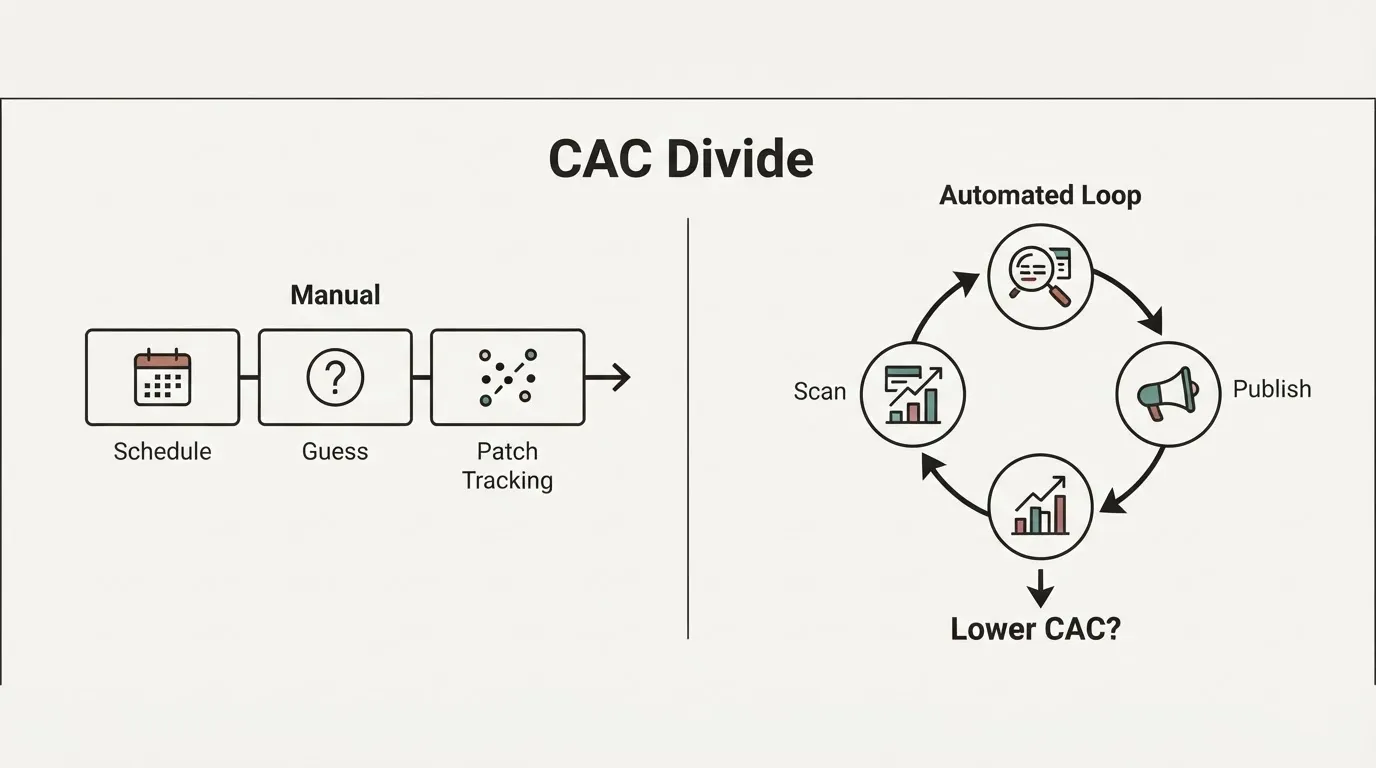
To reduce SaaS CAC, small teams should not start by posting more. They should start by fixing attribution, documenting one brand story, and then using AI marketing automation to run a repeatable organic loop that can publish, learn, and improve from real signals.
Key takeaways:
- Broken attribution makes CAC decisions look better or worse than reality
- Manual scheduling burns time without creating a learning loop
- Automation works when unified data and brand guardrails come first
- Small SaaS teams win by compounding measured output, not manual effort
Picture the familiar month-end review: posts went out late, campaign links were inconsistent, and the dashboard still cannot explain which channels influenced signups. That is not a content problem. It is an operating model problem.
The market is moving fast, but the divide is not simply AI users versus non-users. It is teams still hand-running content with broken attribution versus teams managing a loop that creates, publishes, measures, and learns.
Manual content is costlier than it looks
That operating-model problem becomes obvious when you open the ledger. If you can spend $889.44 across six campaigns on four platforms and get zero signups, the expensive part was not the creative. It was the manual system behind it.
- Spend looked active but produced no signup signal
- Platform spread increased work across four channels and six campaigns
- Manual execution hid waste because effort looked like progress
- Broken feedback loops meant the next month learned almost nothing
This is where Scout7’s perspective matters: show the spend first, then admit the measurement gap. Based on what Scout7 saw when reviewing its own spend and attribution patterns, consistency and volume only help when the system can tell the truth about what worked.
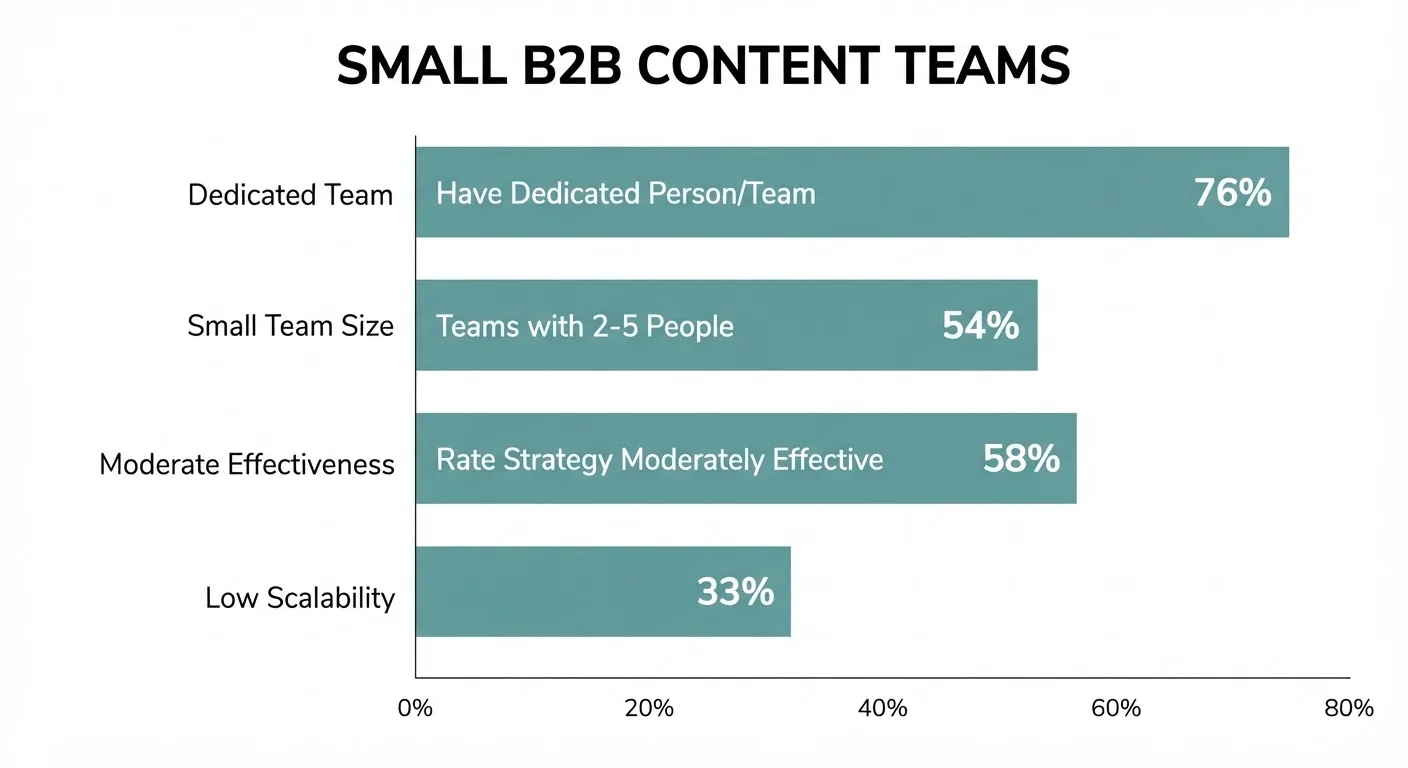
That story fits the wider market. In Content Marketing Institute’s 2025 B2B benchmark study, more than three in four teams (76%) had a dedicated content person or team, yet more than half (54%) were only two to five people. In the same CMI research, about 58% rated their strategy only moderately effective, and only about one in three said they had a scalable creation model.
The next question is obvious: if manual content is the drag, what actually replaces it?
Manual scheduling vs. automated loops
The answer is not “humans out, AI in.” The real comparison is a stop-start calendar versus a loop that can scan, create, publish, engage, backlink, and measure on repeat.
- Manual tools manage tasks but rarely connect content to downstream learning
- Marketing Automation handles repetitive execution across channels at scale
- Agentic Marketing shifts humans from button-clicking to strategic oversight
- Compounding happens when each cycle informs the next one
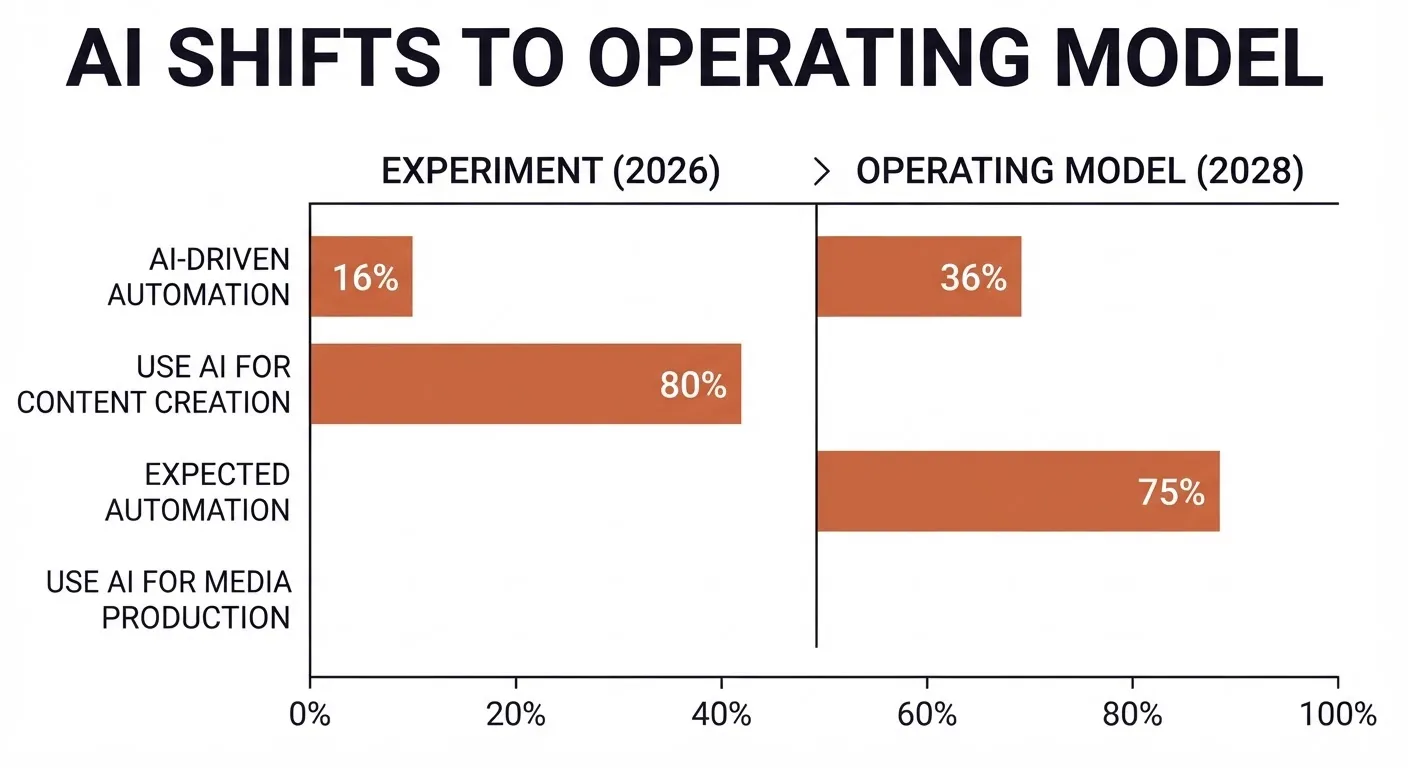
This shift is becoming standard workflow, not a side experiment. According to a Gartner survey of 402 CMOs, marketing leaders expect AI-driven automation to rise from about one-sixth of work (16%) in 2026 to more than one-third (36%) by 2028.
HubSpot points in the same direction. In HubSpot’s 2026 State of Marketing trends report, nearly half of marketers (48.57%) said AI-powered personalized content is a top trend, slightly ahead of automation itself. In the broader HubSpot 2026 State of Marketing report, about 80% said they use AI for content creation and about 75% for media production.
The win is not faster posting. The win is a loop that learns without losing the brand story.
But that loop only works if the inputs are real, which brings us back to the hardest part: data.
Unified data decides whether automation helps
Before trusting any CAC number, fix the tracking. If 69% of organic arrivals have no referrer, only one bio link is tagged, and a search campaign runs untagged for a month, your dashboard is not measuring performance. It is grading fiction.
- UTM gaps distort CAC across paid and organic channels
- Missing referrers erase learning from social and search activity
- Unlinked systems slow response to buyer behavior
- Unified data gives automation better signals to act on
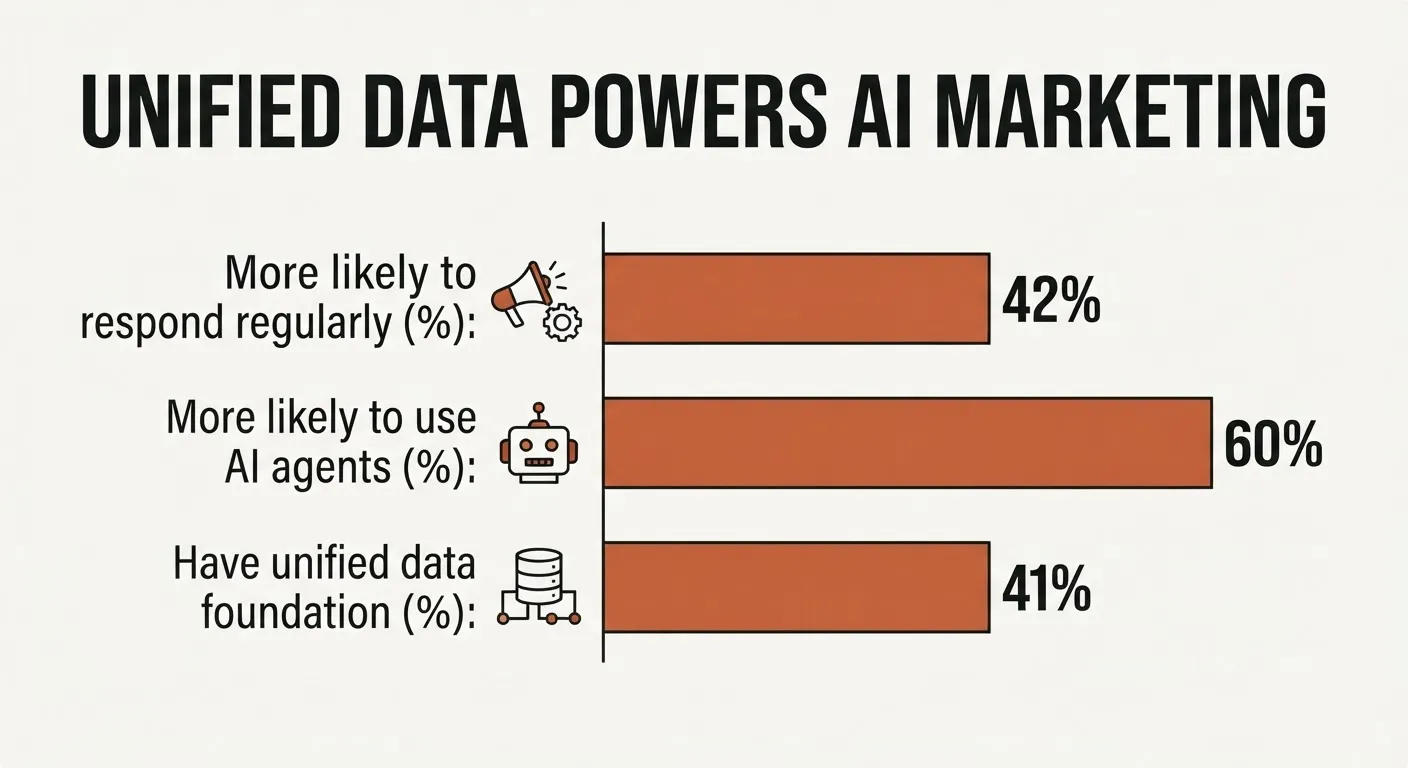
This is why honest measurement comes before any claim that automation will lower CAC. According to Salesforce’s 2026 State of Marketing, teams satisfied with unified customer data were about 42% more likely to regularly respond to customers and about 60% more likely to use AI agents.
The readiness gap is still large. In Adobe’s 2026 AI and Digital Trends in B2B Journey Orchestration report, only about 41% of nearly 800 B2B organizations said they had a unified customer data foundation that could support AI at scale.
So the question is not whether automation is available. It is whether your data is clean enough for automation to learn from reality.
When Automation Actually Helps Reduce SaaS CAC
AI marketing automation for small SaaS is worth it when three conditions are true: your team can define one brand story, your attribution is honest enough to compare channels, and you publish often enough for the loop to learn.
- Switch when channels multiply beyond what campaign-by-campaign management can handle
- Switch when manual scheduling blocks consistency more than strategy does
- Switch when personalization matters to buyer conversion, not just efficiency
- Switch with guardrails so automated output stays on-brand and disclosed
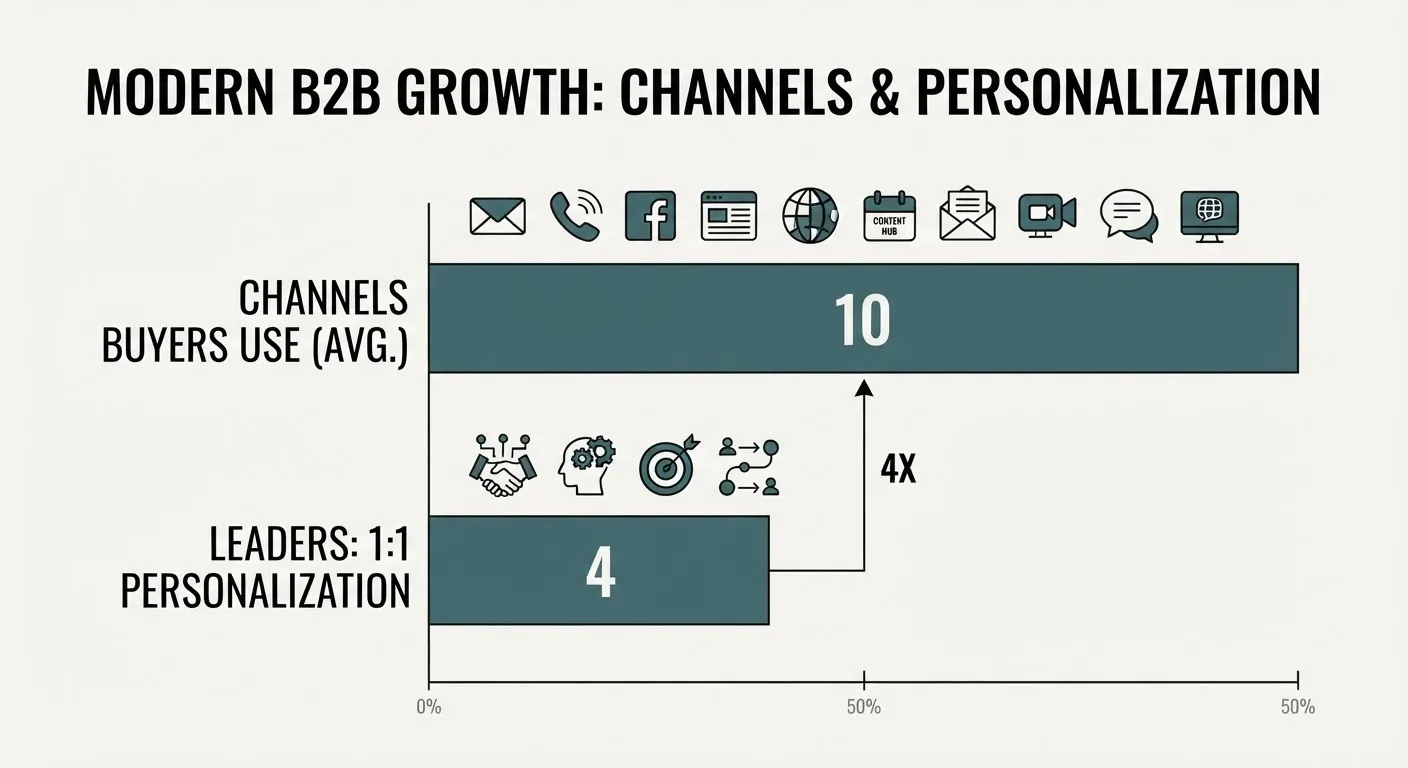
The channel complexity case is now strong. In McKinsey’s 2026 Global B2B Pulse Survey, buyers used an average of 10 channels during the purchase journey. In the same McKinsey research, market leaders were four times more likely to deploy true one-to-one personalization.
That does not mean “publish everything everywhere.” It means building one documented story, then using automation to adapt and distribute it consistently. Scout7 should also disclose AI assistance clearly in any article, carousel, video, or post, such as “Powered by Scout7 AI.”
The final step is practical: what should a team do next month, not next year?
Your next move: instrument, then automate
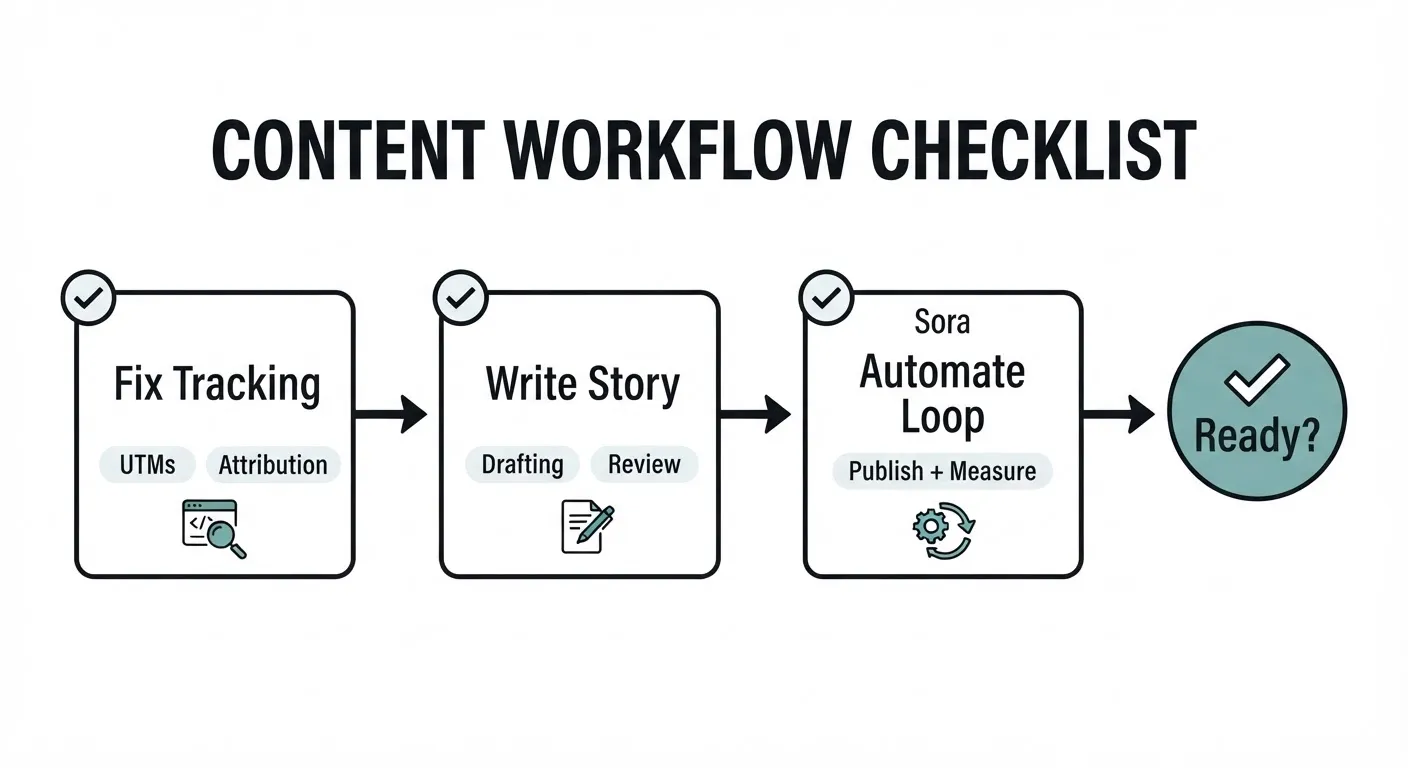
The teams that reduce SaaS CAC are not the ones posting the most by hand. They are the ones that fix tracking first, define one repeatable narrative, and then let Marketing Automation or Agentic Marketing compound output and feedback over time.
- Audit every UTM across paid, social, search, and bio links
- Tag every profile link so organic traffic has a visible source
- Document one brand story with claims, tone, and proof points
- Disclose AI assistance clearly on AI-generated or AI-assisted content
- Run a fair test: one manual month versus one automated month
How to reduce SaaS CAC with AI? Start by repairing attribution and unifying customer data, then automate repeatable organic work so content creation and measurement reinforce each other.
Is AI marketing automation worth it for small SaaS? Yes, when it replaces fragmented manual scheduling with measured, brand-consistent execution; no, when it is layered on top of broken tracking and vague positioning.
Key takeaways:
- Measure first or automation scales noise
- One brand story keeps output consistent across channels
- Unified data turns automation into a learning system
- Test one month against one month before expanding spend
Return to that opening dashboard. The issue was never just the late posts or the thin calendar. It was the hidden cost of a manual cycle that consumed time, scattered spend, and still could not explain CAC with confidence.
For small SaaS teams, that is the new divide. Some teams will keep hand-running content and debating unreliable numbers. Others will instrument the funnel honestly, connect their data, and build an automated loop that may vary in outcomes but improves its odds through repetition and measurement.
That shift matters because the content market is no longer rewarding effort alone. It rewards systems that learn. If your social scheduling still depends on memory, spreadsheets, and half-tagged links, start with the unglamorous work this week: clean your UTMs, tag every bio link, write down your brand story, and disclose where content is AI-assisted or AI-generated. Then compare one manual month against one automated loop month and review CAC only after the tracking is trustworthy. That is the responsible path forward.
Frequently asked questions
Why didn’t $0.13 clicks turn into signups?
Because the article’s core issue is not cheap traffic alone; it is broken attribution and weak measurement. If links are inconsistently tagged and referrers are missing, the team cannot tell which visits influenced signups or whether any channel is actually working.
When does automation actually help reduce SaaS CAC?
Automation helps when three basics are already in place: one documented brand story, honest enough attribution to compare channels, and enough publishing volume for the system to learn. If those inputs are broken, automation scales noise rather than improving CAC.
What should a small SaaS team fix first?
Start with instrumentation. Audit UTMs across paid, social, search, and bio links, then tag every profile link so organic traffic has a visible source before comparing channel performance.
Is manual scheduling always bad?
No. The article argues that manual scheduling becomes expensive when it blocks consistency, hides waste, and fails to create a learning loop. The problem is less “manual” by itself and more manual execution layered on top of broken tracking and scattered brand messaging.
References
- Gartner Survey Reveals Marketing Leaders Expect AI Automation of Marketing Work to Double to 36 Percent by 2028
- Salesforce State of Marketing 2026
- HubSpot Blog: 2026 Marketing Industry Trends Report
- The Surprising Economics of B2B Growth: The New Survival Threshold—and What It Takes to Thrive
- B2B Content Marketing Benchmarks, Budgets, and Trends: Outlook for 2025
- 2026 AI and Digital Trends in B2B Journey Orchestration
- HubSpot 2026 State of Marketing Report