
how_to_playbook
4 AI Crawler Optimization Fixes That Make SaaS Visible
August 27, 2026 · 11 min read · Scout7
A practical playbook for AI crawler optimization: SSR, robots.txt, metadata, sitemaps, and crawl monitoring for AI agents in 2026.
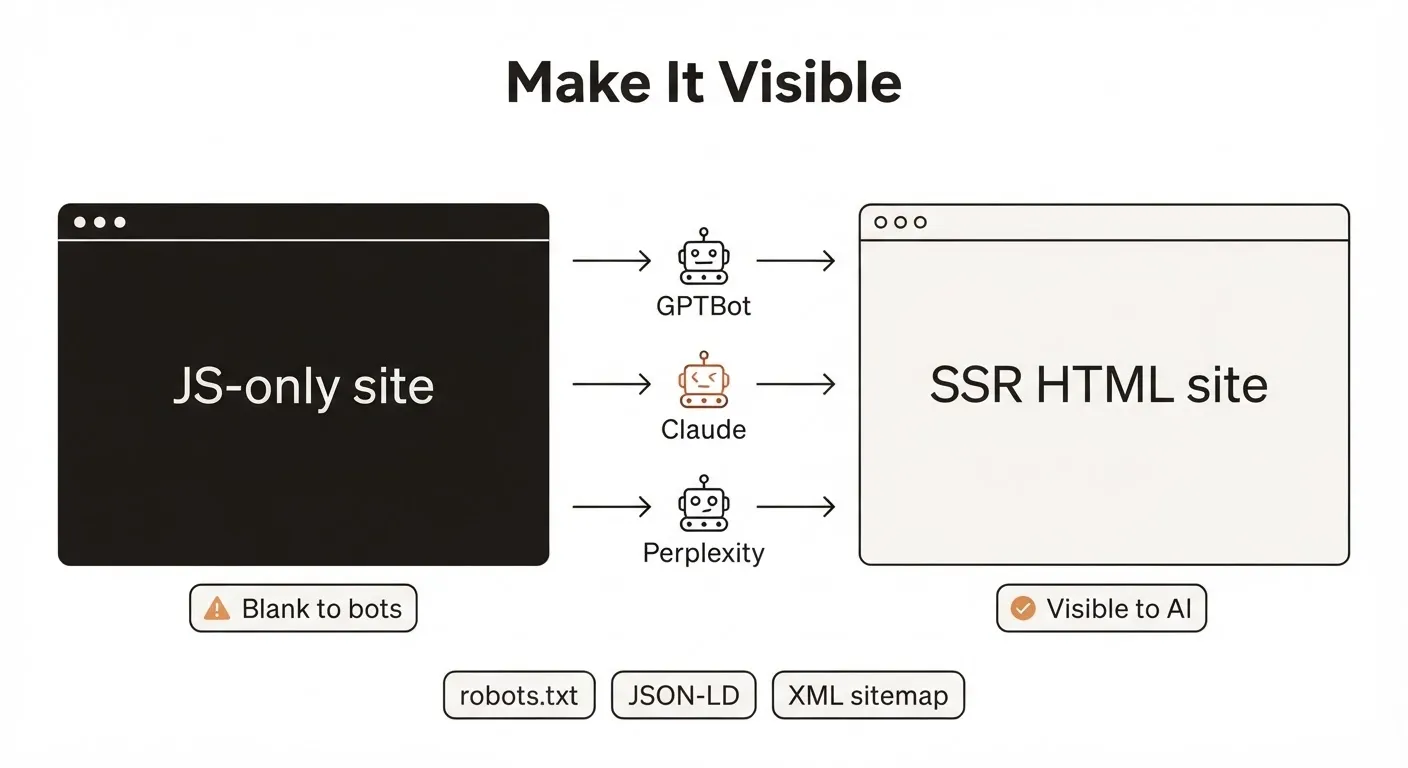
Subtitle: A practical playbook for AI crawler optimization with SSR, robots.txt, metadata, sitemaps, and log-based verification.
Introduction
Your best page can rank, convert, and still vanish from AI answers if the important copy only appears after JavaScript runs. The fix for AI crawler optimization is technical, not mystical: put core content in raw HTML, allow the right bots in robots.txt, add machine-readable structure, and verify real crawl activity in logs.
Key takeaways:
- Ship key content in HTML before any crawler arrives
- Use selective robots.txt rules instead of blanket AI bot blocks
- Skip llms.txt hype unless logs prove it matters
- Monitor server logs weekly to confirm actual AI crawl health
Picture the failure mode. Your pricing page looks great in the browser, the product grid animates nicely, and the FAQ loads after hydration.
Then an AI crawler hits the page, sees a thin shell, and moves on.
That gap matters now because AI research is reshaping buying behavior. According to Forrester’s Buyers’ Journey Survey coverage, nearly all business buyers (94%) use AI during the buying process, and Forrester’s 2026 reporting says twice as many B2B buyers now find generative AI or conversational search more meaningful than any other source.
If AI agents cannot read your site, your pipeline feels that before your rank tracker does. The next section shows why.
Why AI Agents Ignore Your Best Content
The problem is not that your content is bad. The problem is that an AI crawler often cannot see it when that content depends on client-side JavaScript execution.
Technical SEO matters here because technical SEO is the infrastructure work that makes content discoverable, crawlable, and understandable before design polish or copy quality can help. For SaaS teams, that means making sure product facts, pricing, docs, and comparisons are available in the HTML response.
- Crawlability means bots can access and follow your important URLs reliably
- JavaScript execution means a crawler must run scripts before content appears
- Server-side rendering means the server sends finished HTML with the real copy already present
- robots.txt is the file that tells bots what they can and cannot crawl
- Heavy JS paths waste resources as AI bot traffic climbs
This is where the practical stance matters. The issue is not abstract AI SEO theory; it is that client-side rendering creates an invisibility problem, while server-side rendering fixes it.
Based on what we saw when mapping this problem for SaaS teams, the real wins came from exact technical fixes: stop hiding content behind JavaScript, stop blanket-blocking bots, and verify crawl behavior in logs.
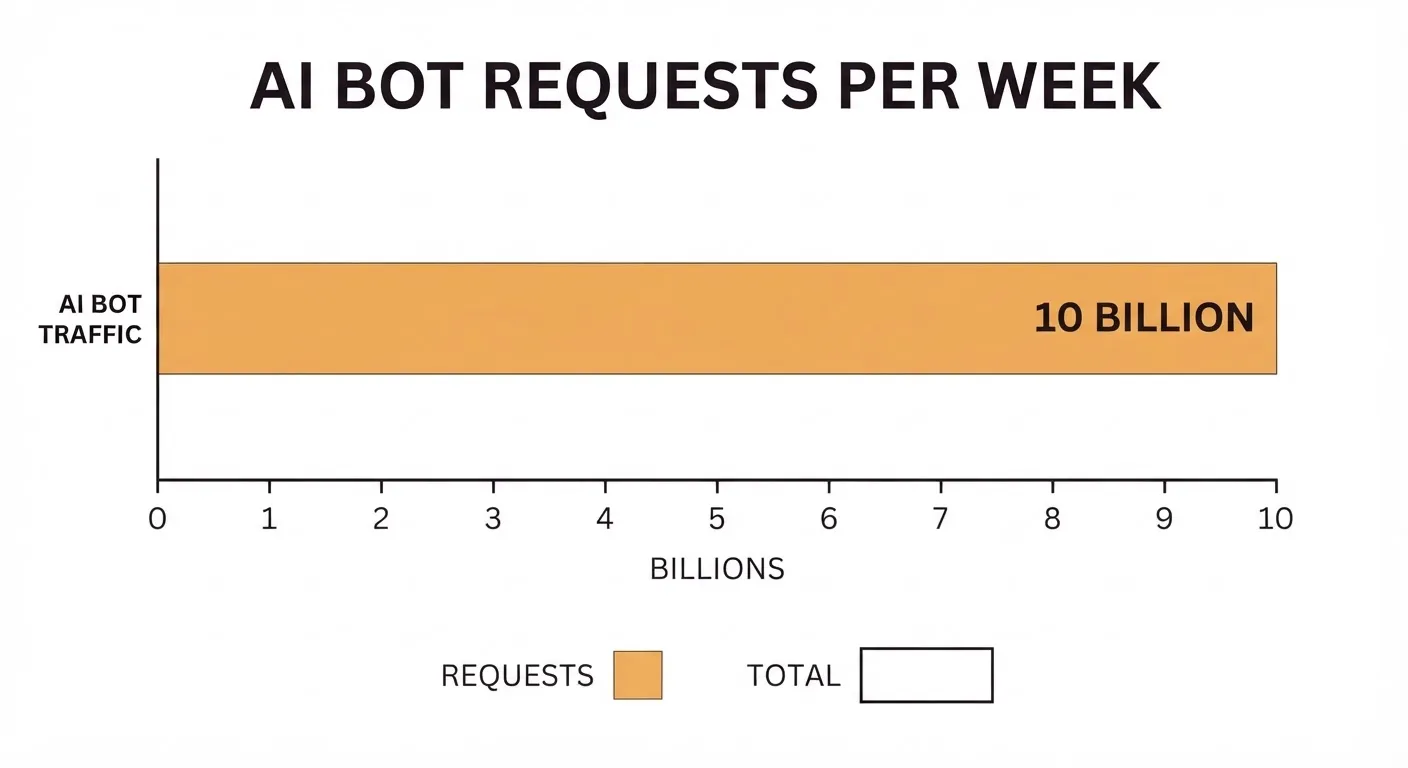
The economics push in the same direction. Cloudflare reported in 2026 that AI bot traffic now exceeds 10 billion requests per week, so lightweight HTML and aggressive caching help both machines and infrastructure. And because Forrester reported that about 94% of global business buyers use AI during buying, this is now a pipeline issue for B2B SaaS, not just an SEO edge case.
So what is the first fix? Replace the rendering pattern that hides your content.
Step 1: Replace Dynamic Rendering With SSR
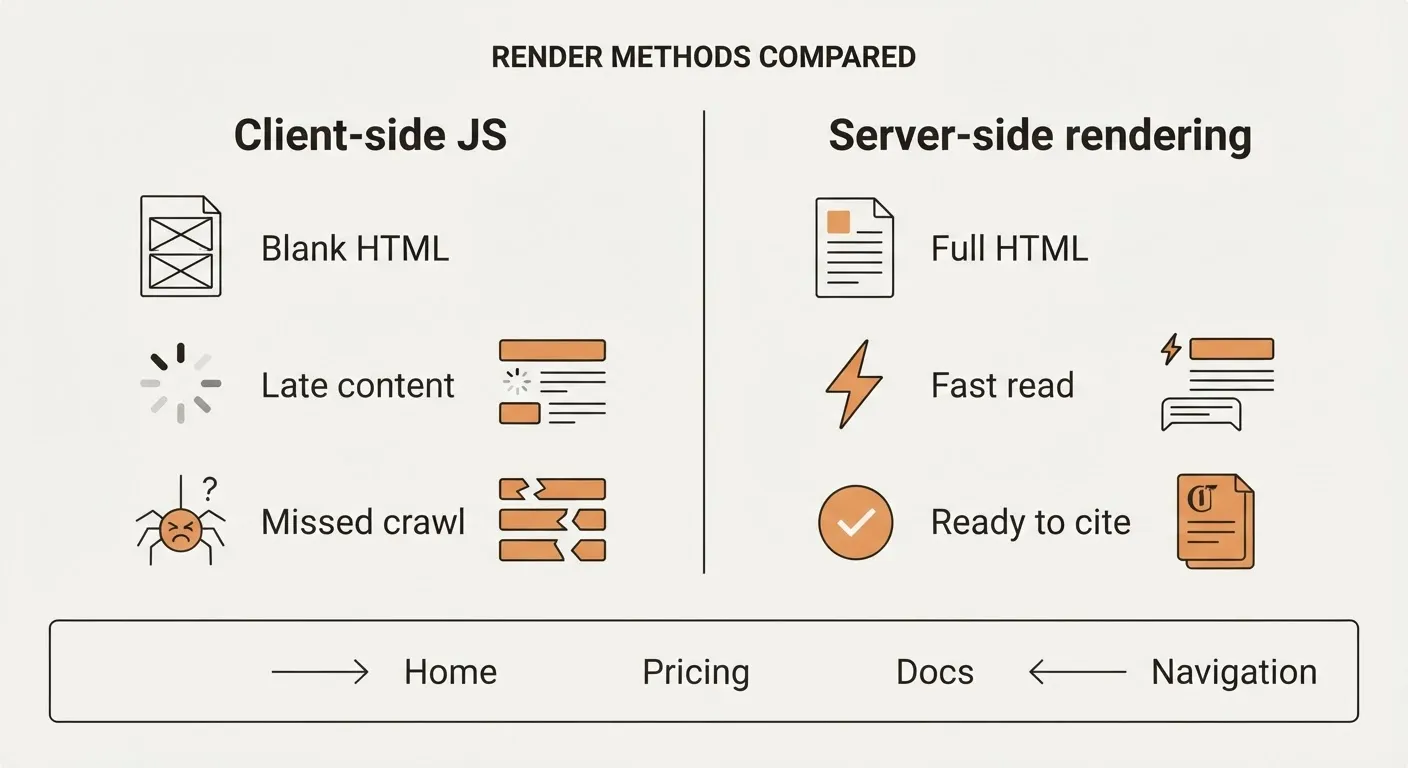
If your page only becomes readable after JavaScript runs, dynamic rendering is not your long-term answer. The durable fix is server-side rendering or prerendering so the crawler gets the real page copy in the initial HTML.
Google has already settled this. In its 2025 JavaScript SEO guidance, Google says dynamic rendering is a workaround, not a long-term solution, and recommends server-side rendering, static rendering, or hydration instead.
Start with the pages that carry your core facts:
- Homepage with category, ICP, and positioning in visible HTML
- Product pages with features, use cases, and proof above scripts
- Pricing pages with plans, limits, and FAQs in the source HTML
- Docs pages with setup steps, examples, and table content server-rendered
- Comparison pages with competitor names and differentiators in the initial response
- High-intent articles that answer category questions without script dependence
Use a simple test. Open view-source: on a key page.
If the headline, pricing copy, product description, and FAQ answers are missing from the raw HTML, your AI SEO problem starts there.
This is also where human experience improves alongside machine readability. When core content ships in HTML, pages load more predictably, render more stably, and ask less of the browser.
Once content is visible, the next mistake to remove is self-inflicted bot blocking.
Step 2: Structure robots.txt for AI Agents
A surprising number of SaaS sites are invisible not because rendering failed, but because robots.txt blocks the crawler they actually want cited by. The right pattern is selective permission, not copying a viral “block all AI bots” snippet from social posts.
A practical starting point looks like this:
User-agent: GPTBot
Disallow: /

User-agent: OAI-SearchBot
Allow: /

Sitemap: https://www.example.com/sitemap.xml
That setup blocks GPTBot training access while allowing OpenAI’s search crawler. Then review other agents such as Claude-Web and Perplexity against your own policy before adding rules.
- Allow answer crawlers you want surfacing your pages
- Block training bots if that matches your content policy
- Avoid blanket disallows copied without understanding the target bot
- Keep key pages within three clicks from your main navigation
- Publish clean XML sitemaps with canonical, live, indexable URLs only
This matters because search behavior is changing fast. In HubSpot’s 2026 State of Marketing report, about 4 in 10 marketers (40.60%) said updating SEO for search changes is a top trend.
The access layer is now set. Next, make your visible content easier for machines to understand correctly.
Step 3: Add Metadata AI Agents Can Parse Fast
Once your copy is visible, the job shifts from access to clarity. AI agents parse faster and with less guesswork when your pages combine semantic HTML with structured data that explains what the page, product, and company are.
This is not machine-first design. It is better page architecture for people and bots at the same time.
- Use semantic headings that match real user questions and page intent
- Put product facts in body HTML with lists, tables, specs, and FAQs
- Add JSON-LD Organization for company identity and official URLs
- Add JSON-LD Product or SoftwareApplication for feature and offer context
- Add FAQPage, Article, and Breadcrumb where the page genuinely supports them
For SaaS teams, this usually means making sure the page answers three things without ambiguity: what the product is, who it is for, and where the evidence lives.
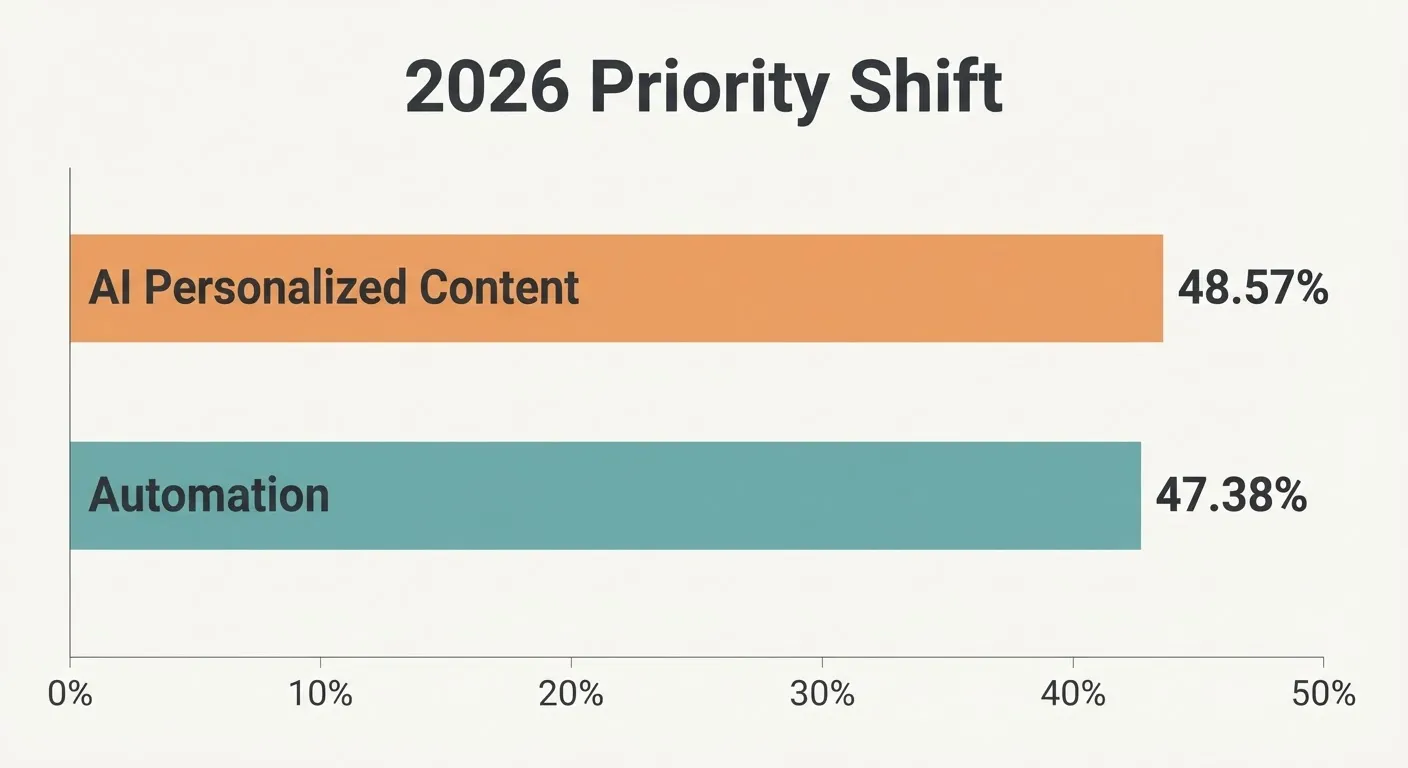
That matters because Forrester’s 2026 B2B predictions say nearly 1 in 3 buyers now view genAI tools as meaningful when committing to a purchase. At the same time, HubSpot’s 2026 marketing trends data found nearly half of marketers (48.57%) see AI-personalized content as a top trend, which means more teams are publishing at scale and need cleaner structure to avoid confusing machines.
If rendering makes you visible and metadata makes you understandable, the last step is proving any of it is happening.
Step 4: Monitor AI Crawler Optimization Health, Not Hype
You do not need another speculative file if your logs already show the truth. Real AI crawler optimization ends with log-based verification: which agents hit which URLs, what status codes they got, and whether the response HTML contained the copy you meant them to read.
Check these first:
- Bot hits by agent for GPTBot, OAI-SearchBot, Claude-Web, and Perplexity
- Status code patterns across 200s, redirects, 404s, and 5xx errors
- Redirect chains that waste crawl budget and delay access
- Response size and TTFB on key HTML pages
- HTML presence of titles, product copy, pricing, and FAQs in source responses
- Crawl depth for high-value pages buried too deep in navigation
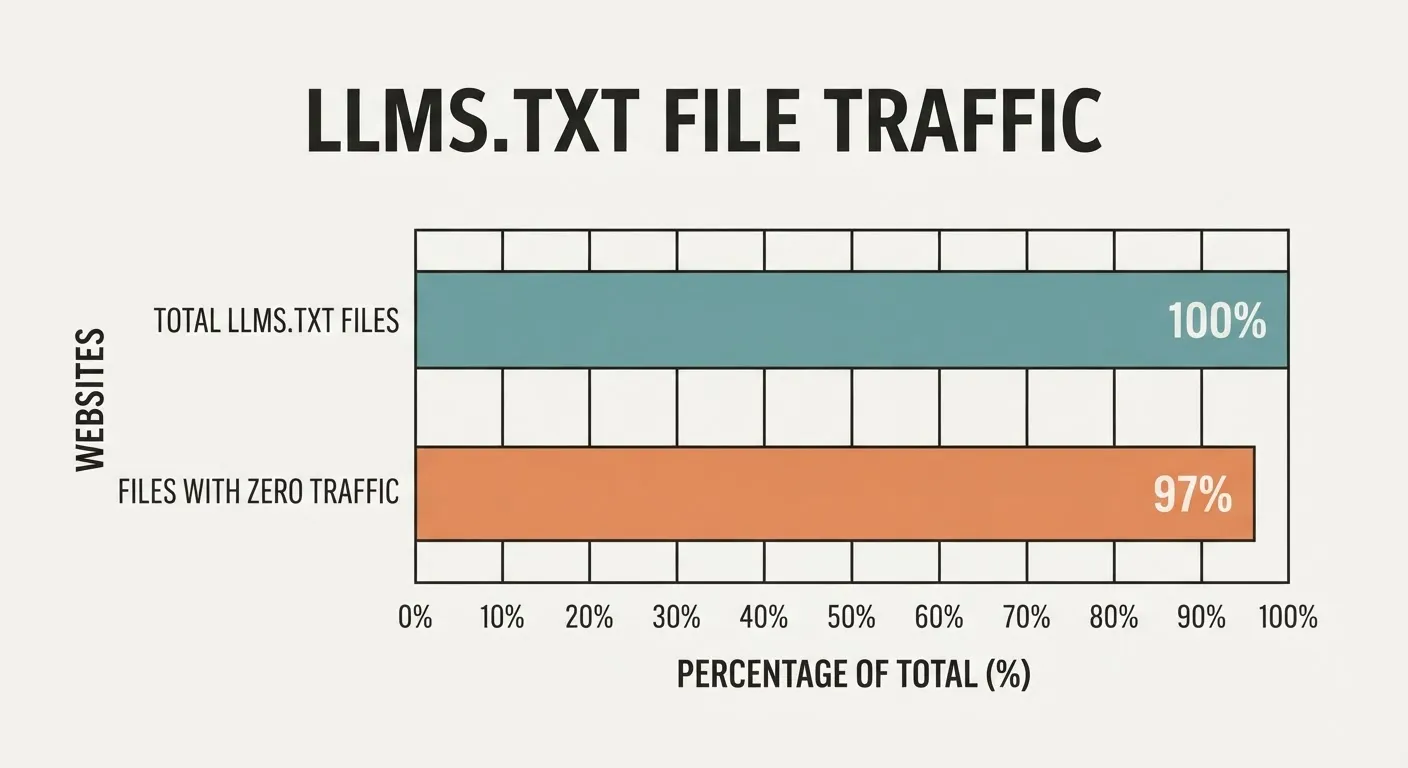
This is where the llms.txt reality check belongs. According to Ahrefs’ 2026 log analysis, 97% of published llms.txt files received zero traffic in May 2026 across 137,000 domains.
So skip the ritual unless your logs prove a crawler actually reads it. Put the effort into raw HTML visibility, clean sitemaps, and verified bot access instead.
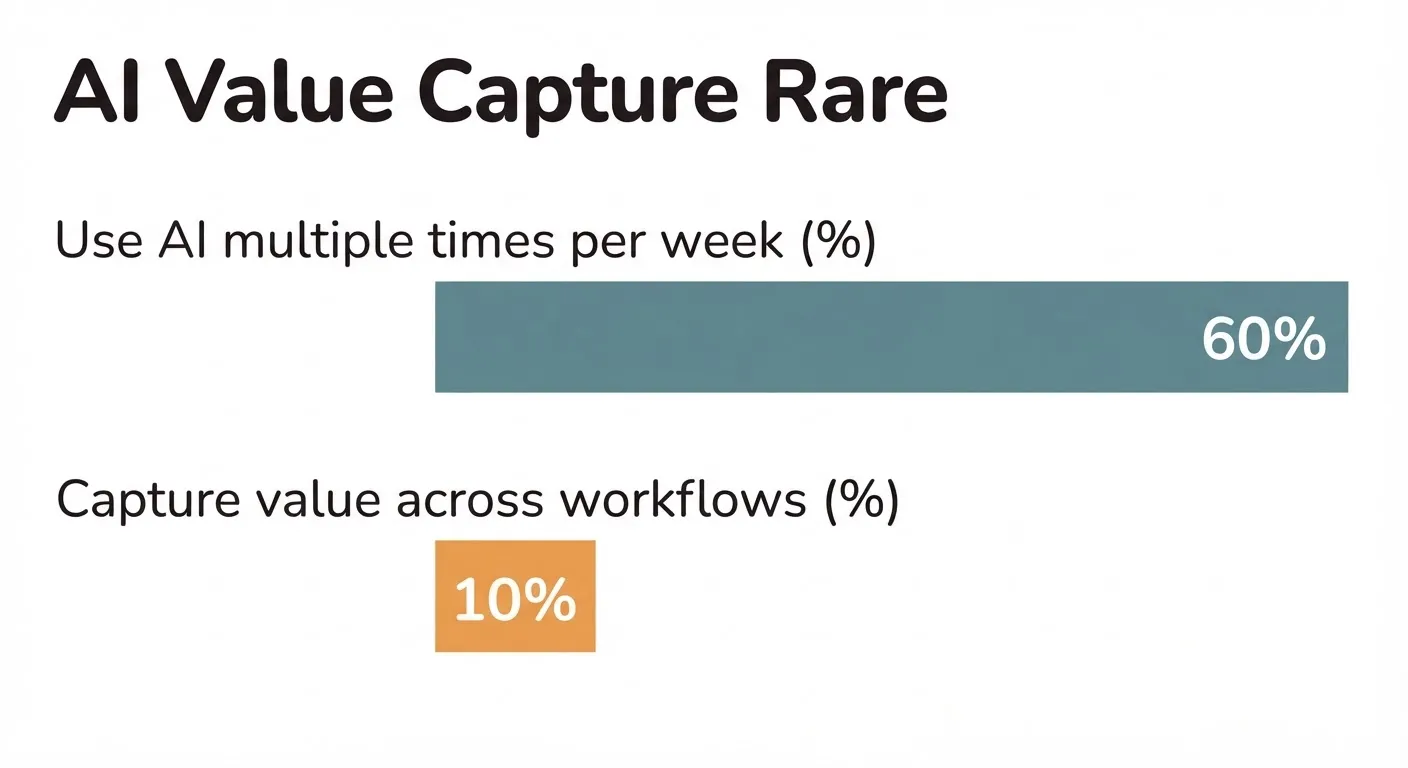
That discipline matters beyond SEO checklists. McKinsey’s March 2026 survey found nearly 6 in 10 marketers use AI multiple times per week, yet fewer than 1 in 10 capture value across end-to-end workflows. Monitoring is how you turn AI SEO from activity into a repeatable system.
So what should you do first, this week, without turning this into a quarter-long project?
Your Next Move This Week
Start with five URLs, not fifty. Audit the pages most likely to shape AI-assisted research and buying decisions.
Use this sequence:
- Audit five pages first: homepage, product, pricing, docs, and one high-intent article
- Check raw HTML with
view-source:for headline, core copy, and FAQs - Move missing content to SSR or prerendering if scripts are hiding it
- Review robots.txt to allow answer crawlers and block only what policy requires
- Submit clean XML sitemaps and keep every key page within three clicks
- Read logs weekly to confirm actual bot visits and healthy HTML responses
If you are asking, “How do I make my website readable by AI crawlers?” the direct answer is this: serve your important content in HTML before JavaScript runs, allow the right bots to crawl it, structure the page semantically, and verify all of it in server logs.
If you are asking, “Does dynamic rendering work for AI SEO in 2026?” the direct answer is no as a long-term strategy. Google’s 2025 guidance treats dynamic rendering as a workaround, not the durable fix.
That is also the most useful kind of automation mindset. McKinsey’s 2026 survey shows AI use is widespread, but end-to-end value remains rare, so the winning move is to build a reliable crawlable foundation before adding more layers.
Conclusion
Your site does not disappear from AI answers because it lacks ideas. It disappears because the machine never got the finished page.
Key takeaways:
- SSR beats dynamic rendering when you need reliable crawler visibility
- Selective bot access wins over blanket AI blocks and copied snippets
- Logs beat hype when validating AI SEO changes
The hook at the start still holds: a page can rank, convert, and still be invisible to AI agents if the important content appears only after JavaScript execution. That is why the four fixes in this playbook follow a strict order.
First, make your key pages crawlable in HTML. Second, use robots.txt intentionally so the agents you want can access them. Third, add semantic structure and JSON-LD so machines can classify your SaaS with less guesswork. Fourth, verify everything through logs instead of chasing rituals like llms.txt by default.
This is the practical core of AI crawler optimization, technical SEO for AI agents, and AI SEO in 2026. It also aligns with better user experience: faster pages, more stable rendering, cleaner architecture, and less infrastructure waste.
If you want a concrete next step, run the five-page audit this week: homepage, product, pricing, docs, and one high-intent article. Fix whatever is missing from raw HTML first, then clean up bot rules and start a weekly crawl-health review. That is how builders with no time to sell create organic marketing on loop that machines can actually read.
Frequently asked questions
How do I make my website readable by AI crawlers?
Serve your important content in HTML before JavaScript runs so crawlers can see it in the initial response. Then allow the right bots in robots.txt, add clear semantic structure and metadata, and verify actual crawl activity in your server logs.
Does dynamic rendering work for AI SEO in 2026?
Not as a long-term strategy. The article notes that Google treats dynamic rendering as a workaround and recommends server-side rendering, static rendering, or hydration instead.
Should I block all AI bots in robots.txt?
Usually no. The safer approach is selective permission: allow answer crawlers you want surfacing your pages and block training bots only if that matches your policy.
Is llms.txt worth adding?
Only if your logs show a crawler actually uses it. The article’s recommendation is to prioritize raw HTML visibility, clean XML sitemaps, and verified bot access before spending time on speculative files.
References
- Google Search Central, Understand JavaScript SEO Basics: https://developers.google.com/search/docs/crawling-indexing/javascript/javascript-seo-basics
- HubSpot, 2026 State of Marketing: Data from 1,500+ Global Marketers: https://blog.hubspot.com/marketing/hubspot-blog-marketing-industry-trends-report
- McKinsey, From anxiety to advantage: A marketing organization that thrives with AI: https://www.mckinsey.com/capabilities/growth-marketing-and-sales/our-insights/from-anxiety-to-advantage-a-marketing-organization-that-thrives-with-ai
- Forrester, 2026 Predictions Guide: B2B Marketing, Sales, & Product: https://www.forrester.com/predictions/b2b-2026/
- Forrester, AI Is Accelerating The Great GTM Reset For Partner Ecosystems: https://www.forrester.com/blogs/ai-is-accelerating-the-great-gtm-reset-for-partner-ecosystems/
- Ahrefs, We Analyzed 137K Sites: 97% of llms.txt Files Never Get Read: https://ahrefs.com/blog/llmstxt-study/
- Cloudflare, Why we're rethinking cache for the AI era: https://blog.cloudflare.com/rethinking-cache-ai-humans/
- Forrester, B2B Buyers Make Zero-Click Buying Number One: https://www.forrester.com/blogs/b2b_buyers_make_zero-click-buying-number-one/