
case_study
$889 on Ads, Zero Signups — Our B2B Organic Growth Automation Ledger
August 27, 2026 · 8 min read · Scout7
Our B2B organic growth automation ledger: $889.44 of ads, zero signups, and a 46% traffic drop within three days of switching the comment agent off.
Introduction
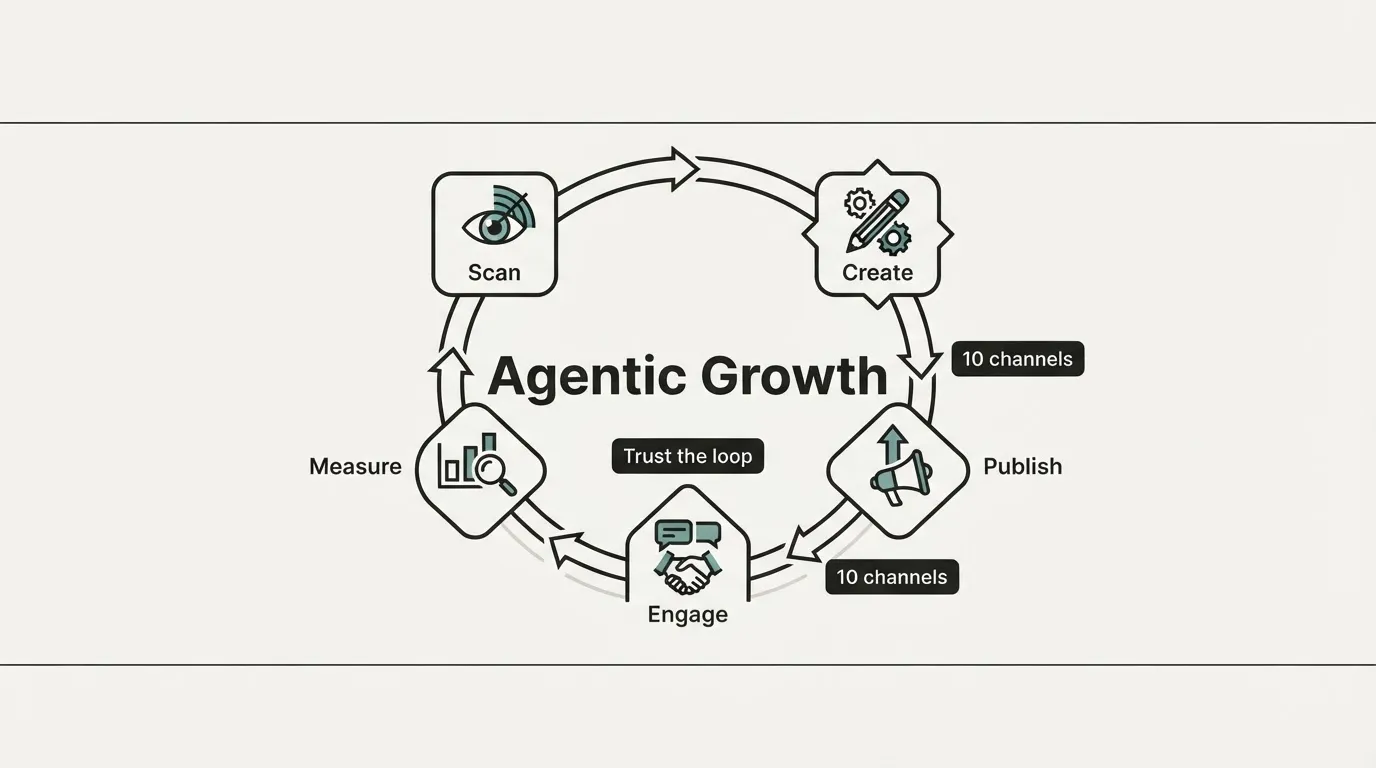
You are building product all day, and marketing still expects you to show up everywhere: search, social, comments, follow-up, analytics, and the next post. B2B organic growth automation works when you stop treating marketing like a calendar and start treating it like a measurable loop that keeps scanning, creating, publishing, engaging, and measuring while you keep building.
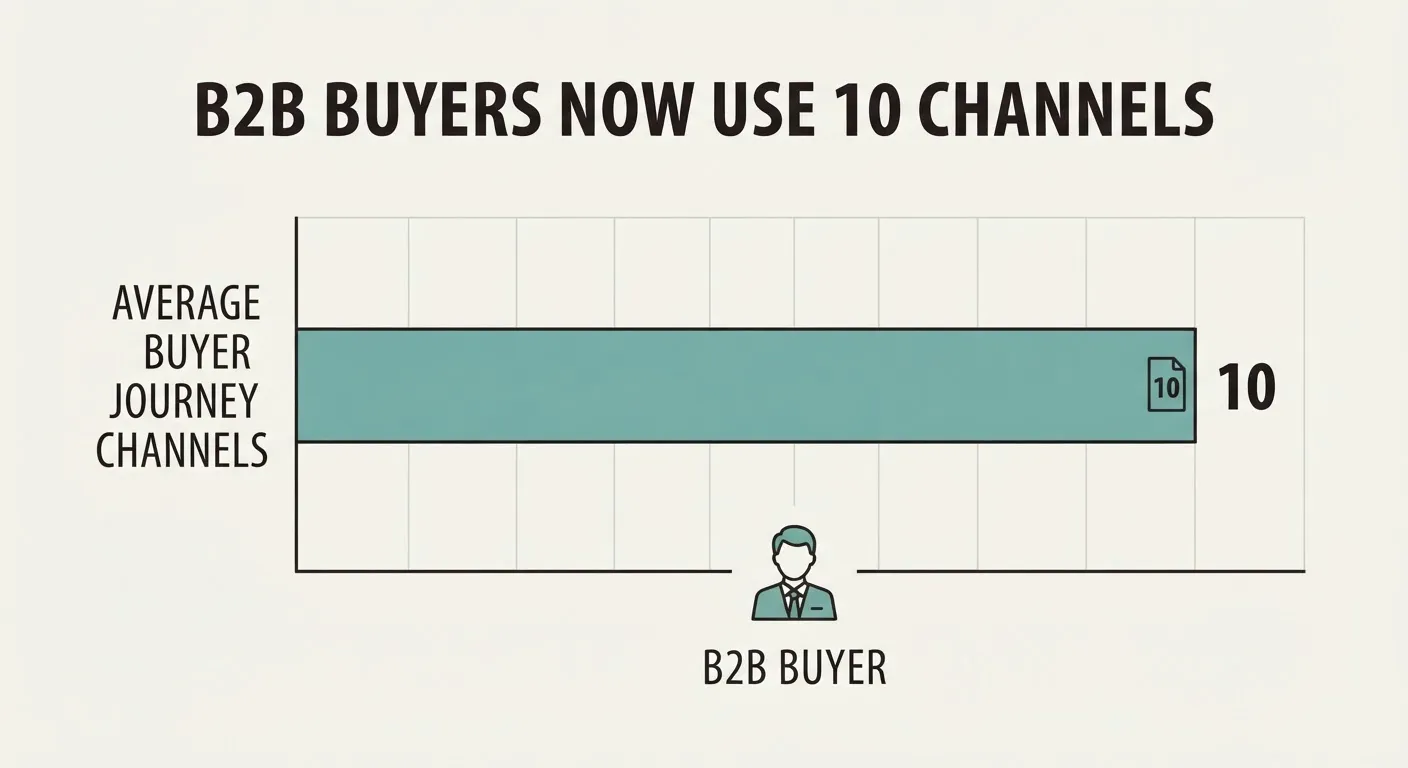
This pressure is not hypothetical. According to McKinsey’s 2026 Global B2B Pulse Survey, B2B buyers now use an average of 10 channels during the purchasing journey.
Key takeaways:
- Manual content calendars break across a 10-channel buyer journey
- Agentic loops remove execution drag without replacing human judgment
- Shutoff tests reveal contribution better than vanity metrics do
- One real run beat assumptions on ads, engagement, and traffic
This case study follows one solo founder’s published run, labeled where content was AI-assisted with Scout7, to show what happened when the loop ran and what changed when parts of it were switched off.
The 10-Channel Trap
And that is the real trap: the problem is rarely ideas. The problem is surface area.
For a B2B SaaS founder—someone building and selling software to other businesses—the bottleneck is often simple:
- Write the post while building the product
- Publish consistently across more than one channel
- Follow up fast when people engage
- Measure results honestly before the next sprint starts
According to McKinsey’s research, buyers now move across an average of 10 channels before buying.
That changes the operating model. Organic Growth is the process of expanding a business’s reach, audience, or revenue through non-paid channels, and in B2B it now depends on showing up repeatedly across a fragmented journey.
The founder’s argument here is practical, not ideological: agentic automation is a bridge for lean operators. It removes the volume bottleneck, not the need for strategy, which leads to the better model.
From Manual Calendars to B2B Organic Growth Automation
So if a calendar cannot keep up, what replaces it? A loop does.
A static content calendar assumes marketing is mostly scheduling. An AI Agent is a software system capable of perceiving its environment, reasoning through complex tasks, and executing autonomous actions, which makes it better suited to continuous marketing work than a fixed publishing plan.
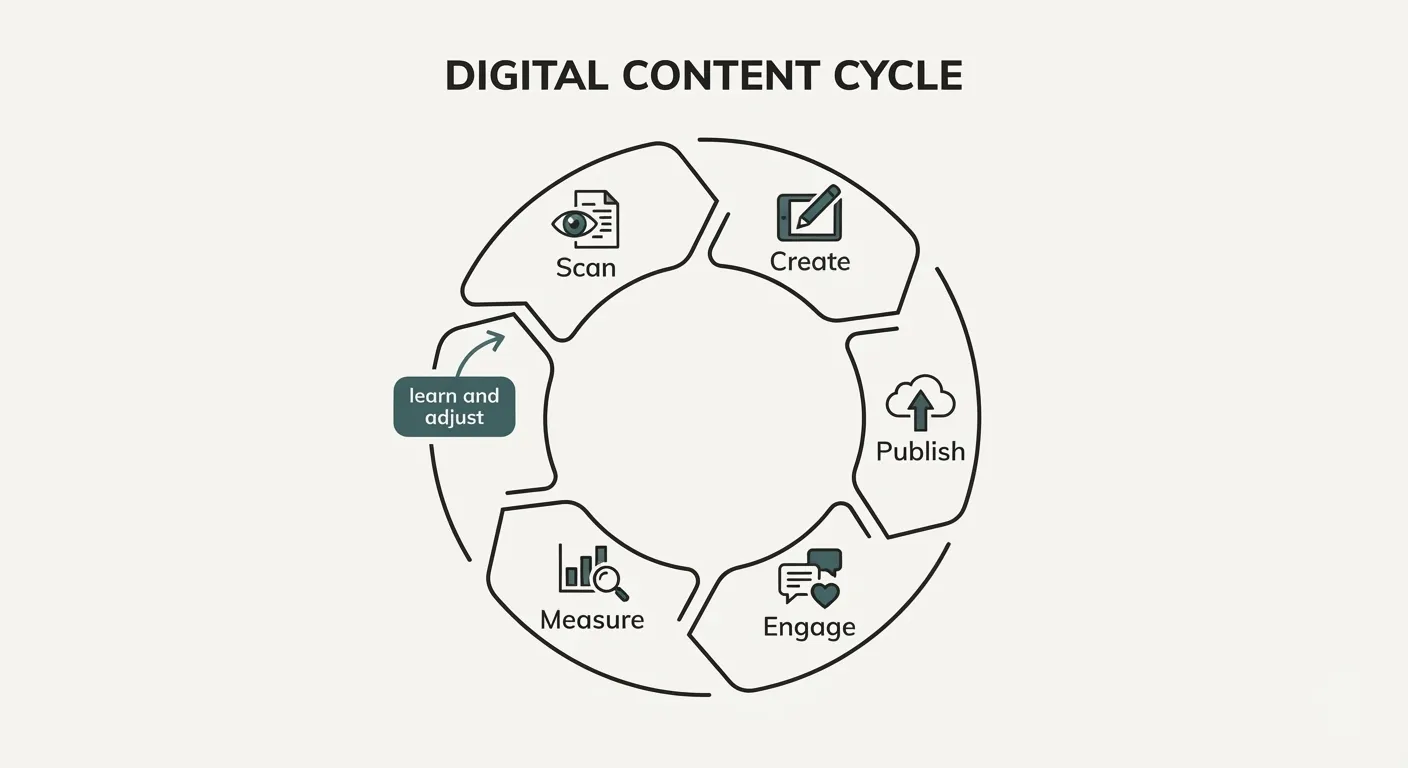
An agentic loop looks like this:
- Scan for topics, conversations, and buyer signals
- Create assets for articles, posts, and supporting formats
- Publish across the channels that matter
- Engage with replies, comments, and follow-up touchpoints
- Measure what changed, then adapt the next cycle
That shift is happening fast. In a 2026 survey of 402 CMOs, Gartner found AI-driven automation is expected to rise from 16% of marketing work in 2026 to 36% by 2028.
At the same time, Adobe’s 2026 B2B journey research found most organizations expect agentic AI to manage at least half of customer interactions in the near future.
That still leaves one question: what does this look like when a real operator actually runs it?
Case Study: What Happened When the Loop Ran
Here is the useful part: one close run tells the story better than ten tool roundups.
In this published, AI-assisted run using Scout7, the founder disclosed:
- $889.44 spent in total
- 667,395 impressions generated
- Zero paid signups from ads
- 949 automated comments posted in 10 days
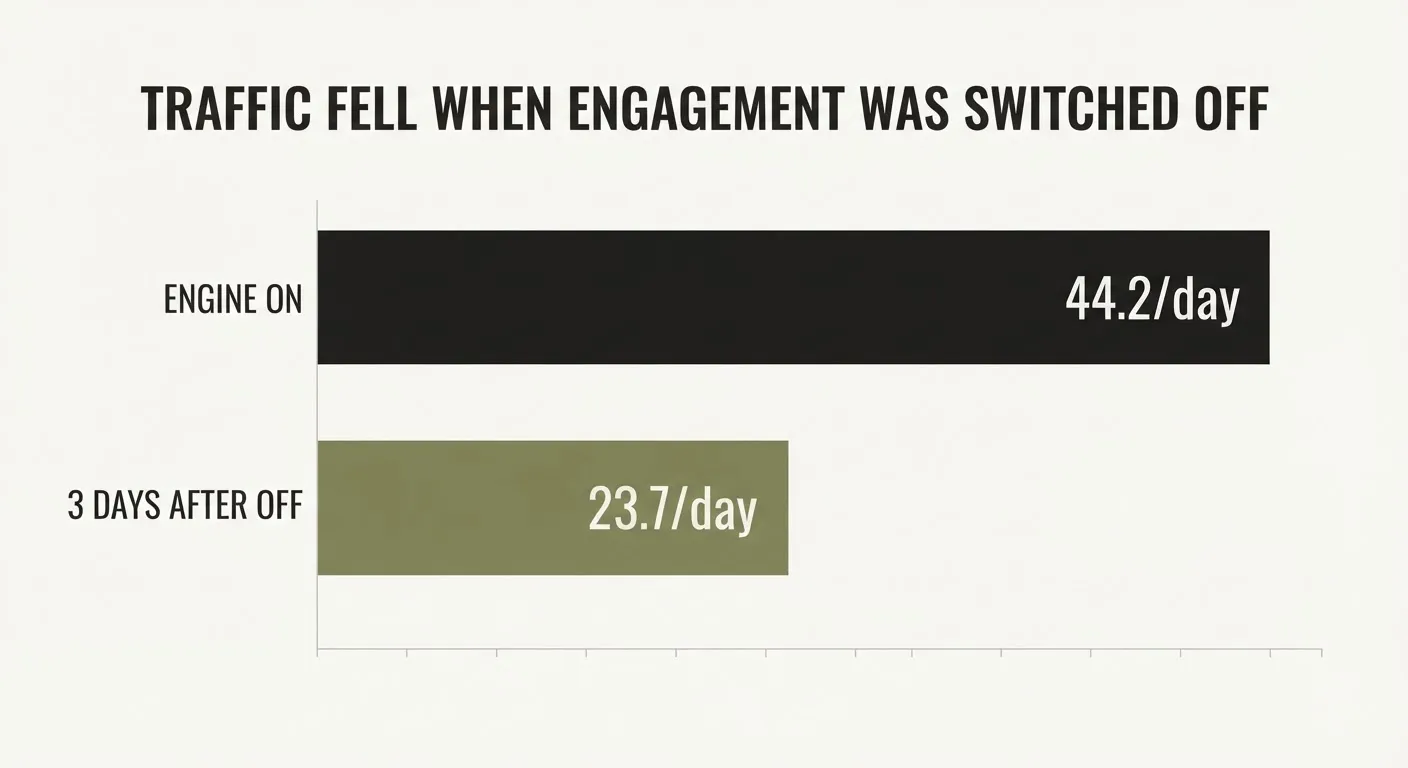
- 44.2 organic visits/day with engagement on
- 23.7 organic visits/day three days after engagement switched off
The point was not that every tactic worked. The point was that measurement exposed what actually mattered.
This is where basic metrics matter. Paid ads are sponsored placements you buy for visibility; they can generate reach quickly, but they do not always produce efficient outcomes. Customer acquisition cost is the cost to acquire a customer, and if spend produces no measurable signups, CAC effectively worsens because cost rises without conversions.
ROI is return on investment: what you get back relative to what you spend. In this run, ad spend created impressions but no paid signups, so the measurable ROI from that spend was unclear. Engagement looked different.
The founder switched systems off to test contribution. Ads off cost nothing measurable, while engagement off cut organic traffic by roughly 46% within three days.
Based on what we saw when we switched parts of the loop off, the value of agentic AI was not replacing judgment but making enough execution happen for judgment to be tested.
That matters more now because discovery itself is changing. G2’s 2026 Buyer Behavior Report found 8 in 10 B2B software buyers use AI search to buy more efficiently, while McKinsey also found about 71% of B2B companies now offer e-commerce.
In other words, always-on organic visibility now affects both discovery and conversion paths, which brings the operational question back into focus.
The Skills Gap Solution
Once you accept the loop, the blocker becomes obvious: who is going to run it?
The founder’s experience was blunt. The bottleneck was never having the idea or the skill; it was getting the thing written, posted, and followed up while also building the product.
That is why marketing automation matters here. It is the use of software to automate repeatable marketing tasks, and for lean B2B teams its value is not magic copy generation. Its value is consistent execution.
The wider research supports that gap:
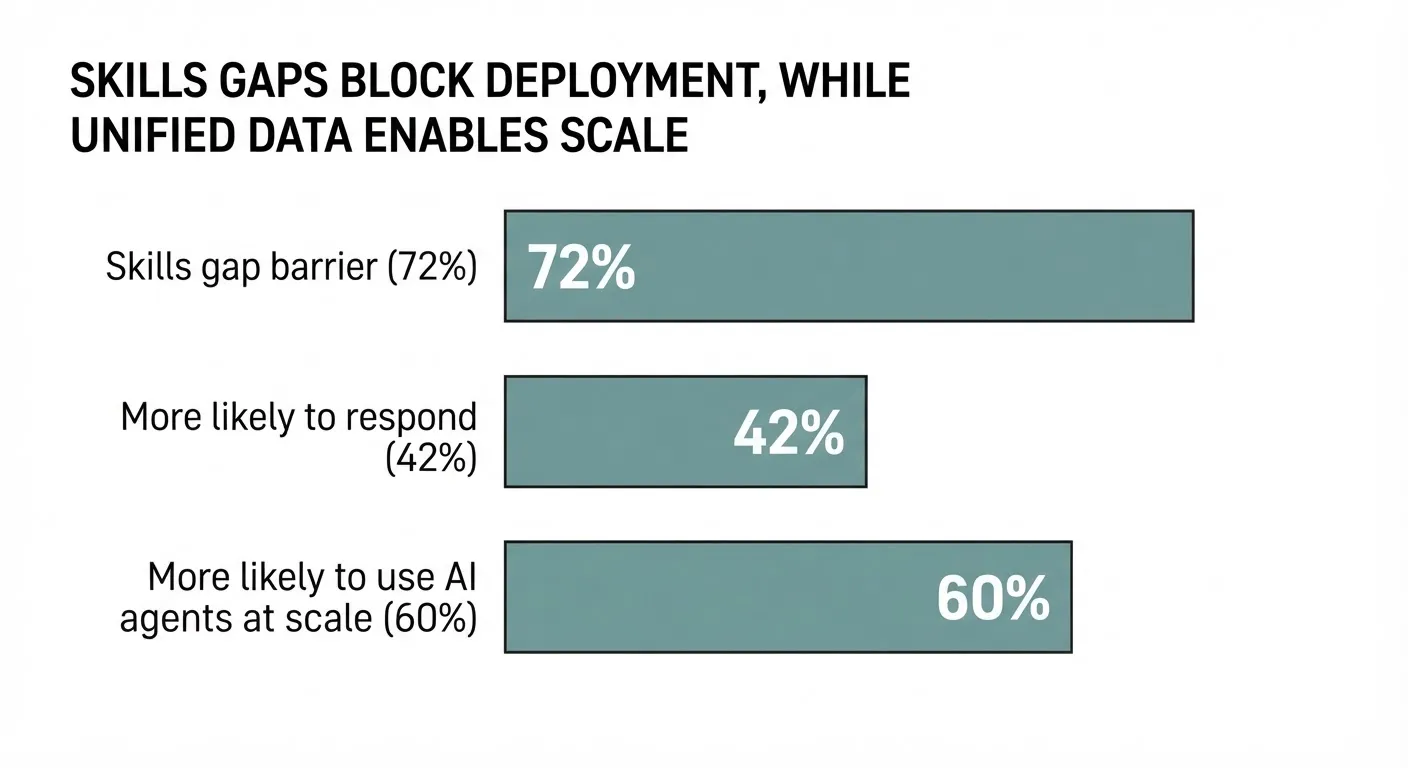
- Adobe found nearly 3 in 4 organizations (72%) cite skills gaps as a major barrier to deploying agentic AI
- Salesforce found teams satisfied with unified data are 42% more likely to regularly respond to customers
- The same Salesforce research found those teams are 60% more likely to use AI agents at scale
- McKinsey found market leaders are 4 times more likely to deploy true one-to-one personalization
Nobody got replaced in this story; there was never a team to replace.
The harder part was trust. The founder only learned what worked by running shutoff tests, and most teams never run them because evidence forces tradeoffs.
What This Means for Lean B2B Teams
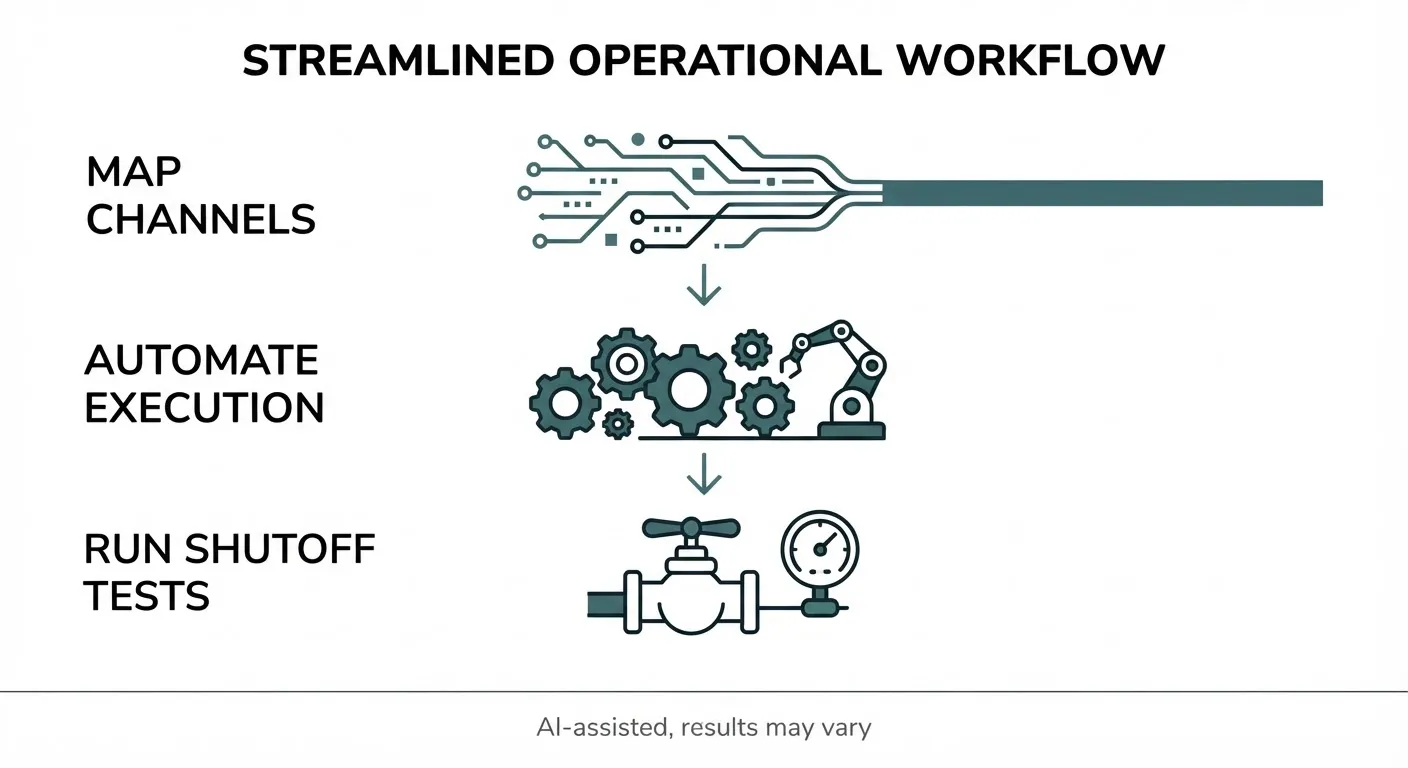
So the lesson from this run is simple: automate the loop, not the judgment.
If you are asking how to automate B2B organic marketing, the answer is to build an end-to-end system that scans for demand, creates assets, publishes consistently, engages with the market, and measures outcomes with shutoff tests.
If you are asking about the benefits of AI agents for B2B growth, the practical gains are clear:
- More output without expanding headcount
- Faster follow-up across fragmented channels
- More honest measurement through switch-off experiments
- Better organic coverage where buyers and AI search tools discover vendors
That model fits Scout7’s core loop: an autonomous marketing growth loop run by an AI agent over MCP, from Claude or whichever agent you already have open. Scout7’s value is operational: one-line integration and an end-to-end system that can scan, create, publish, engage, backlink, and measure.
McKinsey found buyers now span 10 channels, so lean teams need systems that can show up across that journey.
Use agents to remove execution drag. Then disclose AI assistance clearly, respect consent and privacy requirements, and qualify outcomes because results may vary.
Frequently asked questions
Why did $889 of ads produce zero signups?
The spend bought cheap attention — a blended $0.13 per click across 667,395 impressions — but none of it converted at any point over nine weeks. Every one of the 57 signups in the window arrived from organic or untagged sources, which is why the ledger, not the impression count, is the number to judge.
How do you know the comment agent caused the traffic drop?
Because the shutoff was the only change. Between the engine-on window and the three days after it was switched off there were no ads and no posts running — organic fell from 44.2 to 23.7 visits a day, a 46% drop, while switching ads off earlier had cost nothing measurable.
Isn't 949 automated comments in 10 days spam?
It held up because every comment drew from one written brand story, with a banned-phrases list, platform caps, and human review of exceptions. Three of the 949 were retracted and one was removed by a moderator — a 0.3% miss rate, published here rather than hidden.
What does B2B organic growth automation look like in practice?
It is a loop — scan, create, publish, engage, measure — run by an AI agent inside written guardrails, with a human approving the plan and owning the exceptions. The proof it is working is the shutoff experiment: switch it off, and the graph should move.
References
- McKinsey — The surprising economics of B2B growth: The new survival threshold—and what it takes to thrive (PDF)
- Adobe — 2026 AI and Digital Trends in B2B Journey Orchestration
- Gartner — Survey Reveals Marketing Leaders Expect AI Automation of Marketing Work to Double to 36% By 2028
- G2 — 2026 Buyer Behavior Report
- Salesforce — State of Marketing 2026
- McKinsey — The surprising economics of B2B growth: The new survival threshold—and what it takes to thrive