
guide
AI Search Optimization: 40% of AI Citations Start in Google
August 27, 2026 · 12 min read · Scout7
A practical guide to AI search optimization: how ChatGPT, Perplexity, and Google AI Overviews discover, retrieve, and cite your content.
~8 min read
Introduction
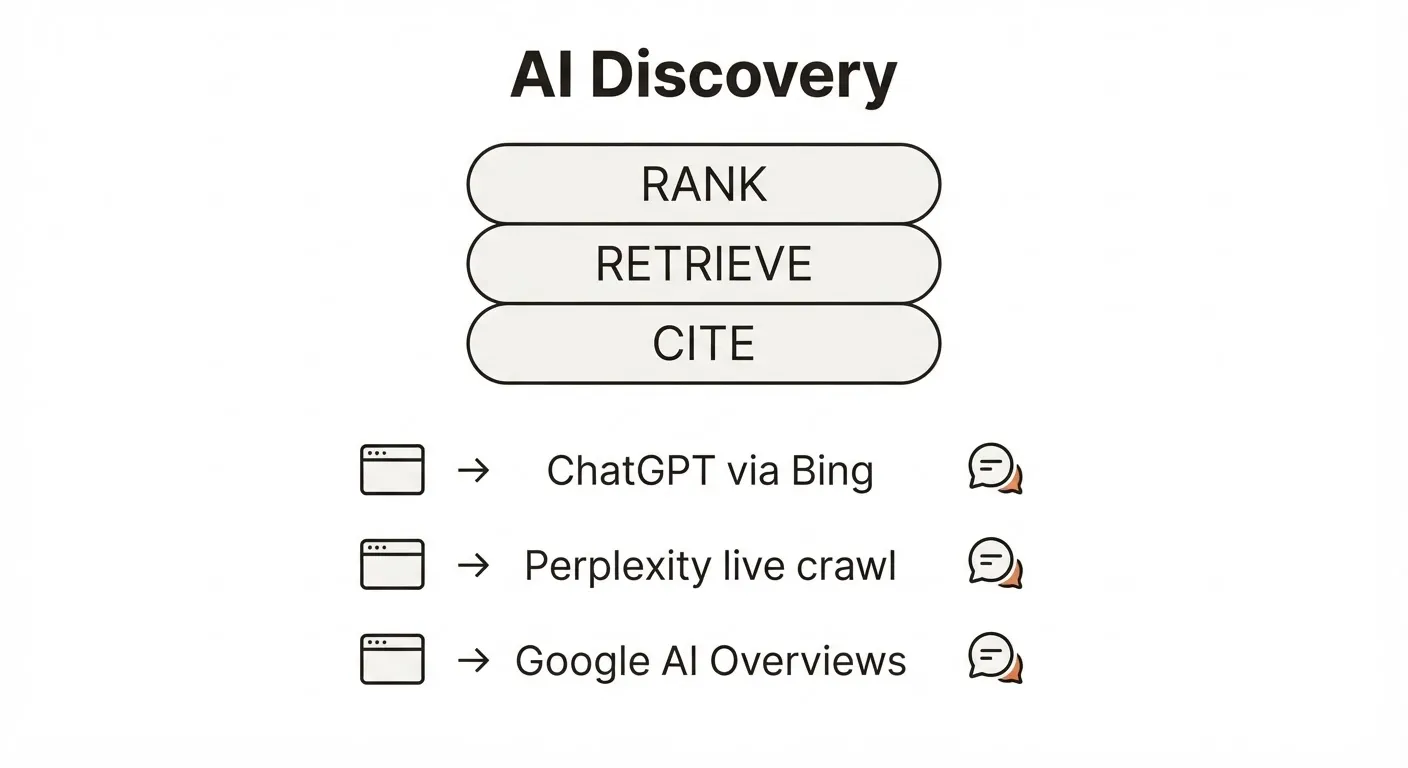
You win the ranking, then watch the answer box take the attention anyway. That is why AI search optimization now means two jobs: rank well enough to be eligible, then make your page easy for AI systems to retrieve, quote, and cite inside the answer itself.
That shift is not theoretical anymore. Buyers increasingly trust synthesized answers before they ever click, which means visibility now lives in both classic search and AI-generated responses.
Key takeaways:
- Ranking is still the entry ticket for many AI citations
- Retrieval is the new multiplier after indexing
- Each engine discovers pages differently before citing them
- Citation tracking now matters as much as click tracking
This guide takes a mechanics-first view because the confusion usually starts there. Teams often lump crawling, indexing, ranking, retrieval, and citation into one blurry process, when they are actually five different gates.
And once you see those gates clearly, the next question becomes obvious: if the blue link no longer owns the whole interaction, what changed for the value of rank itself?
The Blue Link Lost Its Monopoly
That matters because the old prize was a click, and the new prize is often inclusion in the answer before the click ever happens. Search has not disappeared, but the surface where buyers make decisions has widened.
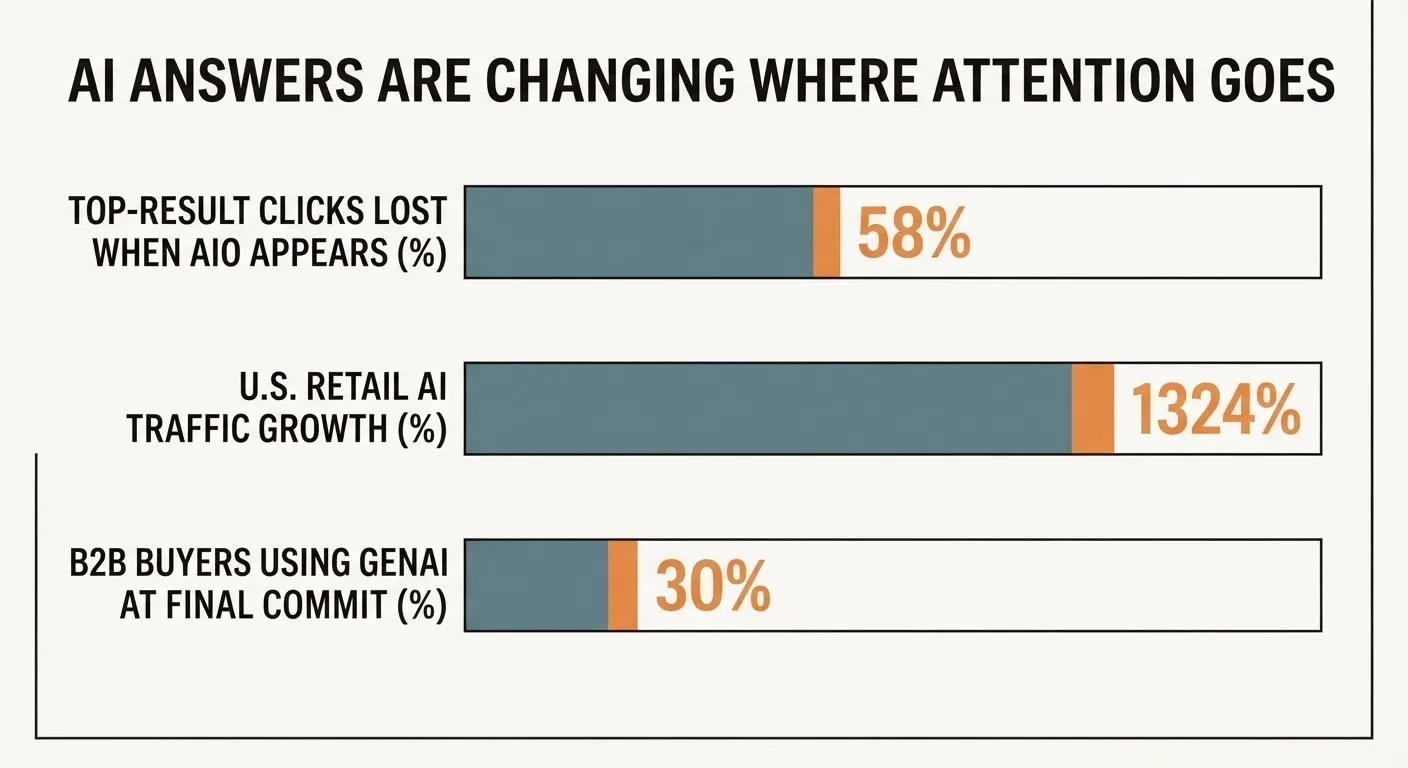
According to Ahrefs’ February 2026 update, when a Google AI Overview appears, the #1 organic result gets about 58% fewer clicks on average. Ahrefs also found CTR for AI Overview-triggering keywords fell from 0.073 to 0.016 between December 2023 and December 2025.
Research from Semrush’s 2026 AI Visibility Index shows AI traffic to U.S. retail sites surged 1,324% between October 2024 and May 2026. In other words, AI-mediated discovery is not a side channel anymore.
And the buyer behavior is moving with it. Forrester’s 2026 B2B predictions says 30% of B2B buyers in 2025 treated genAI as a meaningful interaction during the final commit stage.
The fight is no longer just for rank. It is for a spot inside the answer buyers trust.
So if AI answers are reshaping attention, the next thing to unpack is how those systems actually find your pages in the first place.
How AI Agents Actually Find Your Pages
AI agents find content through a chain of gates: crawl, index, rank, retrieve, then cite. If your page fails early in that chain, it usually never gets a chance later.
An AI crawler is the bot that discovers and reads your page. This is where technical SEO matters: crawlability, rendering, robots.txt rules, internal links, canonicals, and page speed all affect whether a system can access the content at all.
Then comes indexing. Indexing stores the page as a searchable record, and modern systems increasingly represent pages semantically too, not just as keyword strings. That is why a page can become relevant for related questions even when the wording changes.
Ranking is the next gate. In practice, ranking is eligibility.
- Crawling is discovery of the URL and its visible content
- Indexing is storage plus representation of what the page means
- Ranking is eligibility for many answer systems
- Retrieval is passage selection for a specific prompt
- Citation is attribution inside the final answer
Google makes this more obvious than most. According to Google Search Central’s AI features documentation, AI Overviews and AI Mode can use query fan-out, which means Google may run multiple related searches across subtopics before composing an answer.
That has a practical implication for AEO and Generative Engine Optimization. If your page only barely matches one keyword, it may miss the wider cluster of adjacent questions the engine actually uses during retrieval.
The engines also differ:
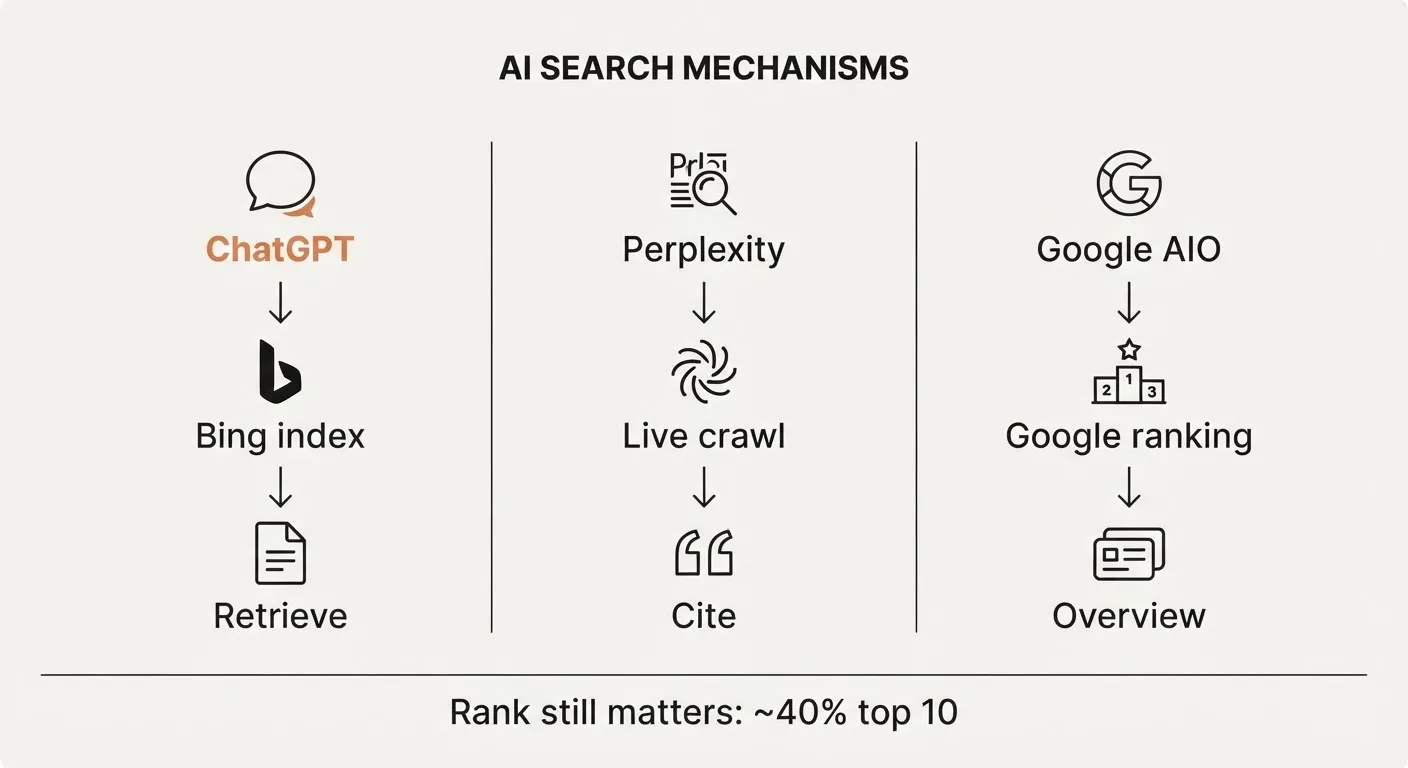
- ChatGPT often depends on Bing-backed web retrieval, so Bing visibility still matters
- Perplexity can crawl the live web, making freshness and accessible pages more visible
- Google AI Overviews pull from pages already ranking in Google’s systems
- About 40% of AI citations still come from pages already in the top 10
That is the core thesis of this piece: AI search optimization is not replacing SEO. It is stacking a retrieve-and-cite layer on top of it.
Based on what we saw from the mechanics-first perspective behind this guide, the useful frame is not “SEO is dead,” but “ranking is the foundation and retrieval is the multiplier.”
But once a page is discovered and indexed, another trap appears: teams assume speed alone means they will stay visible.
Indexing Fast Is Not the Same as Being Chosen
That assumption breaks fast in AI search. A page can be crawled quickly, indexed quickly, and still fail to earn durable visibility.
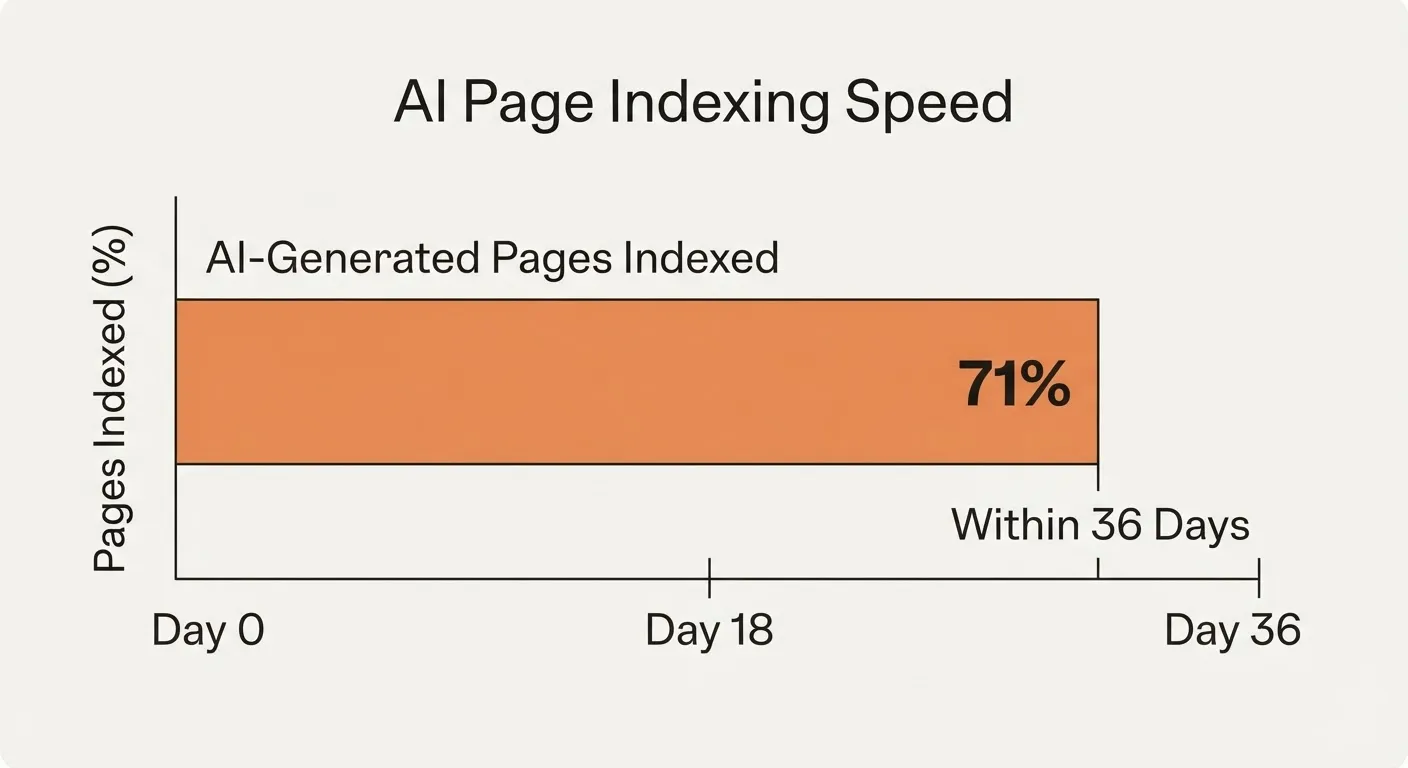
A useful example comes from Search Engine Land’s 16-month experiment with SE Ranking. Across 20 new domains publishing 2,000 unedited AI-generated articles, about 71% of pages were indexed within 36 days.
At first glance, that sounds promising. The same experiment also generated more than 122,000 impressions and 244 clicks early on.
But the point of the study is the fade. Fast indexing did not create lasting traffic, durable rankings, or reliable discoverability.
- Indexing speed is access, not endorsement
- Early impressions can be temporary before systems reassess usefulness
- Thin pages may surface briefly then disappear from meaningful queries
- Retrieval rewards relevance and clarity after indexing happens
This is where many teams confuse technical progress with business progress. Yes, technical SEO still matters because a page must be crawlable and indexable first. But after that, the systems still ask: is this the best passage for this question right now?
And that leads to the next hard part. If clicks no longer tell the whole story, what should teams measure instead?
The New Metric Is Citation, Not Just Click
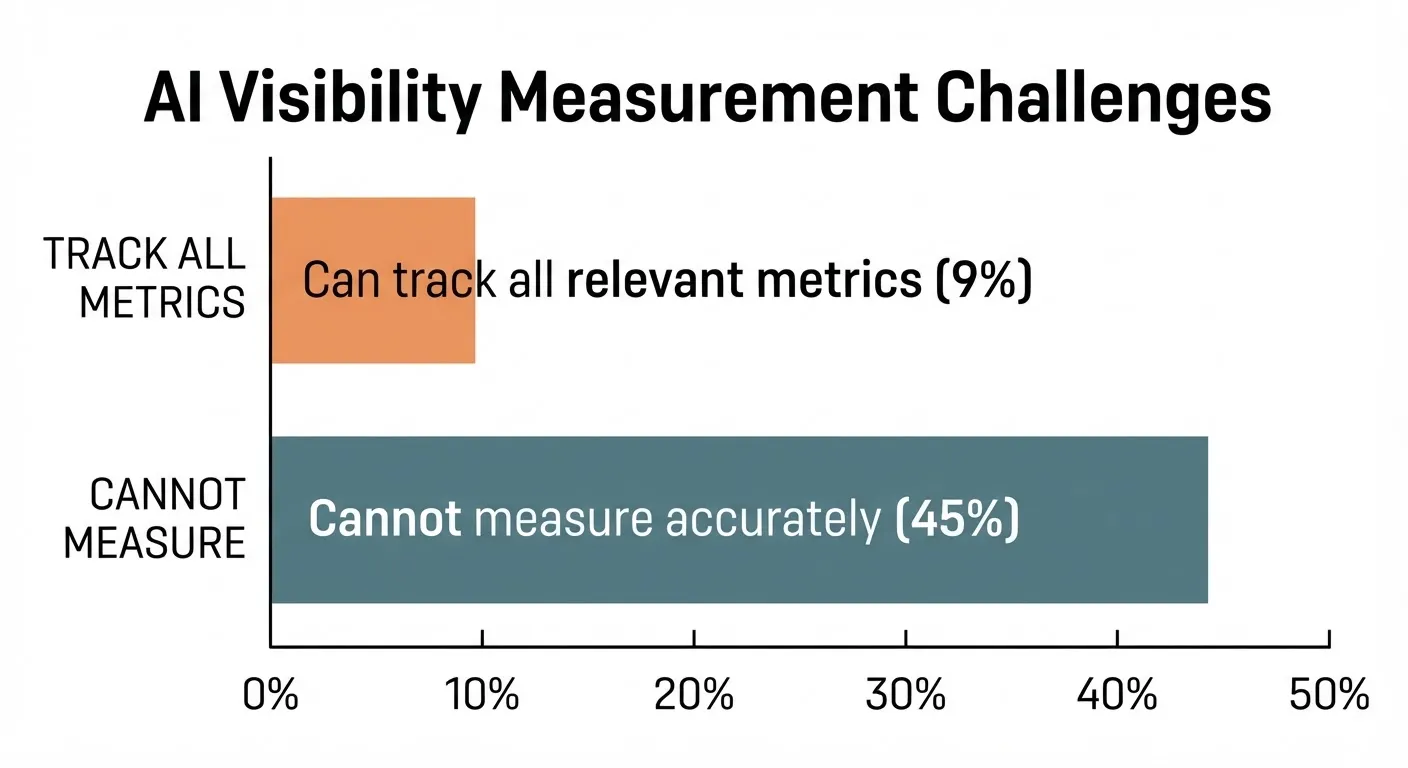
The short answer is this: if your dashboard only measures clicks, it misses part of the new visibility model. You now need proxies for mentions, citations, and AI-assisted discovery.
According to Semrush’s 2026 AI Visibility Index, about 45% of marketing leaders cannot accurately measure their brand visibility inside AI-generated answers. The same release says only 9% can track all relevant AI visibility metrics across platforms.
That gap says a lot. The issue is not that AI visibility is impossible to measure. It is that most teams still use old reporting for a new surface.
The practical fix is to track proxy signals:
- AI mentions across priority buyer prompts
- Citation frequency by page, topic, and brand
- Referral traffic from AI tools and answer engines
- Share of voice on high-intent buyer questions
- Organic traffic alongside citation growth, not instead of it
This is where marketing automation becomes useful for content teams. Not “generic marketing automation,” but a repeatable system that publishes, monitors mentions, compares prompts over time, and feeds the next content update.
If old metrics are incomplete, the next question is what to change on-page so ranked content becomes easier for machines to choose.
AI Search Optimization for the Agent Without Abandoning SEO
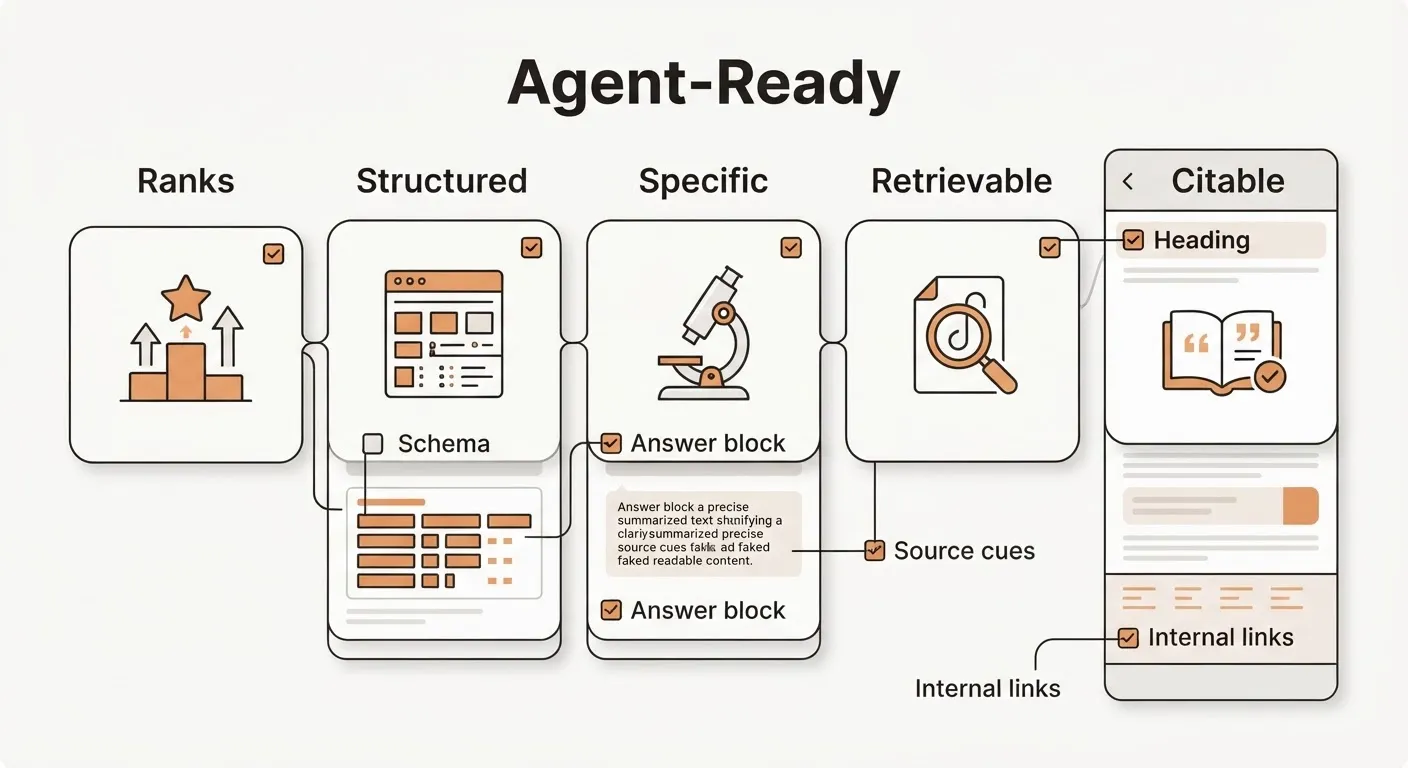
Generative Engine Optimization is the practice of making rankable content easier for AI systems to retrieve, interpret, and cite accurately. It matters because AI answers rarely quote your whole page; they select passages.
So no, the move is not to abandon SEO. SEO is still the foundation because rankings often determine whether a page even becomes a candidate for retrieval.
That matters even more as agentic workflows spread. Forrester’s 2026 agency research says 9 in 10 U.S. marketing agencies use generative AI, and 50% already use agentic AI for marketing execution.
At the same time, adoption alone does not guarantee outcomes. Wynter’s 2026 B2B AI study found 47% of teams had reduced or stopped backfilling marketing roles due to AI, yet 53% said AI had not delivered ROI.
That is the warning. Automation without retrieval-ready content is just faster waste.
What agent-ready pages do well:
- Answer one buyer question clearly near the top
- Use strong headings that map to sub-questions
- State claims directly so passages stand alone
- Add structured data where relevant and accurate
- Keep topical focus tight at the page level
- Write for query fan-out across adjacent intents
This is the bridge between AEO, technical SEO, and GEO. AEO helps you answer extractable questions. Technical SEO helps crawlers access the page. GEO helps answer engines retrieve and cite the right passage.
If that sounds like more work, it is. But the teams that win are rarely the ones producing one heroic page and hoping it lasts forever.
The Streak Is the Strategy
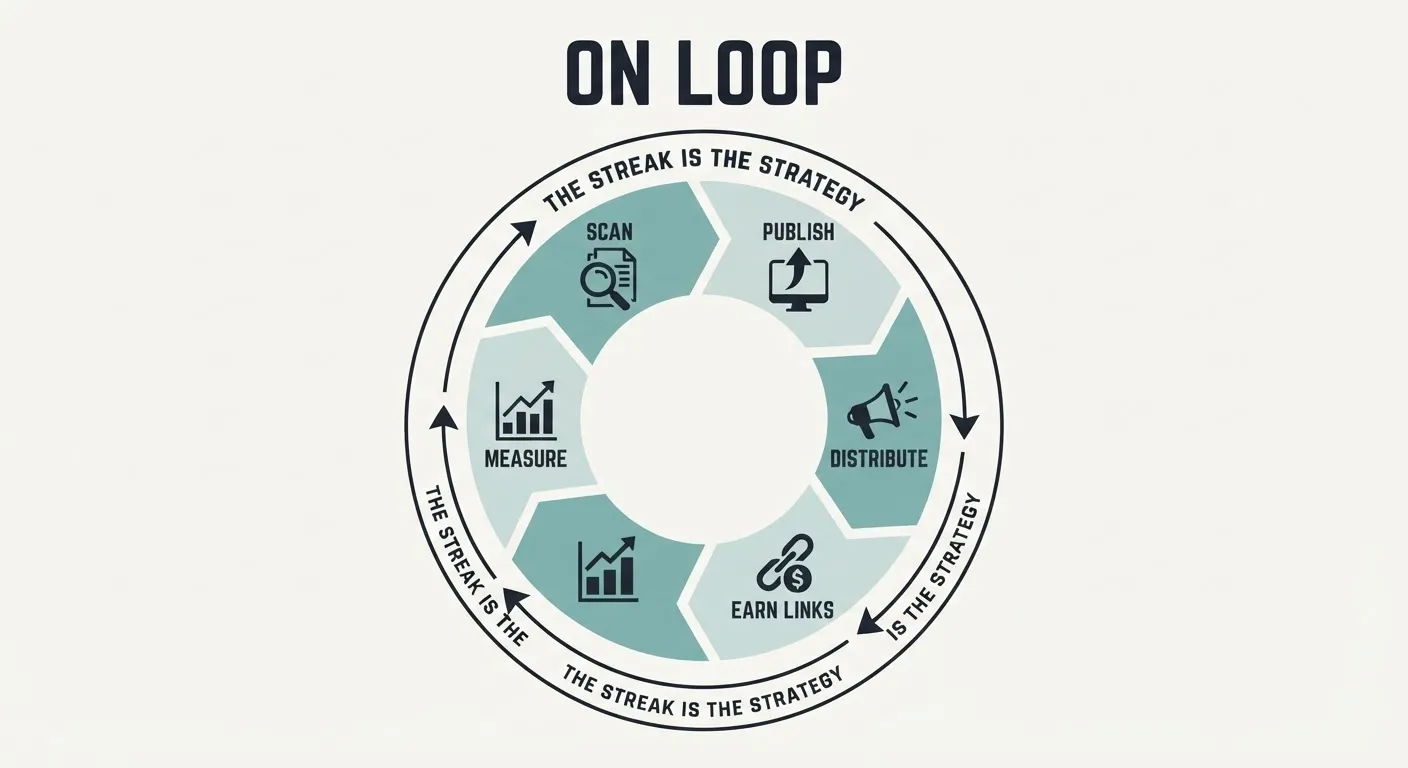
What AI discovery rewards over time is not a single spike. It rewards consistent coverage across many buyer questions, with pages that stay fresh and easy to retrieve.
That is why the Scout7 idea of “A week of organic marketing on loop” fits this moment so well. The discovery model now favors breadth, consistency, and feedback loops over occasional publishing bursts.
Semrush’s June 2026 AI Visibility Index shows AI traffic to U.S. retail sites rose 1,324%, while travel sites rose 2,215% over the same period. When discovery channels grow that fast, consistency compounds.
For builders with no time to sell, that changes the operating model:
- Publish on a loop instead of in campaigns
- Earn backlinks steadily to support ranking eligibility
- Refresh pages often as prompts and citations shift
- Measure mentions and referrals every week
- Turn learnings into the next asset instead of starting cold
This is also where connected tools matter. If your workflow ties site content to systems like Claude, ChatGPT, and an mcp connector, you can turn content production into a repeatable growth loop instead of a pile of disconnected tasks.
And once the loop is in place, the final question gets much more practical: what should you actually change this week?
What to Change This Week
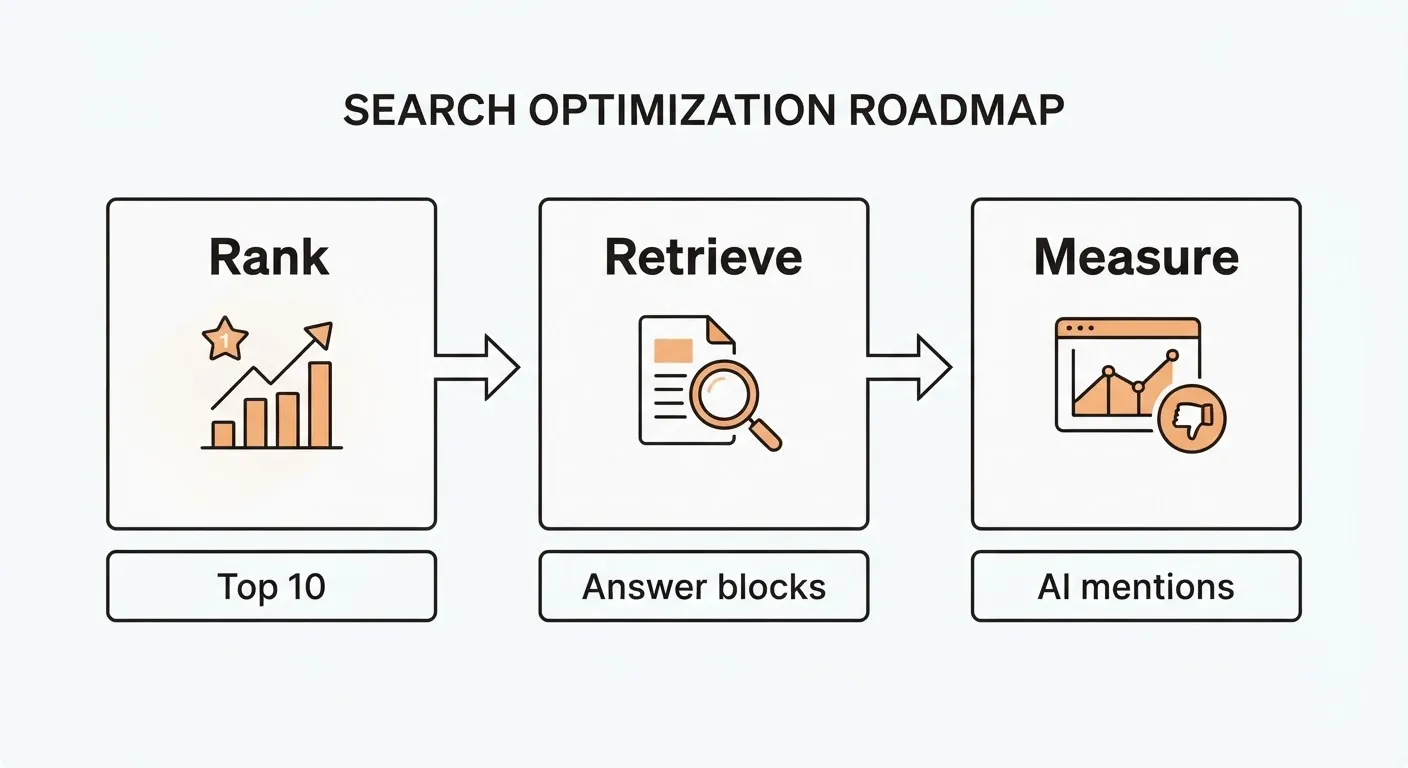
Start with the page already ranking or almost ranking. The fastest path to AI visibility is usually not a brand-new content universe. It is improving retrieval and citation odds on pages search engines already trust.
If you want to know how to get cited in AI Overviews, the answer is straightforward: keep your SEO base strong, make the page easy to retrieve, and answer adjacent buyer questions clearly enough that an engine can quote the relevant passage.
Your weekly checklist:
- Audit crawlability with robots.txt, rendering, canonicals, and internal links
- Pick five buyer questions that deserve one focused page each
- Rewrite intros so the answer appears in the first 60 words
- Break pages into extractable sections with clear, literal headings
- Add evidence-backed claims and update stale pages first
- Track citations and AI referrals beside rankings and organic traffic
- Publish consistently so retrieval opportunities compound
If you remember one thing, make it this: ranking earns eligibility, retrieval earns citation. That is the new layer.
Frequently asked questions
Does AI search optimization replace traditional SEO?
No. The article’s core point is that AI search optimization adds a retrieve-and-cite layer on top of SEO, rather than replacing it. Ranking is still often the foundation for whether a page becomes eligible for citation at all.
Why can a page get indexed quickly but still fail in AI answers?
Because indexing is only one gate in the chain. A page can be crawled and stored quickly, but retrieval systems still evaluate whether it is the best, clearest passage for a specific prompt.
Which platforms matter most for AI citations?
The article highlights ChatGPT, Perplexity, and Google AI Overviews because they discover and retrieve content differently. ChatGPT often relies on Bing-backed retrieval, Perplexity can crawl the live web, and Google AI Overviews often draw from pages already performing in Google.
What should teams measure besides clicks?
Track proxy signals like AI mentions, citation frequency, referral traffic from AI tools, and share of voice on key buyer prompts. The article argues that clicks alone no longer capture the full picture of visibility in AI-generated answers.
References
- Ahrefs — Update: AI Overviews Reduce Clicks by 58%
- Semrush — Releases Expanded 2026 AI Visibility Index, Analyzing 126 Million AI Search Prompts
- Google Search Central — AI Features and Your Website
- Forrester — B2B Marketing, Sales, & Product 2026 Predictions
- Search Engine Land — How AI-generated content performs in Google Search: A 16-month experiment
- Forrester — Nine In 10 US Marketing Agencies Use AI To Cut Costs At The Expense Of Marketing Effectiveness And Long-Term Brand Growth
- Wynter — How B2B Marketing Actually Uses AI in 2026
Conclusion
Key takeaways:
- Rankings still feed AI citations across major answer systems
- Retrieval-ready pages outperform merely indexed pages
- Citation, mentions, and AI referrals now belong in reporting
- Consistency beats one-off publishing in AI agent discovery
The opening image still holds: you can win the blue link and still lose the attention. But that does not mean search stopped mattering. It means the game gained a second layer.
The practical lesson is simple. AI search optimization is not about replacing SEO with a shiny new acronym. It is about using SEO as the foundation, then applying Generative Engine Optimization and AEO principles so machines can retrieve the right passage, trust it, and cite it.
That is good news for teams willing to work from the mechanics up. You do not need to chase every new platform with a different strategy. You need pages that are crawlable, indexable, rankable, and easy to quote.
So this week, pick your top five buyer questions. Tighten the pages already closest to page one. Add stronger headings, clearer claims, and better passage structure. Then track citations, mentions, and AI referral traffic next to your classic organic traffic numbers.
The brands that win the next phase of discovery will not treat AI as a separate universe. They will build a repeatable loop where ranking earns entry, retrieval earns citation, and the streak becomes the strategy.