
market_pov
SEO Isn’t Dead. AI Search Optimization Is the Shift.
August 27, 2026 · 11 min read · Scout7
SEO still matters in 2026, but the game has changed. Learn how to optimize for AI Overviews without abandoning the SEO basics.
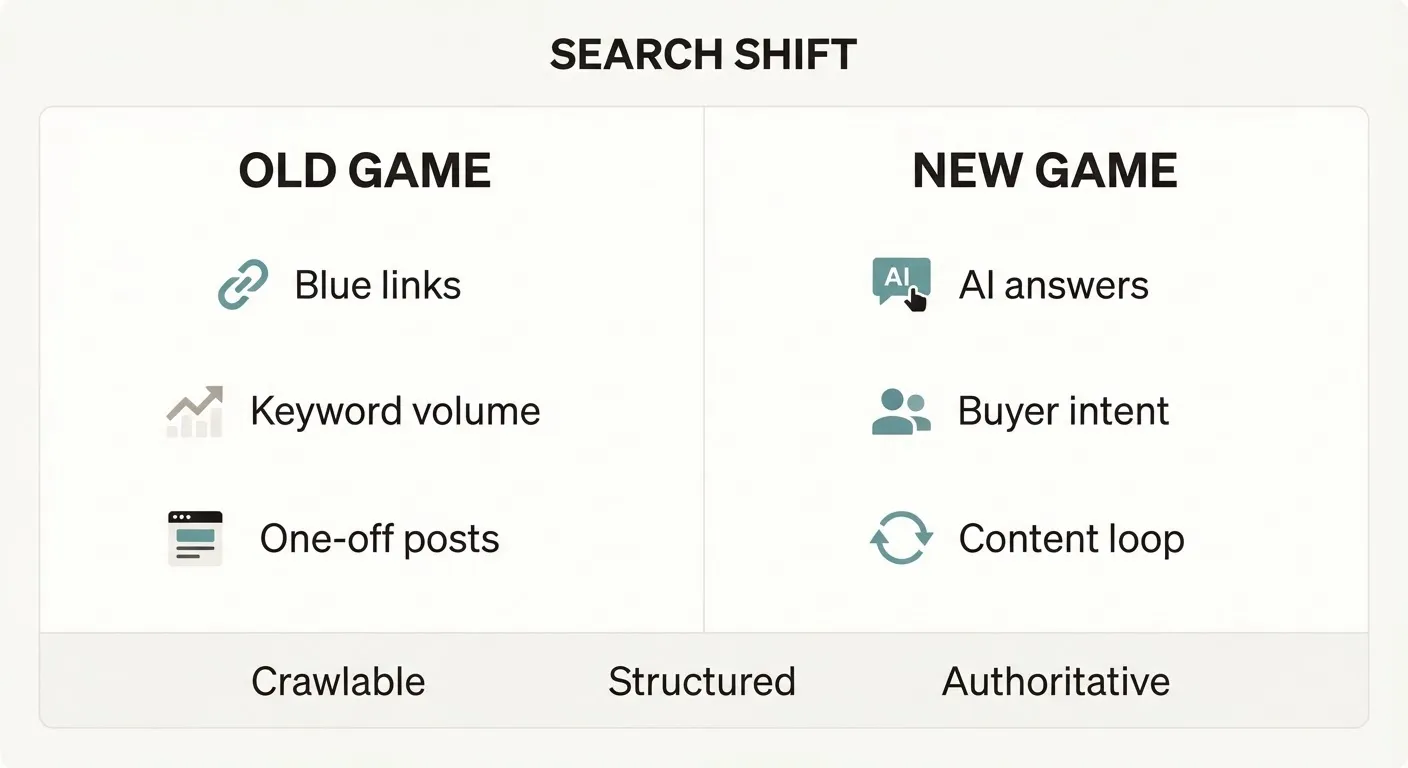
SEO still matters in 2026, but the game has changed. Here’s how to build AI search optimization without throwing away the SEO basics that still drive discovery.
Introduction: AI search optimization starts where SEO always should have
You open analytics, see fewer clicks, and the scary thought lands fast: maybe SEO is over.
Here’s the short answer: SEO for AI Overviews is not a replacement for SEO. It’s SEO updated for a world where discovery happens in both blue links and AI answers. What died is traffic chasing through thin, keyword-shaped pages. What still works is building pages, proof, and structure that search engines and AI systems can trust.
The fear feels reasonable because the search page really is changing.
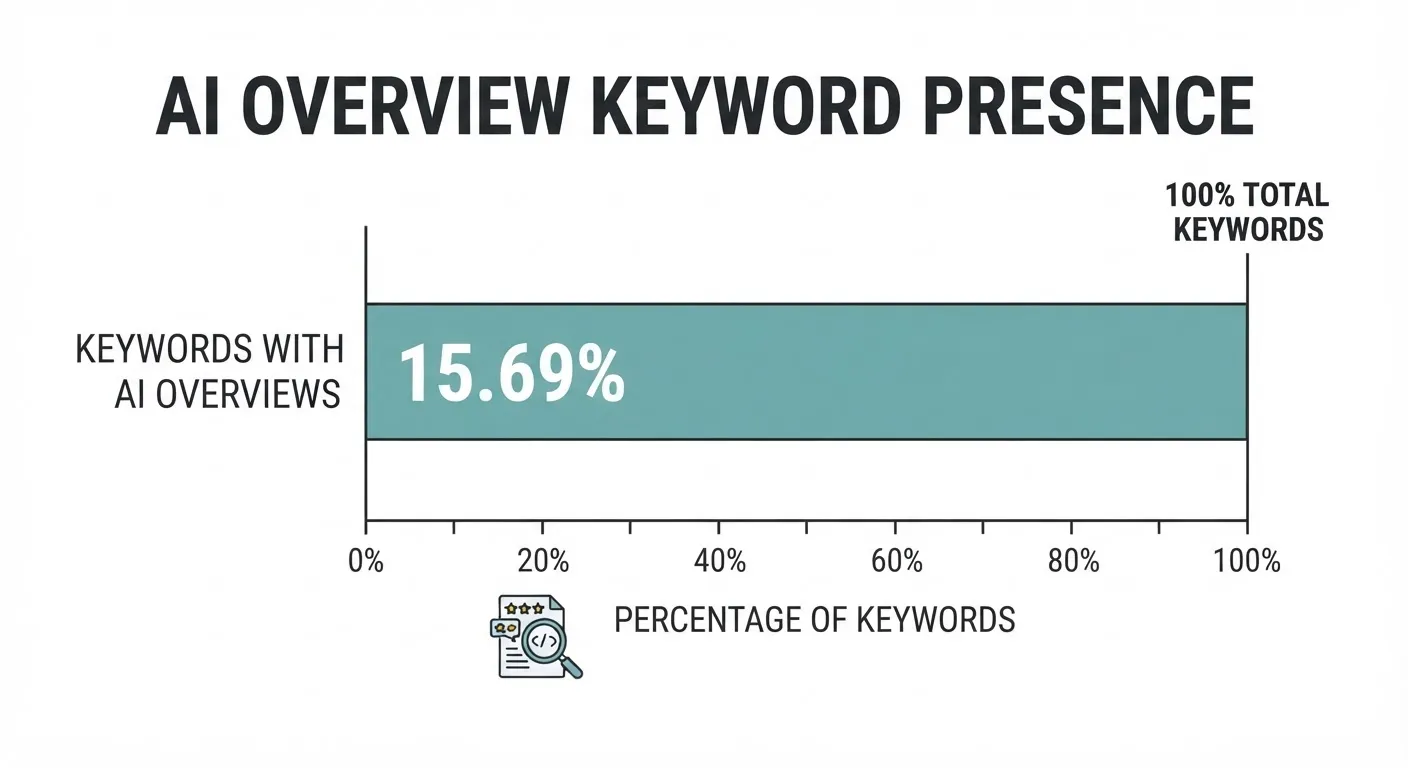
According to Semrush’s AI Overviews study, Google AI Overviews appeared for about one in six keywords (15.69%) by November 2025, after peaking near 25% in July.
That is why this conversation matters now.
If you are wondering does SEO still matter in 2026, the answer is yes. But the job has changed from “rank this page” to “earn search engine visibility across classic search and AI-mediated discovery.” That shift is where terms like AEO, AI search optimization, and generative engine optimization start to matter.
AEO means answer engine optimization: shaping content so answer engines can extract, summarize, and cite it.
GEO means generative engine optimization: making your brand legible inside AI systems that generate responses, recommendations, and comparisons.
And then comes the real question: if SEO is still alive, what exactly died?
What actually died — and what didn’t
What died was the old bet that enough keyword pages would keep delivering easy clicks forever.
What did not die is SEO itself. In practice, your site still needs to be crawlable, well-structured, internally linked, and trustworthy if you want Google or an AI system to understand it.
This is the part anxious founders need to hear clearly.
- Keyword-volume gaming faded as AI answers absorbed more search real estate
- SEO basics still matter because AI systems still rely on web content they can parse
- AI search optimization depends on structure not just clever prompts or rewritten copy
- Authority still compounds when your best pages earn mentions and links over time
Google’s own behavior makes that plain.
In June 2026, Google announced Search Console reporting for AI Overviews and AI Mode, including impressions and page-level reporting. Google did not say search disappeared. Google said visibility now includes AI surfaces too.
The market is adapting, not quitting.
In HubSpot’s 2026 marketing trends report, about 41% of marketers (40.6%) said updating SEO for search changes was a top priority.
SEO isn’t dead. It got a bigger job.
So if the foundation still matters, where is the biggest new pressure coming from? From commercial intent moving into AI surfaces.
The commercial AI land grab
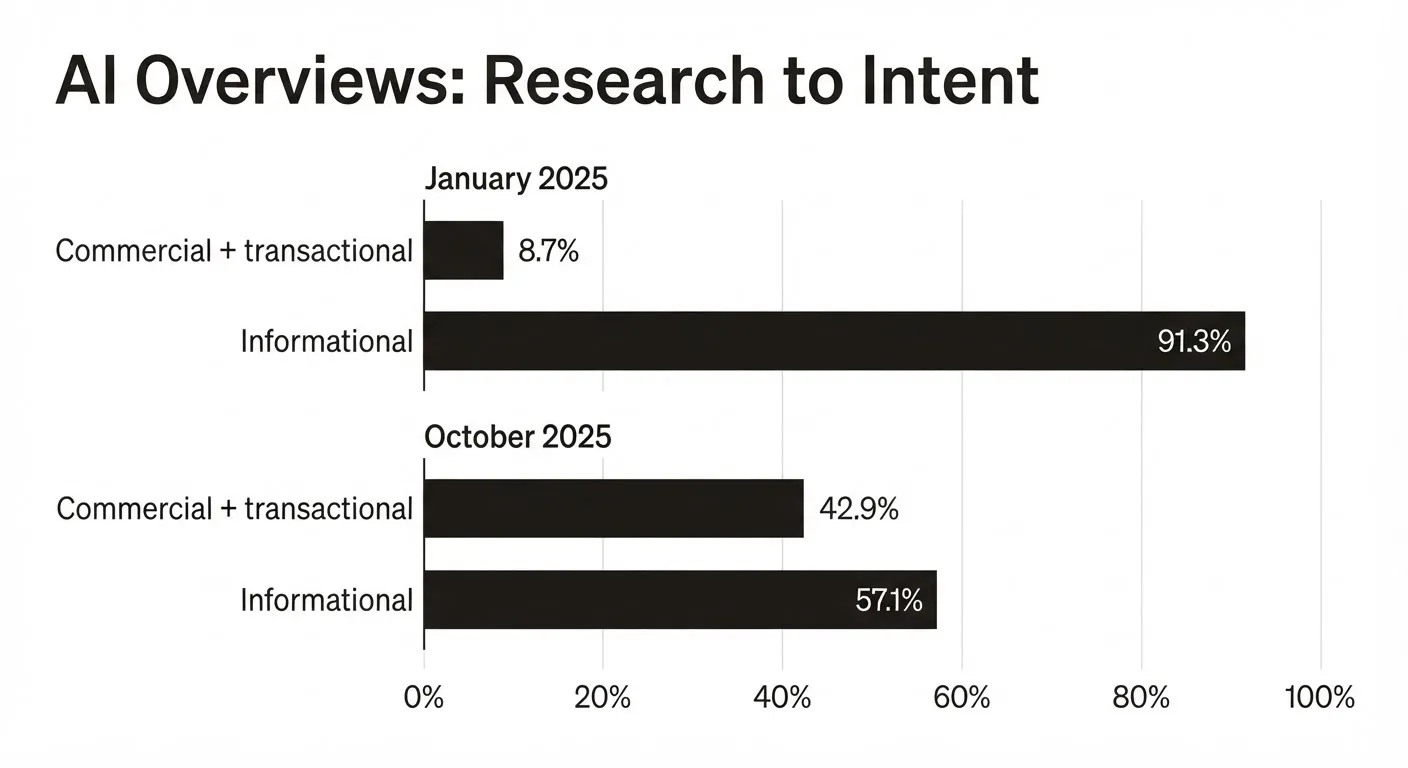
That shift is the real story: AI answers are no longer just helping with homework-style questions.
They are moving closer to the moment someone wants to compare vendors, shortlist tools, or buy.
Semrush’s refreshed AI Overviews study found that commercial and transactional triggers grew from less than one in ten (8.7%) to nearly four in ten (42.9%) between January and October 2025.
At the same time, informational triggers dropped from more than nine in ten (91.3%) to about 57% (57.1%).
That matters because SEO used to let teams separate “traffic content” from “money pages.” AI is blending those moments.
- Commercial discovery moved upstream into AI Overviews during 2025
- Informational dominance shrank as buyer-intent queries gained AI treatment
- Citation now influences demand capture not just awareness-stage visibility
- Intent-led content matters more than raw traffic potential
Buyers are already changing behavior too.
According to G2’s 2026 AI Search Insight Report, just over half of B2B software buyers (51%) now start research with an AI chatbot more often than Google.
That means founders need to show up in both places: classic search and generated answers.
And that raises the next problem. If more teams are using AI to publish faster, why are so many becoming less visible?
Why generic content is now invisible
Most teams did not lose because they ignored AI.
They lost because they used AI to produce faster versions of the same forgettable content everyone else already had.
This is where content automation needs a reality check. Content automation means using software and AI to generate, schedule, repurpose, and publish content at scale. It matters because speed helps only when it produces relevant, differentiated output.
The numbers are blunt.
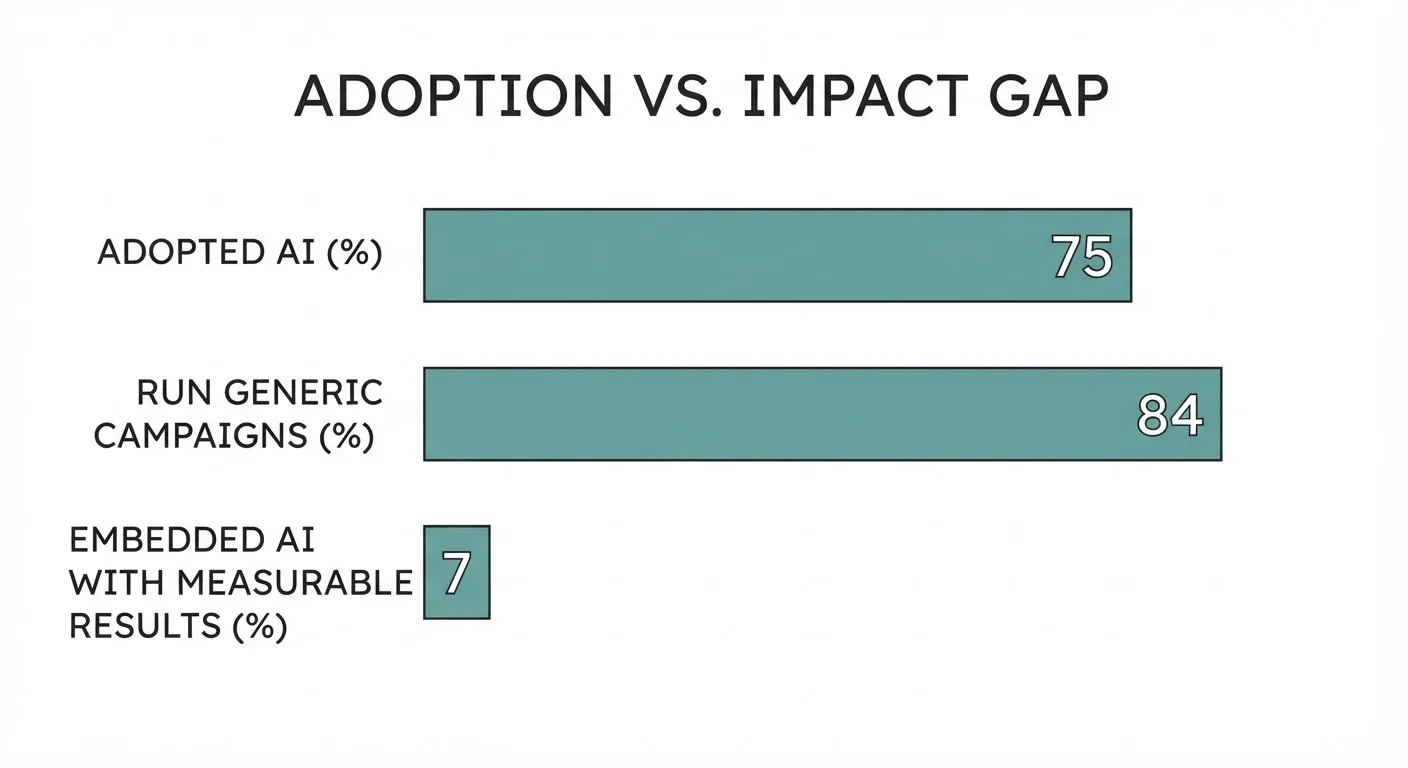
In Salesforce’s 2026 State of Marketing, three out of four marketers (75%) said they had adopted AI, yet more than eight in ten (84%) still ran generic campaigns.
And Adobe’s 2026 marketing report found more than 8 in 10 teams missed opportunities in the previous quarter because they could not respond in time, while only about 1 in 14 teams (7%) had embedded AI in ways that produced measurable business results.
That gap says a lot.
- Adoption is high but sameness is still everywhere
- Speed alone is not strategy when every page says roughly the same thing
- Execution lag kills visibility because fresh answers win more citations
- Measurable AI maturity is rare even among teams already using the tools
A generic page may still get indexed.
But in an AI-shaped market, it often will not get quoted, remembered, or trusted. That is where a repeatable loop beats one-off output.
The loop-first strategy
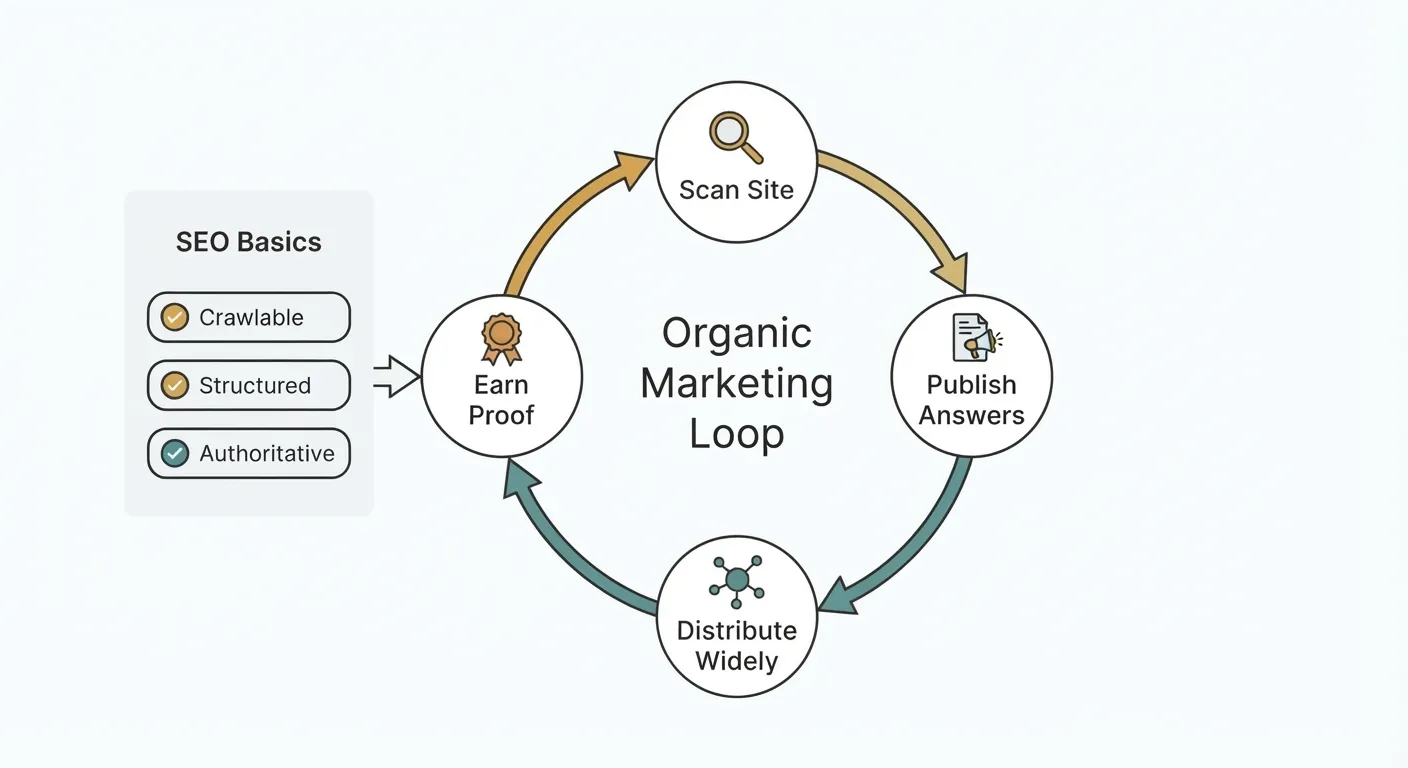
So the fix is not “do more SEO” or “replace SEO with GEO.”
The fix is to keep the SEO base and run an always-on loop that keeps your best information fresh, clear, and citable.
This is the myth most worth busting. The real problem is not AI itself. It is relying on one-off content pushes instead of a repeatable organic marketing on loop system.
The deeper issue is usually this: they were publishing in bursts, then going quiet, while search and AI surfaces rewarded teams that kept context fresh.
That is why AEO and GEO work best on top of SEO, not instead of it.
- Keep the basics: crawlability, headings, internal links, and topical authority
- Add answer-ready formatting: direct definitions, comparisons, FAQs, and concise summaries
- Tie ideas to brand context: connect every concept back to product, proof, and use case
- Refresh continuously: update winners, republish insights, and distribute across channels
- Earn mentions externally: citations improve when your brand appears beyond your own site
This is where terms connect.
A featured snippet is the old search version of answer extraction: Google pulling a concise answer from a page into a prominent result. AI Overviews are more advanced, but the lesson is similar. Clear structure, direct answers, and well-scoped pages are easier to extract from.
That is also why search engine visibility matters more than raw traffic. Search engine visibility is the share of meaningful search presence your brand earns across results, snippets, AI summaries, and answer surfaces. Traffic is one output. Visibility is the system.
Execution maturity is still uneven.
Content Marketing Institute’s 2026 B2B research showed a market still split by maturity, not excellence. And Forrester’s 2026 buyer research found the typical B2B purchase now includes 13 internal stakeholders and 9 external influencers.
So yes, AI can help someone discover you.
But trust still gets built through proof, repetition, and consistency. That is why the streak is the strategy.
If you want to operationalize that loop, tools like Scout7 fit quietly here: not as “generic marketing automation,” but as a way to keep a week of organic marketing on loop for builders with no time to spare.
And that usually leads founders to a few practical questions.
Common questions
Is SEO dead in 2026?
No. SEO still matters in 2026 because search engines and AI systems both rely on accessible, structured, credible web content. What is fading is the old playbook of publishing thin pages built only to capture keyword volume.
How do I optimize for AI Overviews?
Start with strong SEO foundations, then make pages easy to extract from. Use clear headings, direct answers, concise definitions, strong internal links, updated facts, and content that maps tightly to search intent and product context.
Do keywords still matter?
Yes. Keywords still help you understand how buyers talk, what they ask, and where demand exists. But they are inputs now, not the whole strategy.
Should I stop doing SEO and only do GEO?
No. Generative engine optimization sits on top of SEO, not outside it. If your pages are weak, stale, or hard to understand, your visibility in AI answers will usually be weak too.
What SEO basics still apply?
The same fundamentals still matter: crawlability, clean site architecture, internal linking, clear headings, helpful pages, and topical authority. Those basics support both classic rankings and SEO for AI Overviews.
Where do tools like Claude, ChatGPT, MCP connector, and llm fit?
They help you run the loop faster, not skip the strategy. In practice, that means using Claude, ChatGPT, an mcp connector, or your broader llm stack to create, refresh, and distribute content that still rests on sound SEO structure.
The answers are short. The operating model behind them is what matters most.
The bottom line
Key takeaways:
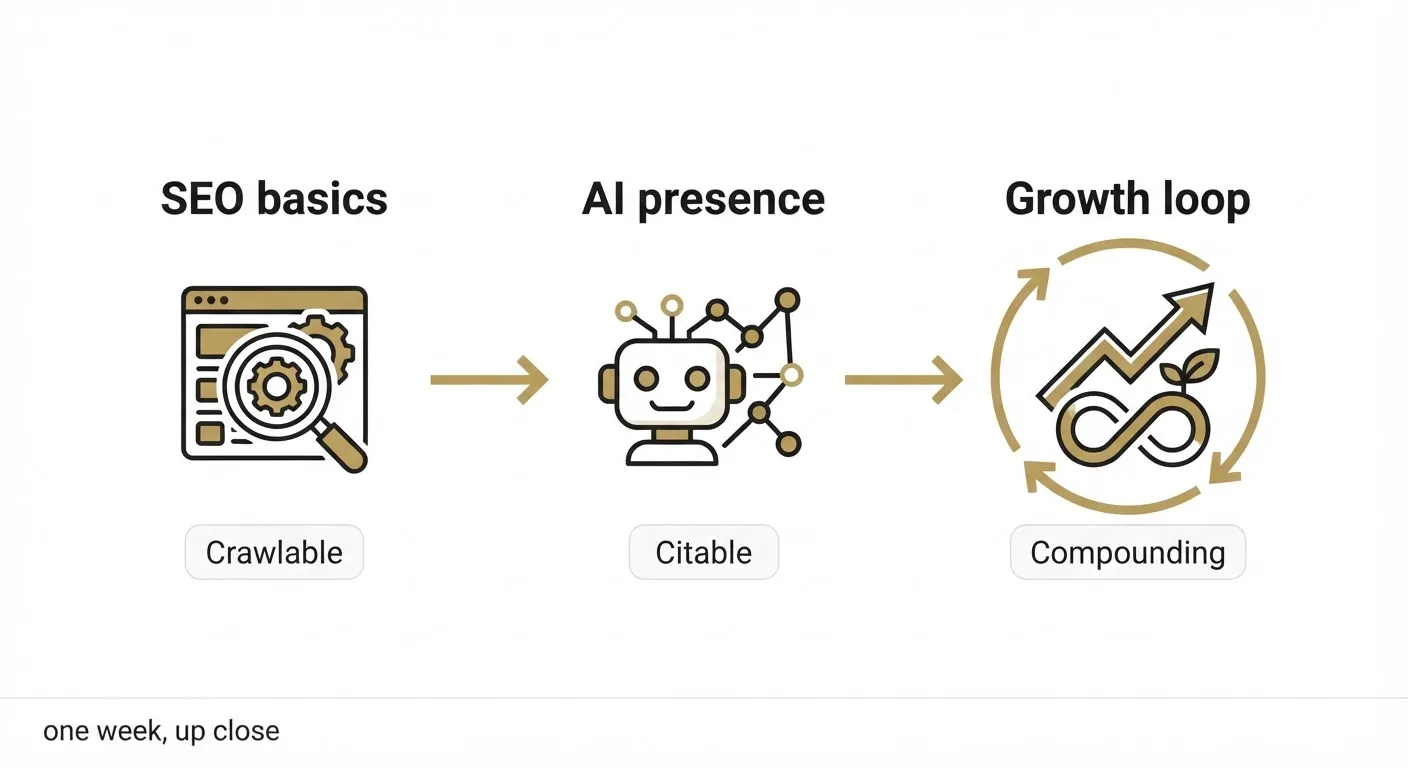
- SEO still matters because AI discovery still depends on web foundations
- AI Overviews reward clarity more than keyword-volume publishing
- One-off pushes fade fast while repeatable loops keep brands visible
- AEO and GEO work best when built on fresh, structured SEO content
Go back to that first moment: the dip in clicks, the panic, the headline saying SEO is dead.
It spreads because it feels true. Traffic is harder. AI answers do intercept attention. Old ranking tricks do work less than they used to.
But the useful truth is better than the scary one.
SEO is not dead. Search has been rerouted. Discovery now happens across blue links, featured snippets, AI Overviews, chatbot answers, and brand mentions that get pulled into generated results. That changes the target, not the need.
So keep doing SEO. Just stop treating it like a page-by-page traffic lottery.
Build technical health. Publish clear, intent-led content. Refresh what matters. Create answer-ready pages that a human can trust and an AI system can cite. Then run that process every week.
That is the shift Scout7 is built around: a week of organic marketing on loop for builders with no time to spare. If you want to see what a usage-based, always-on engine looks like in practice, check out Scout7 pricing and map your current content process against that loop.
The teams that win next will not be the ones who panic first. They will be the ones who keep the foundation, drop the fluff, and stay visible wherever discovery moves next.
Frequently asked questions
What is AI search optimization?
AI search optimization is SEO adapted for a world where discovery happens in both blue links and AI answers. In this article’s framing, it sits alongside AEO and GEO, with the same goal: make your content easy to understand, extract, and trust.
Is AI search optimization replacing SEO?
No. The article is explicit that SEO for AI Overviews is not a replacement for SEO, but an update to it. Crawlability, structure, internal linking, and trustworthy content still support both classic rankings and AI-mediated discovery.
Why is traffic dropping even if my content is ranking?
Because search visibility is no longer limited to clicks from blue links. AI Overviews and chatbot answers can intercept attention, which means you may earn impressions or citations without getting the same traffic you used to.
What should I change first if I want better AI visibility?
Start with the SEO basics, then make your pages more answer-ready. The article recommends clear headings, direct answers, concise definitions, strong internal links, updated facts, and tight alignment between search intent and product context.
References
- Semrush AI Overviews Study
- Introducing Search Generative AI performance reports in Search Console
- 2026 state of marketing: Data from 1,500+ global marketers
- The Answer Economy: G2's 2026 AI Search Insight Report
- State of Marketing in an AI-Driven World: 2026 Adobe Report
- Salesforce State of Marketing 2026
- B2B Content and Marketing Trends: Insights for 2026
- Forrester’s 2026 Buyer Insights: GenAI Is Upending B2B Buying As Leaders Face Mounting Pressure To Justify Every Dollar Spent