
blog
The AI Marketing Automation Tax on a Founder's Week
August 27, 2026 · 9 min read · Scout7
Most AI marketing stacks still need a human in the loop. Learn where the operator tax hides and how to replace glue work with automation.
Introduction: AI marketing automation is failing in the loop
You asked AI for a week of marketing. It gave you drafts, and then gave you your week back as operations work.
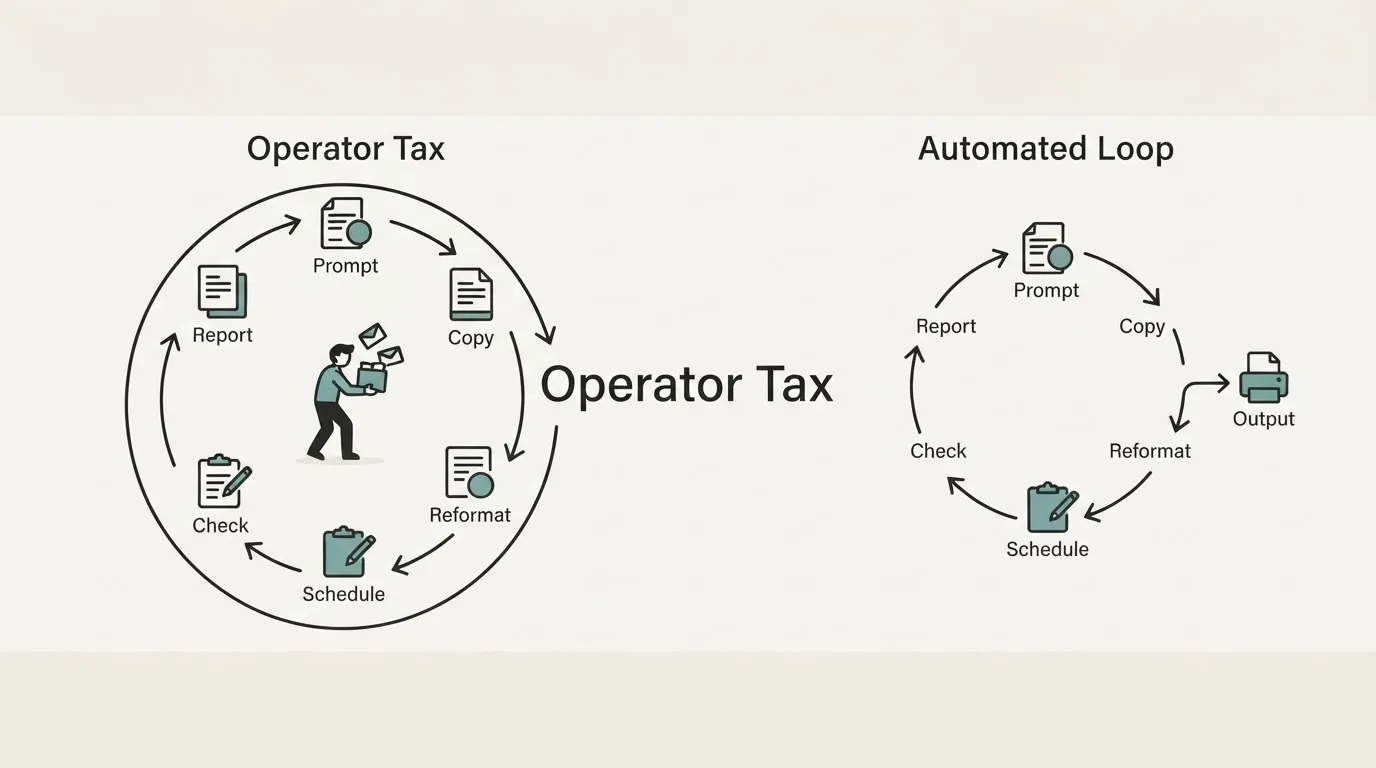
That is the real problem with AI marketing automation: most stacks speed up writing, but still require a human to run prompts, tools, approvals, scheduling, checks, and reporting across the whole loop.
Key takeaways:
- Draft speed does not equal workflow automation
- Operator tax hides in repetitive weekly glue work
- Small teams stall on orchestration, not ideas
- Control planes beat disconnected tool stacks
From the outside, an AI-assisted stack can look efficient. Inside, a founder is still moving work from one step to the next.
This matters because the efficiency gap is no longer about who gets better outputs. It is about who still has to operate the system by hand.
If a person must carry the work between tools, the workflow is not automated.
This piece maps that hidden tax, then shows how to replace it with an organic marketing loop. The next step is to make that tax visible.
The invisible cost of ‘AI-assisted’ marketing
And once you itemise the week, the problem stops looking like a prompting issue and starts looking like a systems issue.
If your stack stops at the draft, you do not have automation. You have a second job.
A founder’s weekly glue work usually looks like this:
- Re-prompting to get the angle, length, or tone right
- Copy-paste between tools for docs, design, schedulers, and CRM
- Reformatting per channel for LinkedIn, X, blog, carousels, and video
- Scheduling by hand across calendars and publishing tools
- Checking what published and fixing misses or broken posts
- Pulling results back into the next brief or content plan
That list feels normal because software has trained teams to accept it. But it is still software failure.
The tools create output, then leave the loop to a person. For a small marketing team or a time-starved b2b founder, that destroys marketing operations efficiency.
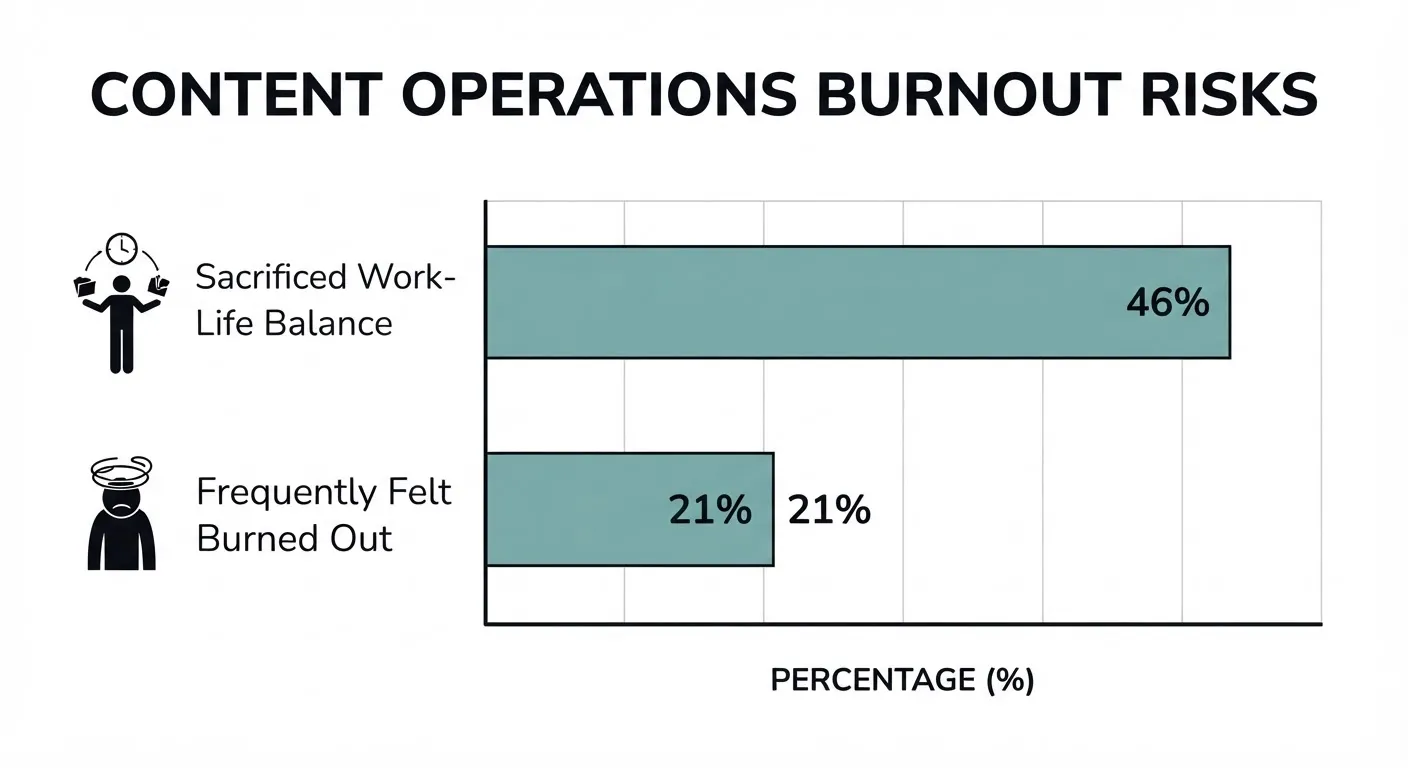
Research from Adobe Express found nearly half of US business owners and marketing leaders (46%) sacrificed work-life balance to hit content goals, while about one in five (21%) frequently felt burned out.
Research from McKinsey’s 2026 State of AI also found about one in five respondents (20%) said AI-related operating costs constrained usage, including token costs.
So the tax is not hypothetical. It shows up as labor, cost, and attention drain.
Why small teams stay stuck in orchestration
And if the tax is structural, the next question is obvious: why do small teams feel it most?
Small teams do not usually fail because they use too little AI. They fail because they lack a system that can run the whole loop without constant supervision.
The pattern shows up across workflow-scale data:
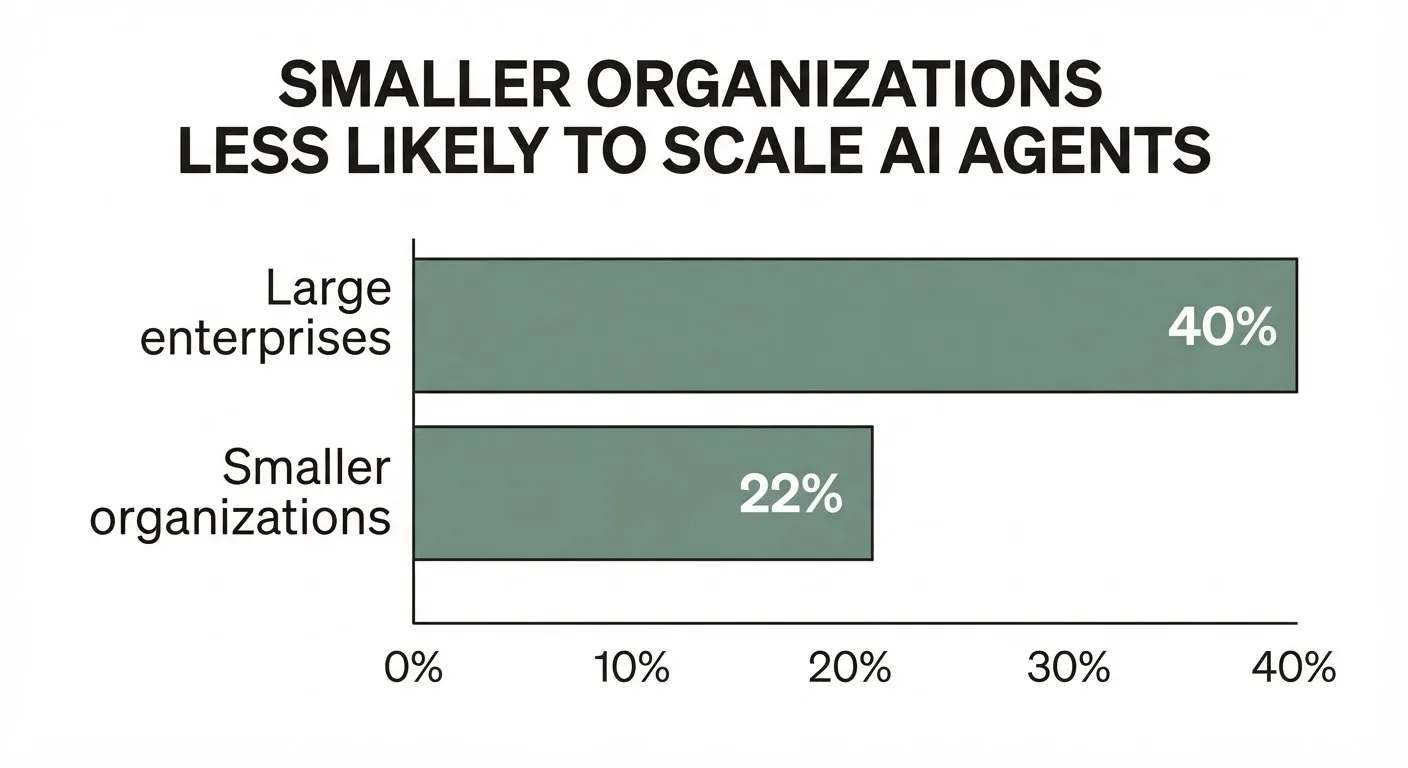
- McKinsey found only about 1 in 5 smaller organizations (22%) had scaled AI agents, versus 2 in 5 large enterprises (40%)
- Another McKinsey marketing survey found nearly 6 in 10 marketers (60%) use AI multiple times per week, but less than 1 in 10 capture value across end-to-end workflows
- Salesforce reported the average organization manages data across seven sources, yet only about 1 in 4 (26%) are satisfied with data connectivity
- IBM found organizations experienced an average of 54 AI agent incidents last year
Here is the mechanical founder view: the week does not break at ideation. It breaks at handoffs.
Based on what we saw when we itemised the founder’s week as prompts, exports, reformats, scheduling, checks, and reporting, the bottleneck was the loop between tools, not the first draft.
That is why content infrastructure matters. When the system is fragmented, every incident, export, and mismatch creates fresh cleanup work.
The automation multiplier
And once the bottleneck is clear, a better question appears: what happens when AI handles the workflow around the asset, not just the asset itself?
The answer is straightforward. Generation makes content faster, but automation makes the system productive.
The strongest signals point in the same direction:
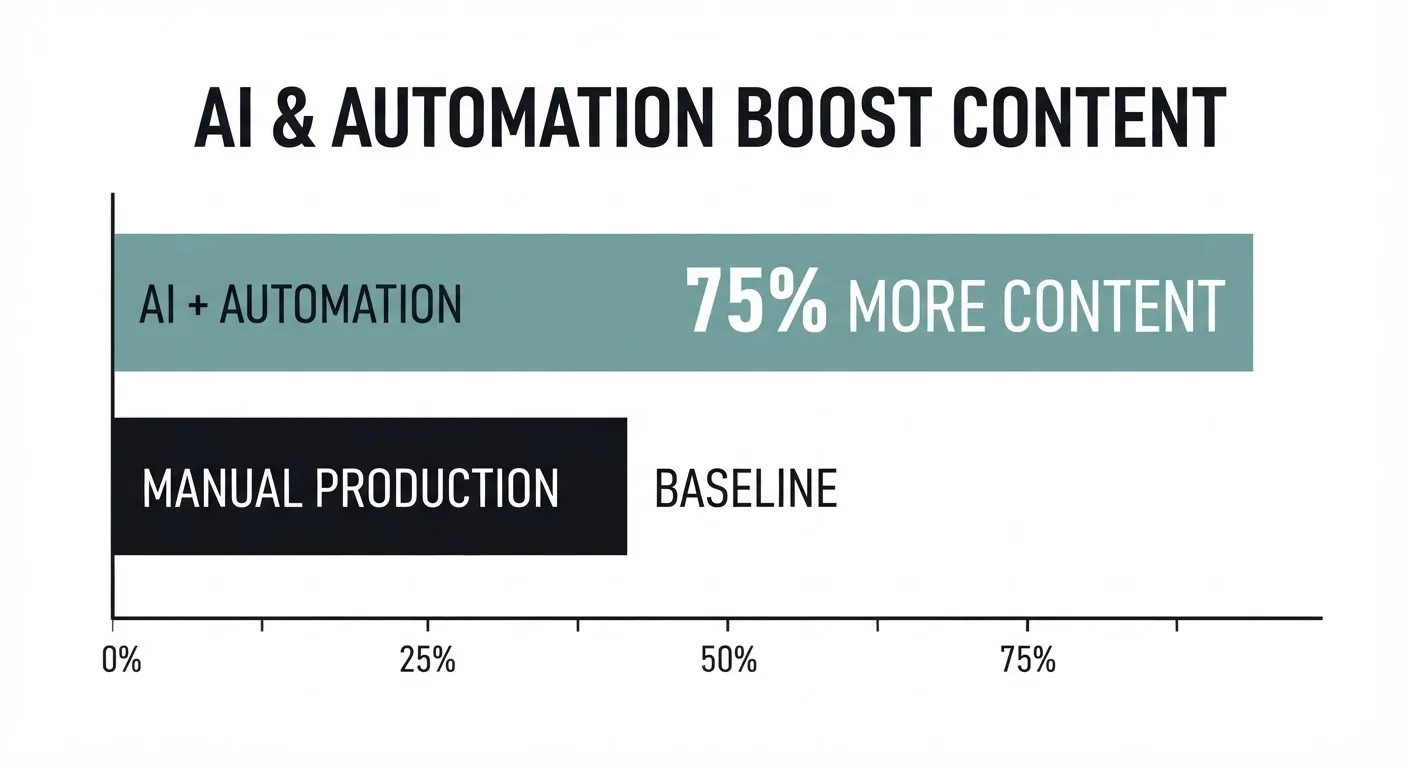
- Adobe Express found teams using AI for both creation and automation produced 75% more content than teams using AI only for generation
- Salesforce found high-performing marketers save an average of eight hours per week through automation
- Yet Salesforce also found 84% still run generic campaigns and 69% struggle to respond promptly
That gap says a lot. Teams have adopted AI, but many still have not automated the operating layer.
This is where unified marketing analytics becomes practical, not theoretical. If results, publishing, and planning live in one loop, the next cycle improves without a founder manually rebuilding the brief.
In other words, the multiplier does not come from one better prompt. It comes from removing the operator sitting between every step.
Build a marketing control plane, not a tool stack
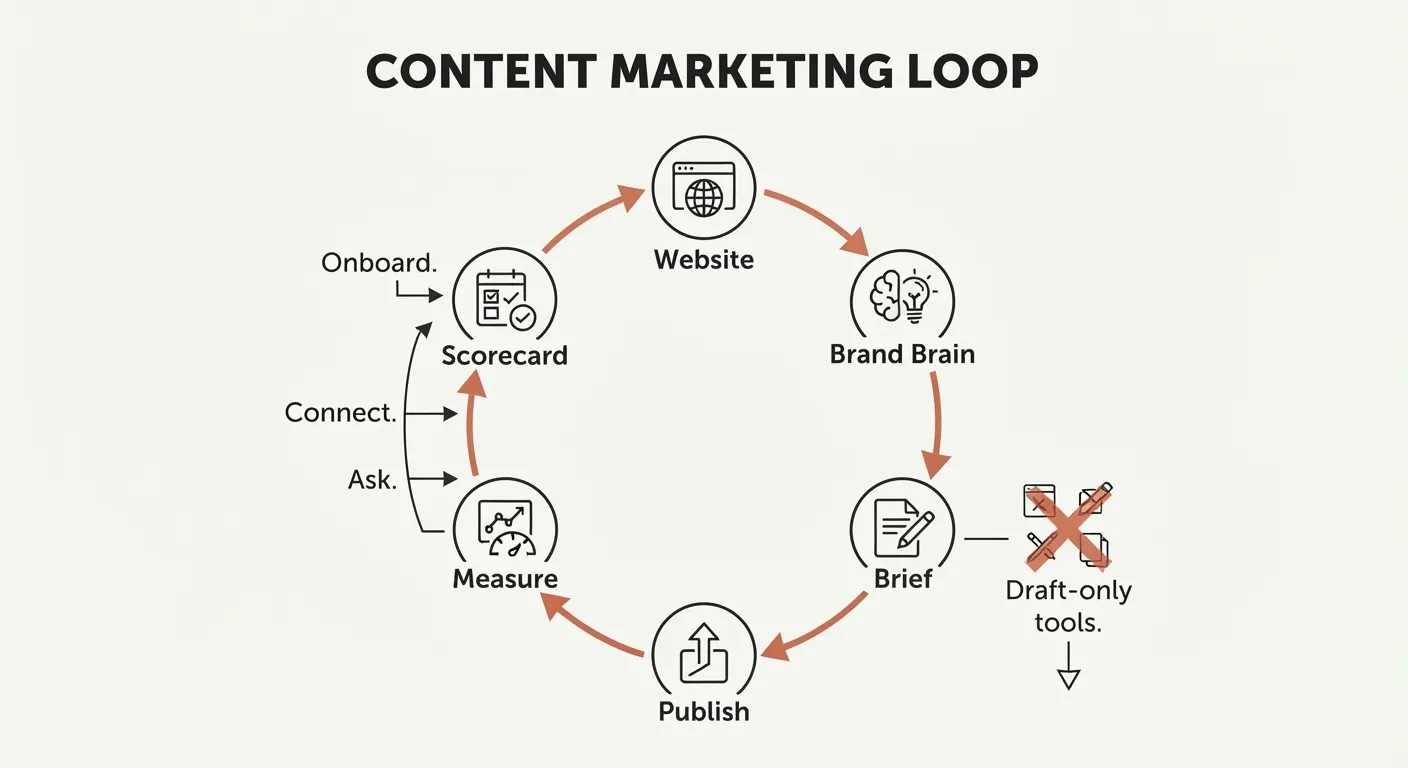
So how do you automate your marketing workflow? You stop managing isolated tasks and start running a loop.
A Marketing Control Plane is a centralized software architecture that integrates disparate marketing automation tools, data streams, and content generation engines into a single operational interface. It functions as the command layer for managing cross-channel campaigns, enabling users to synchronize strategy, execution, and performance analytics from one unified dashboard rather than managing fragmented point solutions.
The old workflow looks like this:
- Generate a draft
- Export it elsewhere
- Reformat by channel
- Schedule each asset
- Check what went live
- Report results manually
The better workflow is simpler: Onboard. Connect. Ask.
That means one system should:
- Build a brand brain from your site and positioning
- Run a weekly organic growth loop across channels
- Maintain a scorecard that updates from live results
- Feed learnings into the next brief automatically
A real organic growth loop is the repeatable cycle of input, production, publishing, measurement, and learning that keeps organic marketing improving week to week.
This is also where b2b content gap analysis matters. A b2b content gap analysis compares what your audience needs against what your current content actually covers, so the loop can prioritize missing topics instead of producing more noise.
A content audit gives the system its starting map. It shows what exists, what performs, what overlaps, and what should feed the next cycle.
For Scout7, the doctrine is direct: Run your organic growth loop from Claude Code, Codex or Cursor. That is how you automate marketing workflow without becoming the workflow.
What to remove from next week
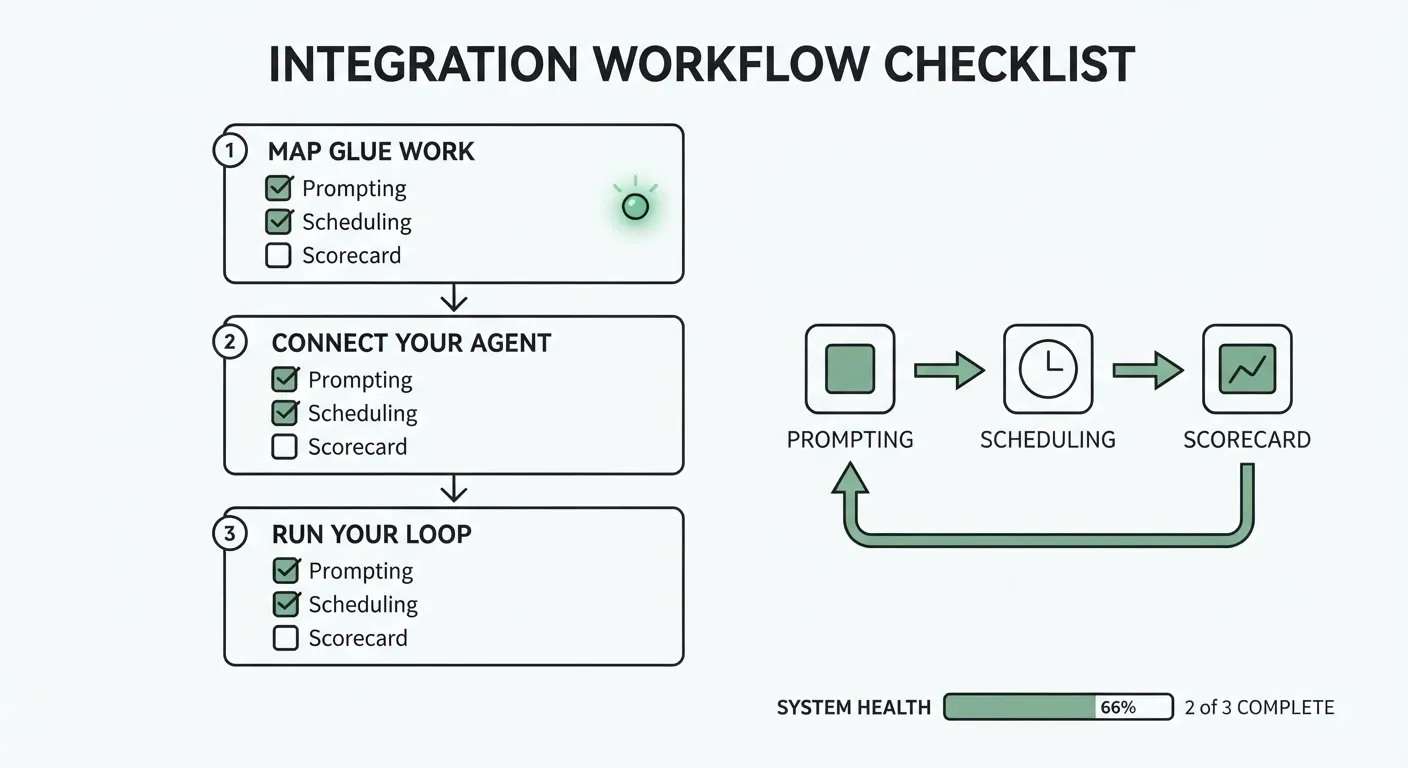
And that leads to the practical test.
If your AI stack still needs you to carry work from one step to the next, that is the first thing to fix.
Start by auditing the space between draft and distribution. That is where the hidden tax usually lives.
Remove these failure points first:
- Human handoffs between writing, design, scheduling, and analytics
- Channel rework that repeats the same adaptation every week
- Status checking to confirm what actually published
- Result gathering that lives in scattered dashboards
- Brief rebuilding done from memory instead of performance data
This is how to answer both core questions.
Why is your AI content strategy failing to scale? Because a person still operates the loop.
How do you automate your marketing workflow? Replace point automation with one control plane that connects inputs, execution, publishing, and learning.
For teams focused on ROI, that shift matters because it removes labor from the operating path, not just minutes from the writing step.
Conclusion
Key takeaways:
- Operator tax lives between generation and execution
- Automation gains come from loops, not isolated drafts
- One control plane improves marketing operations efficiency
The opening image was a founder asking AI for a week of marketing and getting a week of operator work back. That is still the right image to keep in your head.
Most AI marketing automation does not fail because the output is weak. It fails because software stops at the asset and leaves the founder to run the rest of the system.
The fix is not another point tool. It is better content infrastructure: a brand brain, a scorecard, a connected publishing loop, and unified marketing analytics that feed the next cycle automatically.
If you want to improve marketing operations efficiency, do not start by judging the draft. Start by listing every weekly handoff after the draft.
Then remove the operator layer one step at a time until the loop can run without you. That is how a small marketing team starts to scale like a larger one, and how a b2b founder protects time while improving output.
Scout7 is built around that structure: A week of organic marketing on loop. If you want to see how the loop is structured, explore Scout7’s digital marketing agent overview and pricing, then map your own workflow against it. The next gains in AI marketing will go to teams that stop supervising tools and start running a control plane.
Frequently asked questions
Why does AI marketing automation still feel manual?
Because many stacks only speed up drafting, then leave a person to handle prompts, approvals, scheduling, checks, and reporting. As the article argues, if a person still carries work between tools, the workflow is not truly automated.
Where does the operator tax usually show up?
It usually appears in the steps between draft and distribution: re-prompting, copy-paste between tools, channel reformatting, scheduling, status checks, and pulling results back into the next brief. Those tasks feel normal, but they are still operational glue work.
Why do small teams feel this problem more than larger companies?
Small teams are more exposed because they often lack a system that can run the full loop without supervision. The article notes that the week rarely breaks at ideation; it breaks at handoffs, where every export, incident, or mismatch creates cleanup work.
What should replace a disconnected AI tool stack?
The article recommends a marketing control plane instead of isolated point tools. In practice, that means one system that connects brand context, content production, publishing, measurement, and learning so the next cycle improves automatically.
References
- McKinsey & Company, The state of AI in 2026: On the road to ROI — https://www.mckinsey.com/capabilities/quantumblack/our-insights/the-state-of-ai
- Adobe Express, How business owners and marketers are scaling content — https://www.adobe.com/express/learn/blog/scale-content-with-ai
- McKinsey & Company, From anxiety to advantage: A marketing organization that thrives with AI — https://www.mckinsey.com/capabilities/growth-marketing-and-sales/our-insights/from-anxiety-to-advantage-a-marketing-organization-that-thrives-with-ai
- Salesforce, 7 Marketing Trends for the AI Era: 2026 State of Marketing Report — https://www.salesforce.com/au/blog/marketing-trends-ai-era/
- Salesforce, 75% of Marketers Have Adopted AI, Yet Still Use It to Send Generic Campaigns — https://www.salesforce.com/news/stories/state-of-marketing-2026/
- IBM, New IBM Study Finds CIOs and CTOs Face Growing AI Control Gap as Enterprise Deployment Scales — https://newsroom.ibm.com/2026-06-08-new-ibm-study-finds-cios-and-ctos-face-growing-ai-control-gap-as-enterprise-deployment-scales