
blog
Why AI Marketing Automation Needs a Control Plane
August 27, 2026 · 8 min read · Scout7
AI drafts are easy. Growth is not. Learn why founders must move from managing prompts to running an autonomous organic marketing loop.
Introduction
AI marketing automation only drives growth when it runs a connected loop that reads context, publishes, measures, and improves without constant founder intervention. If your AI stops at drafting, you did not automate marketing; you only automated the first step and kept the operating burden for yourself.
Key takeaways:
- Drafting is cheap; execution is still the bottleneck
- Founders stay stuck without an autonomous marketing loop
- A control plane connects context, publishing, measurement, and iteration
- The real ROI is fewer operator hours, not more drafts
You prompt a model, get a decent post, and feel the brief moment of relief. Then the real work starts: checking claims, fixing tone, deciding where it fits, scheduling it, watching performance, and doing the same thing again next week.
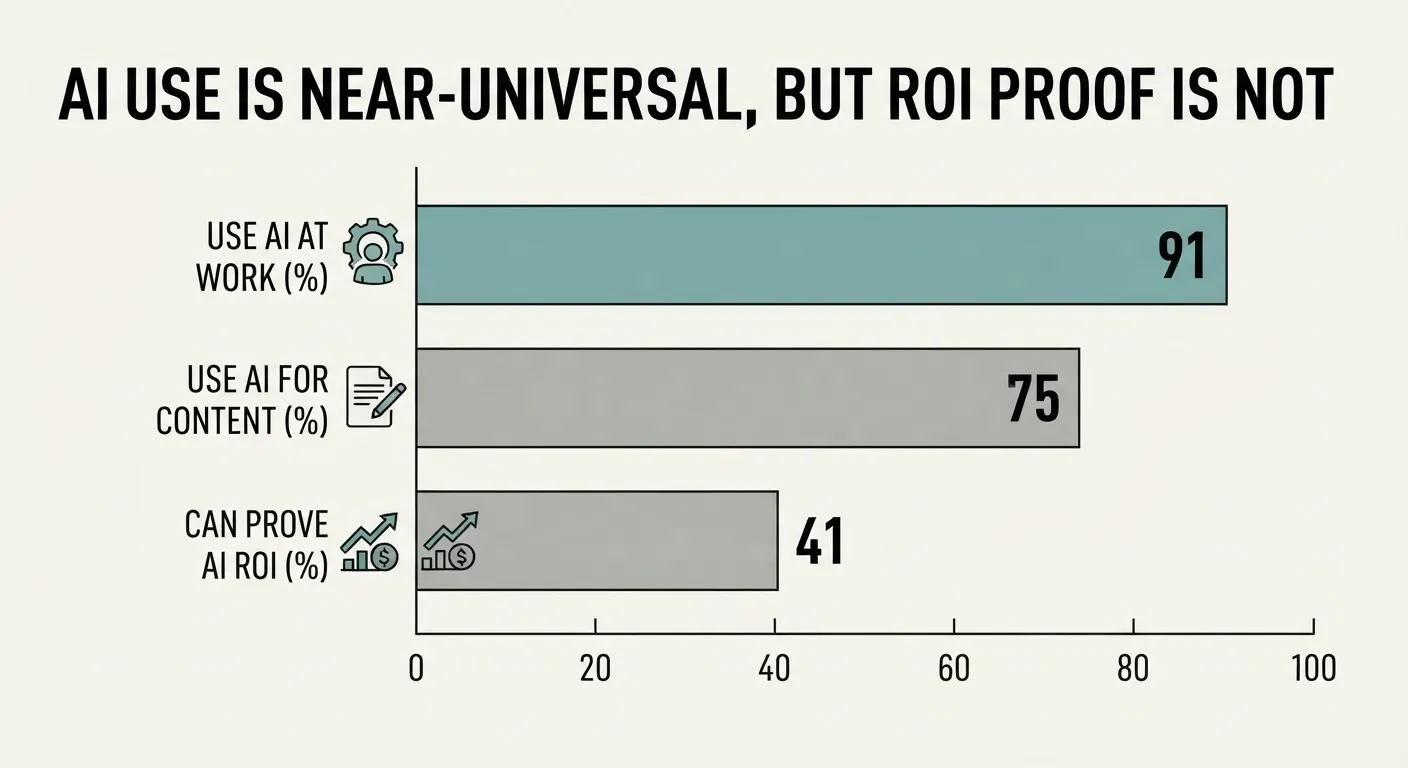
That gap is now visible in the market data. According to Jasper’s State of AI Marketing 2026, about 9 in 10 marketers (91%) actively use AI at work, but only about 4 in 10 (41%) can prove ROI.
The problem is not just content quality. It is the missing system that can execute a full B2B marketing loop without turning the founder into the operator.
The AI Content Trap: Generation Isn’t Execution
 And that is the trap: AI made writing abundant, but it did not make execution automatic. Most teams now have more drafts than they can turn into coordinated growth.
Research from Jasper’s State of AI Marketing 2026 shows about 9 in 10 marketers (91%) already use AI, while only about 41% can prove ROI. Adoption is not the bottleneck anymore.
Research from CXL’s 2026 B2B AI usage survey adds the second half of the story: about 3 in 4 B2B marketers (75%) already use AI for content production, but the real differentiator is scalable operating systems, not prompt libraries.
- AI writing is mainstream across marketing teams
- ROI still lags because execution stays fragmented
- Prompt quality is not enough when publishing and feedback are disconnected
- The next edge is operations that run without constant intervention
If the system ends with “generate draft,” the founder still owns the rest of the week. That leads to the real bottleneck.
Why You’re Still the Bottleneck
 And that bottleneck is usually not talent. It is process.
More content was never the bottleneck; unattended, connected execution is. A pile of AI drafts nobody schedules, measures, or follows up on is not growth.
The weekly grind is familiar: decide what to publish, review for brand fit, push it live, check the scorecard, and patch the next gap by hand. That is the operator tax.
Based on what we saw when the system problem kept surfacing in AI content workflows, the issue was not founders failing to use AI well; it was the absence of a loop that could run without them inside every step.
The research matches that mechanism:
- Jasper found top scaling blockers were brand, legal, and compliance review, then output quality and data/privacy risk
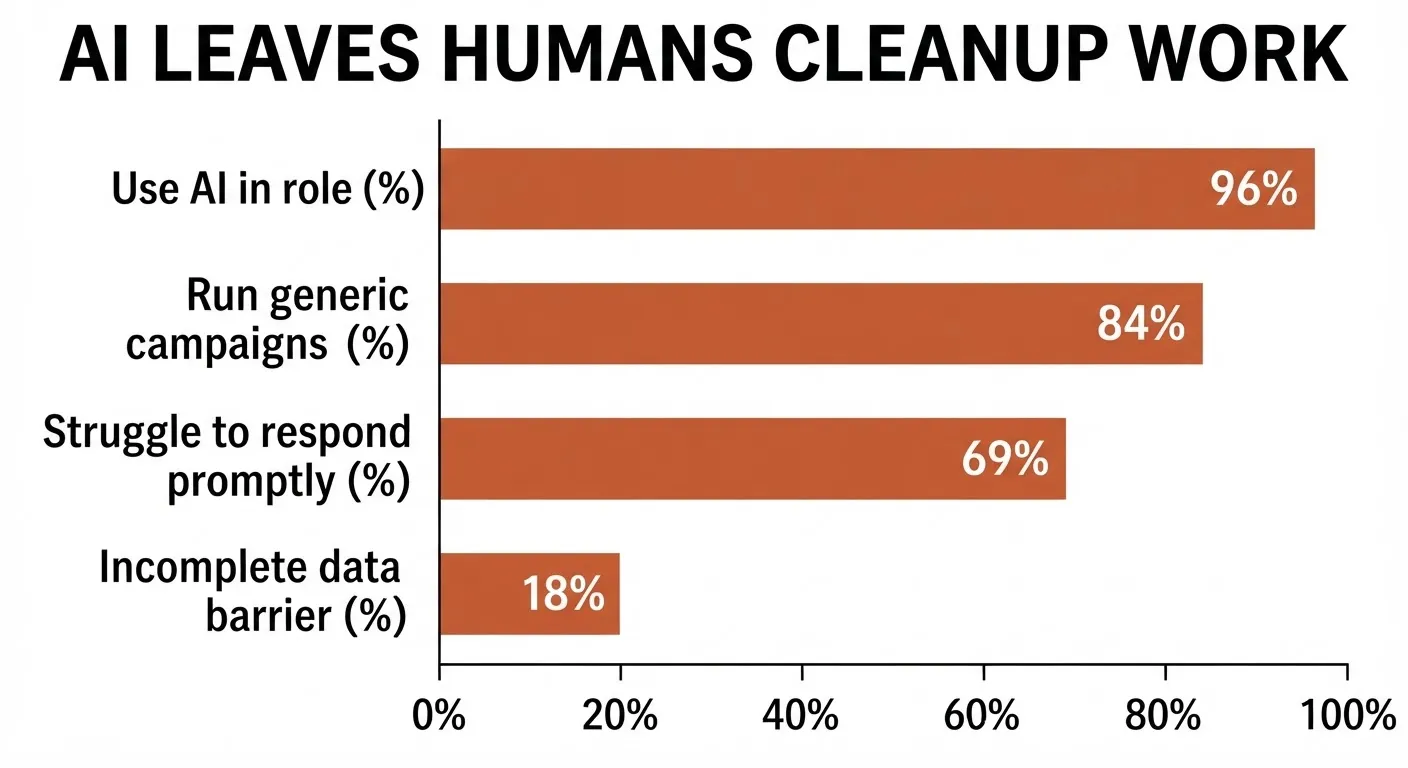
- Demand Gen Report found nearly all marketers (96%) use AI, yet about 18% still cite incomplete data as the biggest decision barrier
- Salesforce found more than 8 in 10 marketers (84%) still run generic campaigns and about 69% still struggle to respond promptly
When the loop is disconnected, the founder becomes the cleanup layer between tools.
So the real question is not how to write better prompts. It is how to stop operating the stack by hand.
Moving from Prompts to AI Marketing Automation Loops
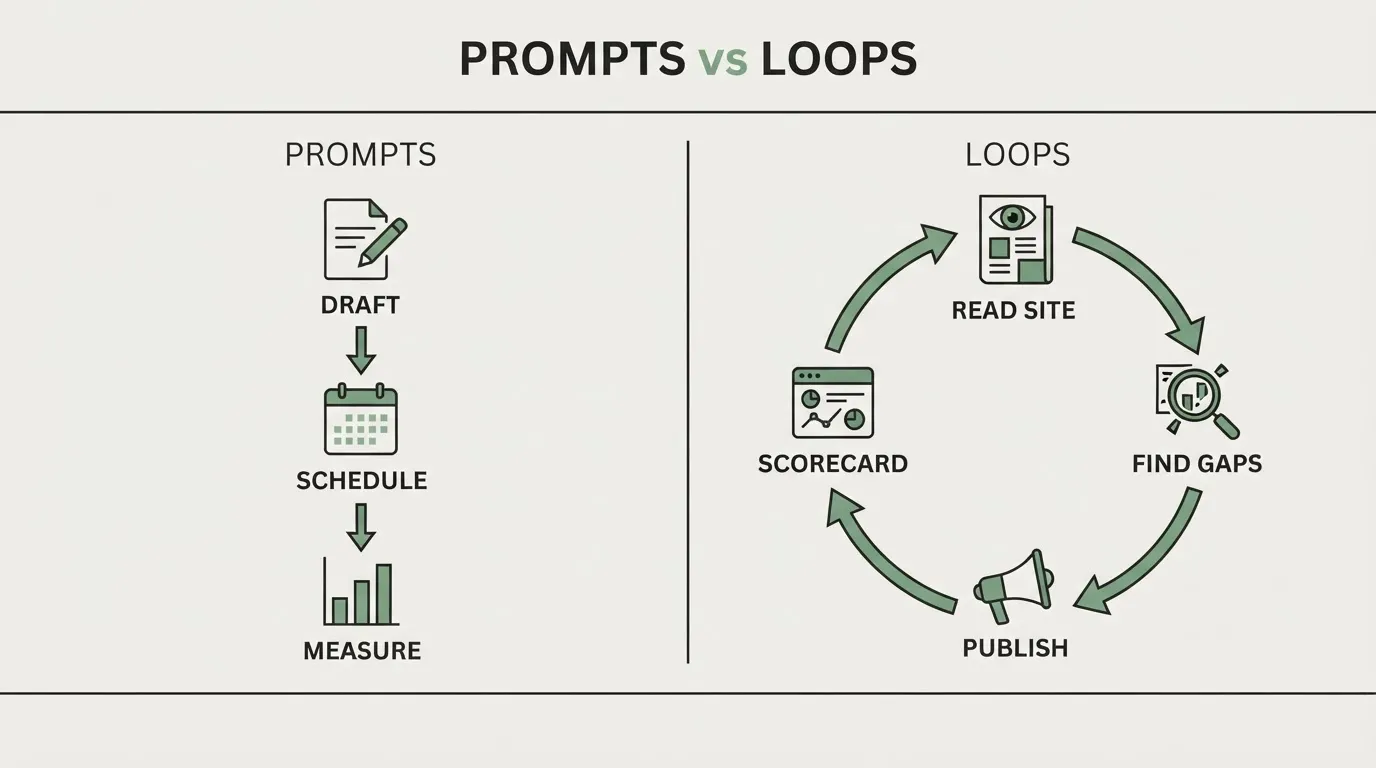
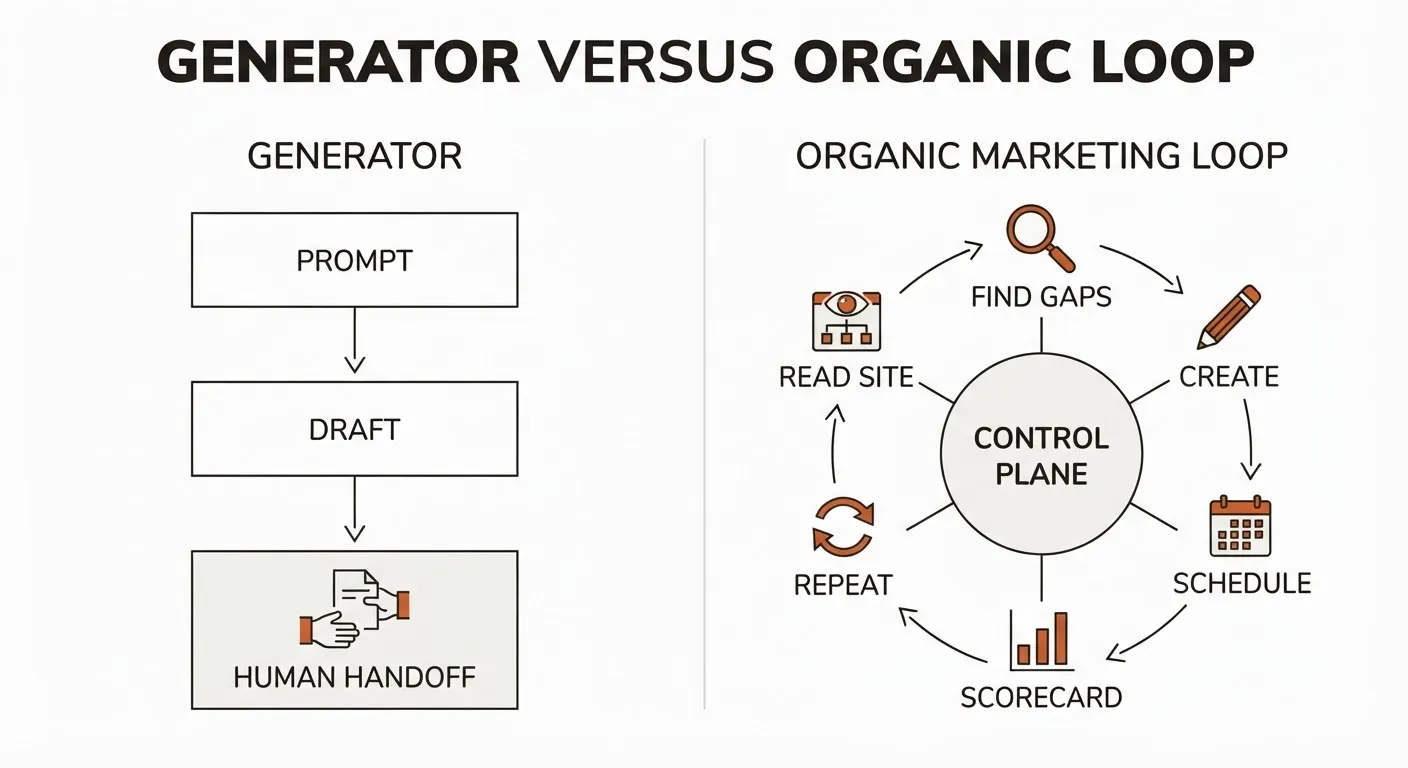 The shift is simple to describe and hard to build: stop managing isolated outputs and start managing an autonomous marketing loop. That requires a control plane.
A marketing control plane is the system layer that reads the site, finds gaps, generates assets, schedules distribution, measures results, and repeats the cycle with shared context. It is the mechanism that turns AI marketing automation into an operating system.
That mechanism matters because connected context changes execution quality:
- Content Marketing Institute reported from 1,015 B2B marketers that winners are building stronger systems first, not simply producing more AI content
- In Salesforce’s 2026 marketing research, marketers satisfied with unified customer data were 42% more likely to regularly respond to customers
- The same Salesforce research found they were 60% more likely to use AI agents to scale efforts
For a technical founder, the model is concrete:
- Read context: site pages, positioning, products, and existing assets
- Find gaps: missing topics, weak coverage, stale pages, thin channels
- Generate assets: blogs, posts, carousels, videos tied to that context
- Schedule distribution: publish across channels on a weekly cadence
- Measure and repeat: update the scorecard, feed results back into the next run
That is how you automate a B2B marketing loop: not with better prompts, but with a control plane that runs the loop.
The ROI of Autonomy
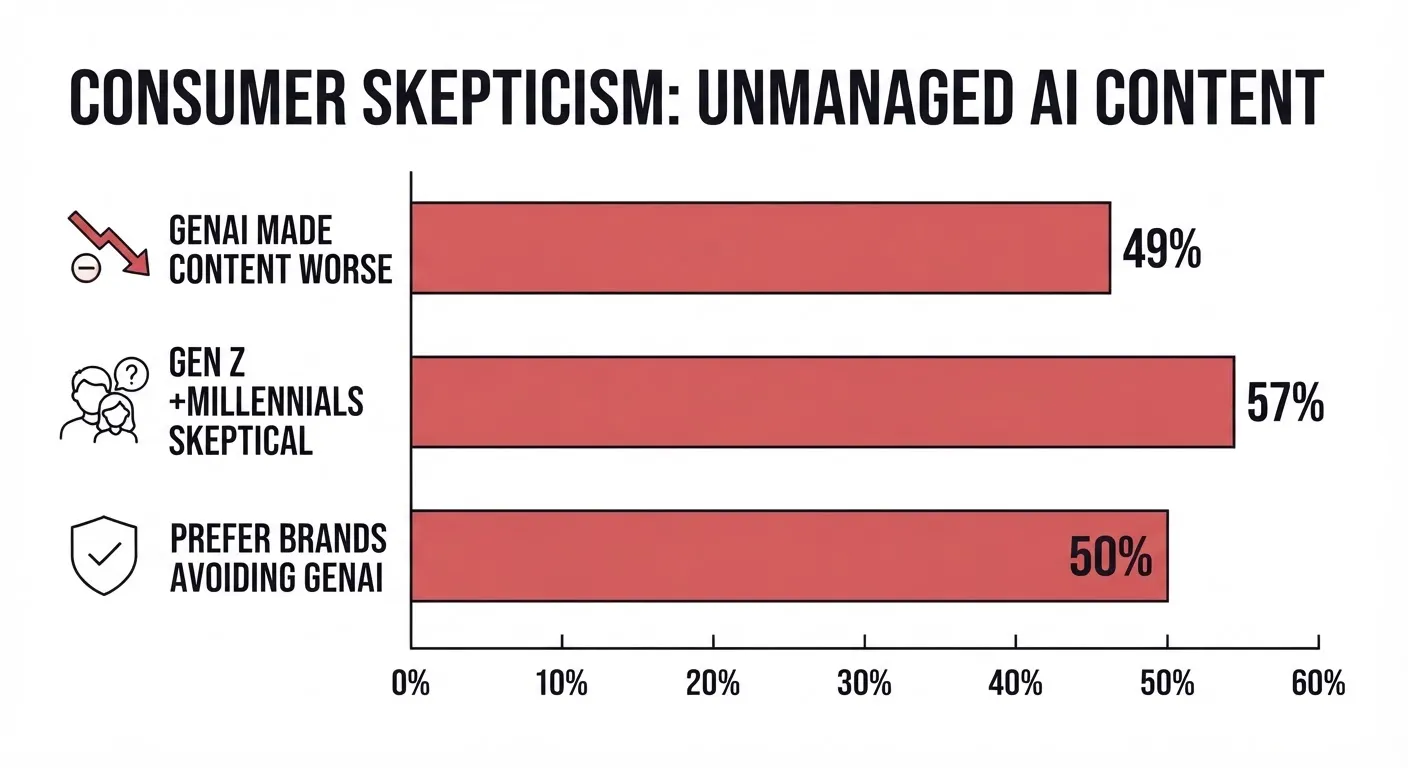 Once the loop can run, the payoff is not “more content.” The payoff is reclaimed founder attention.
That matters because weak execution now carries trust risk, not just wasted time. In a March 2026 survey of 307 U.S. consumers, Gartner found about half (49%) said genAI made content quality worse, rising to 57% among Gen Z and millennials.
A separate March 2026 consumer survey from Gartner found half of consumers (50%) prefer brands that avoid genAI in consumer-facing content.
That does not mean teams should avoid AI. It means oversight has to move up a level.
- Humans still govern brand, proof, and judgment
- The loop handles execution across the weekly calendar
- The founder reviews the scorecard instead of pushing every task forward
- Autonomy creates leverage because supervision scales better than direct operation
The best outcome is simple: your brand brain stays human, while the loop handles recurring execution.
Run the Loop, Don’t Become It
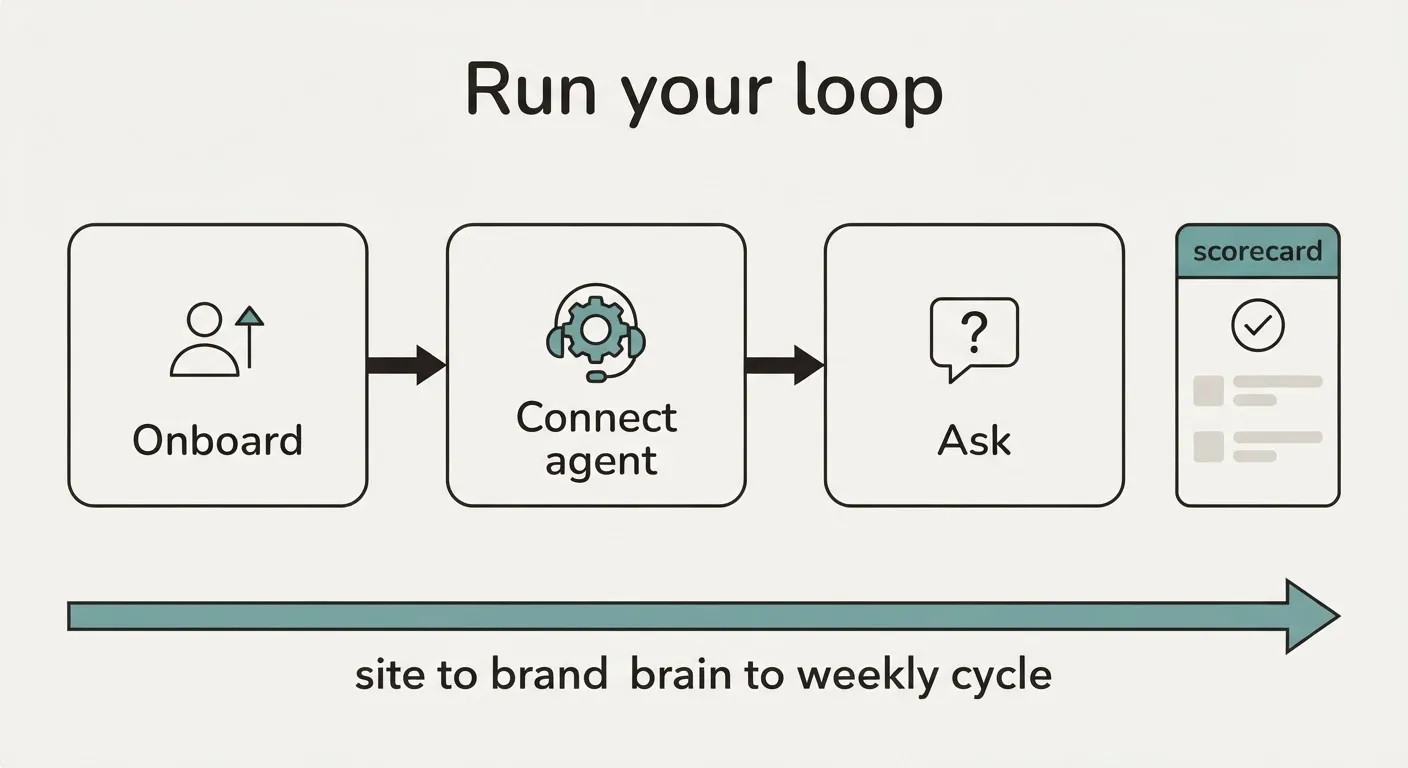 The opening image was a founder staring at a decent AI draft and realizing the real work had not even started. That is still where most teams get stuck.
The fix is not more prompting, more editing, or another writing tool. The fix is to treat the loop as the unit of work. If your system can read context, generate against real gaps, publish on schedule, measure results, and feed those signals back into the next cycle, then AI marketing automation starts compounding. If it cannot, you are still the one doing the execution by hand.
Key takeaways:
- More drafts will not fix growth when execution stays disconnected
- A control plane is the missing mechanism between AI output and real marketing throughput
- The right operating model is an autonomous organic marketing loop with human oversight above it
For technical founders, that changes the job. You stop acting as scheduler, reviewer, and analyst for every asset, and start supervising a scorecard and a brand brain that guide the system.
That is the practical answer to both core questions here. If your AI content is not driving growth, it is usually because generation is happening without a connected loop. If you want to automate your B2B marketing loop, design the control plane first: onboard context, connect your agent, run the weekly cycle, and inspect results at the system level.
Scout7 is built around that exact model: A week of organic marketing on loop. If you want to move from prompt management to autonomous execution, start by mapping your current loop end to end, identify where the founder still acts as the handoff layer, and replace those gaps with a system that can run the cycle every week. The teams that win from here will not be the ones producing the most AI drafts. They will be the ones that finally stop becoming the loop and start running it.
Frequently asked questions
Why doesn’t AI content alone produce growth?
Because drafting only automates the first step. The article argues that growth requires a connected loop that reads context, publishes, measures performance, and improves without constant founder intervention.
What is a control plane in AI marketing automation?
A control plane is the system layer that connects context, asset generation, distribution, measurement, and iteration. Instead of managing isolated prompts, you use it to run an autonomous marketing loop with shared context.
Why are founders still the bottleneck if AI can write quickly?
Founders often still review claims, fix tone, decide where content fits, publish it, and monitor results by hand. When those steps are disconnected, the founder becomes the cleanup layer between tools.
What does ROI actually look like here?
The article makes the case that the main ROI is not just more content output. It is fewer operator hours, with the founder reviewing a scorecard and brand judgment instead of manually pushing every task forward.
References
- Jasper — The State of AI Marketing 2026
- CXL — How Teams Use AI in B2B Marketing in 2026
- Content Marketing Institute — B2B Content and Marketing Trends: Insights for 2026
- Demand Gen Report — AI Dominates: Key Insights from Demand Gen Report’s 2026 B2B Trends
- Salesforce — State of Marketing 2026
- Gartner — Survey Finds 49% of U.S. Consumers Say GenAI Has Made Content Quality Worse
- Gartner — 50% of Consumers Prefer Brands That Avoid Using GenAI in Consumer-Facing Content