
guide
Why Generative Engine Optimization Lets Rivals Get Cited First
August 27, 2026 · 11 min read · Scout7
A practical guide to Generative Engine Optimization: why AI search favors earned authority, and how to structure content to get cited.
Introduction
Generative Engine Optimization is not about cramming more keywords onto your site. It is about making your brand easy for AI tools to understand and safe to cite, which usually means clean structure on your pages and stronger proof from sources beyond your own website.
Key takeaways:
- Clean structure opens the door to AI discovery
- Third-party proof matters more than self-published claims
- AI citations follow trust patterns across your category
- The streak is the strategy for lasting visibility
Picture this: your team publishes a polished landing page, tunes every heading, and still watches ChatGPT cite three competitors first.
That gap feels strange until you see the shift clearly: AI search often treats your site as one signal among many, not the center of the buyer journey.
The old SEO playbook assumed your pages were home base.
Now the model may answer before the click ever happens.
This guide explains what that means in practice, why rivals with stronger outside validation get named first, and what an AI search strategy should actually prioritize.
By the end, you should be able to answer one simple question: if a model had to quote someone in your category today, would it see enough proof to quote you?
The Death of the Keyword-First Strategy
 And that leads to the first hard truth: if your plan still begins with keyword density, you are optimizing for a buyer behavior that is already changing.
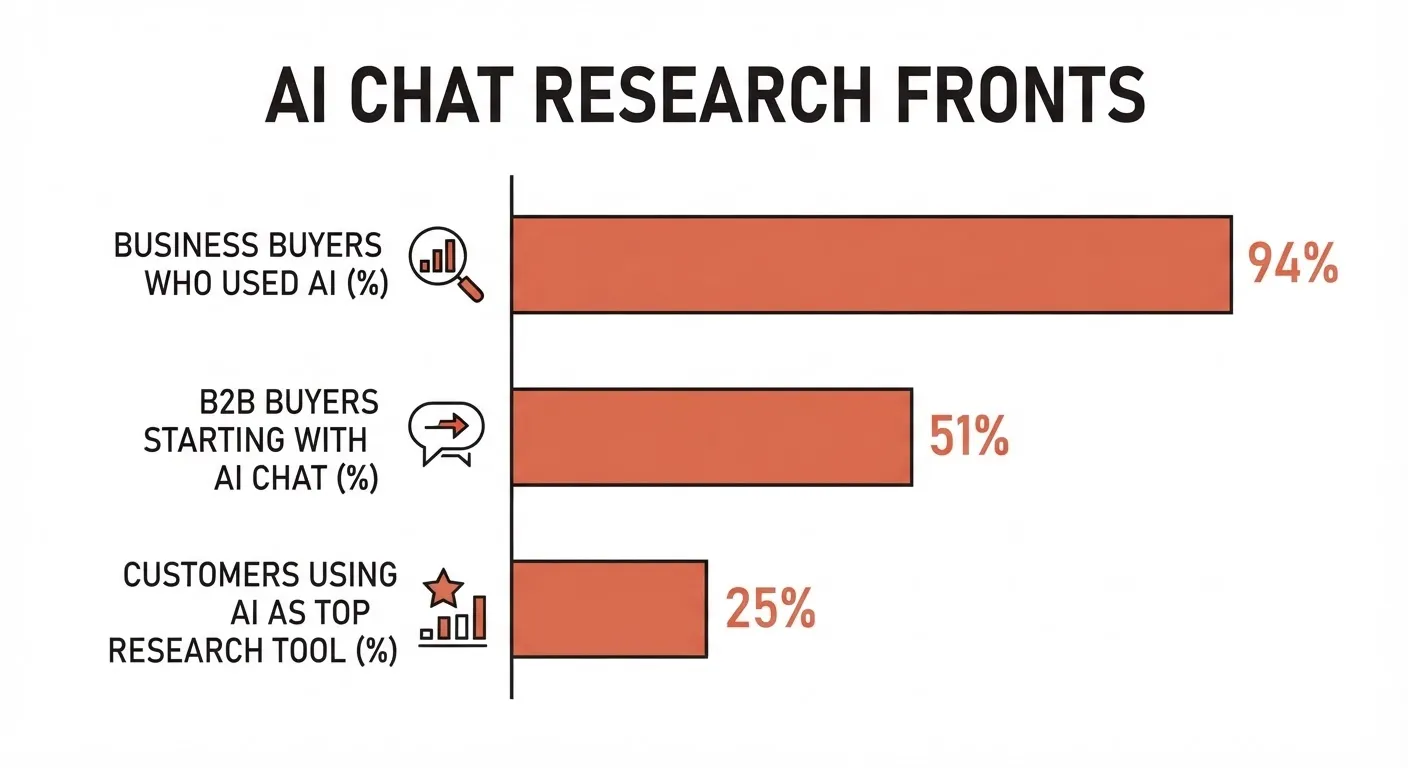
According to Adobe’s 2026 AI and Digital Trends Report, about 25% of surveyed customers (25%) now use AI platforms like ChatGPT as their top research tool.
For B2B software, the shift is even sharper.
Research from G2’s 2026 AI Search Insight Report says just over half of more than 1,000 buyers (51%) start research with an AI chatbot more often than Google.
And this is not edge-case behavior anymore.
Forrester’s Buyers’ Journey coverage says nearly all global business buyers surveyed (94%) used AI.
- Buyers ask chat first instead of opening ten tabs
- AI synthesizes sources instead of ranking blue links
- Your site loses gatekeeper status in early research
- Citation becomes the new front door to consideration
So if buyers now begin in chat, the next question is obvious: what makes a model trust one source over another?
Why AI Models Trust Earned Media
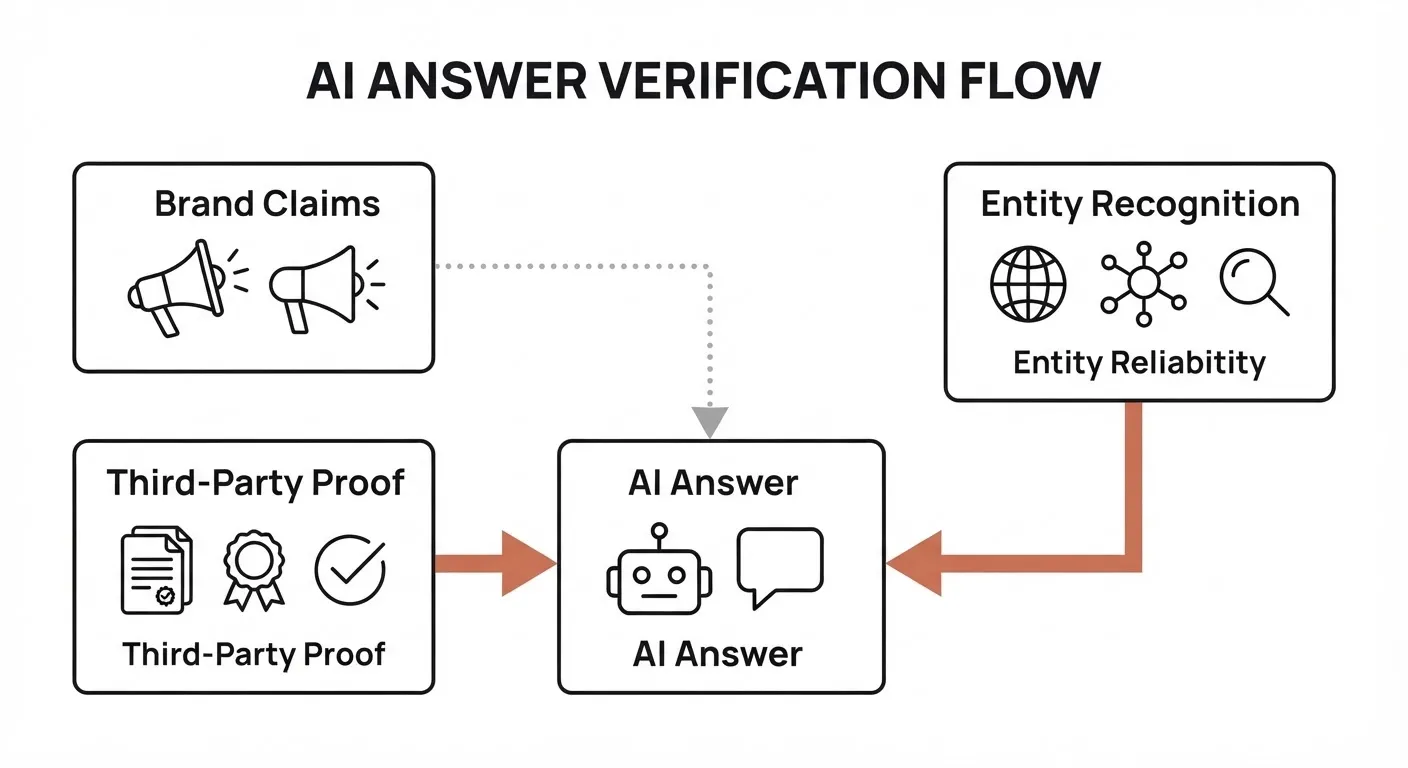 The short answer is simple: models look for signs that other people trust you, not just signs that you trust yourself.
A 2025 academic paper on Generative Engine Optimization found that AI search systems show a systematic bias toward earned media and authoritative third-party sources over brand-owned content.
That is the practical distinction most teams miss.
Machine-readable structure helps, but earned authority is the bigger lever.
If your brand is consistently named in reviews, expert roundups, industry coverage, and category pages, a model has more external proof to lean on.
If all the praise lives only on your own site, the model has less reason to treat you as the safest citation.
Research from TrustRadius’ 2026 buying report coverage adds the human reason why: about 94% of buyers who used AI (94%) said they fact-check AI responses at least some of the time.
So the model is not just generating answers.
It is generating answers users may verify.
That is why entity clarity also matters.
A brand that is described the same way across pages, profiles, reviews, and articles is easier for a model to recognize as one coherent thing.
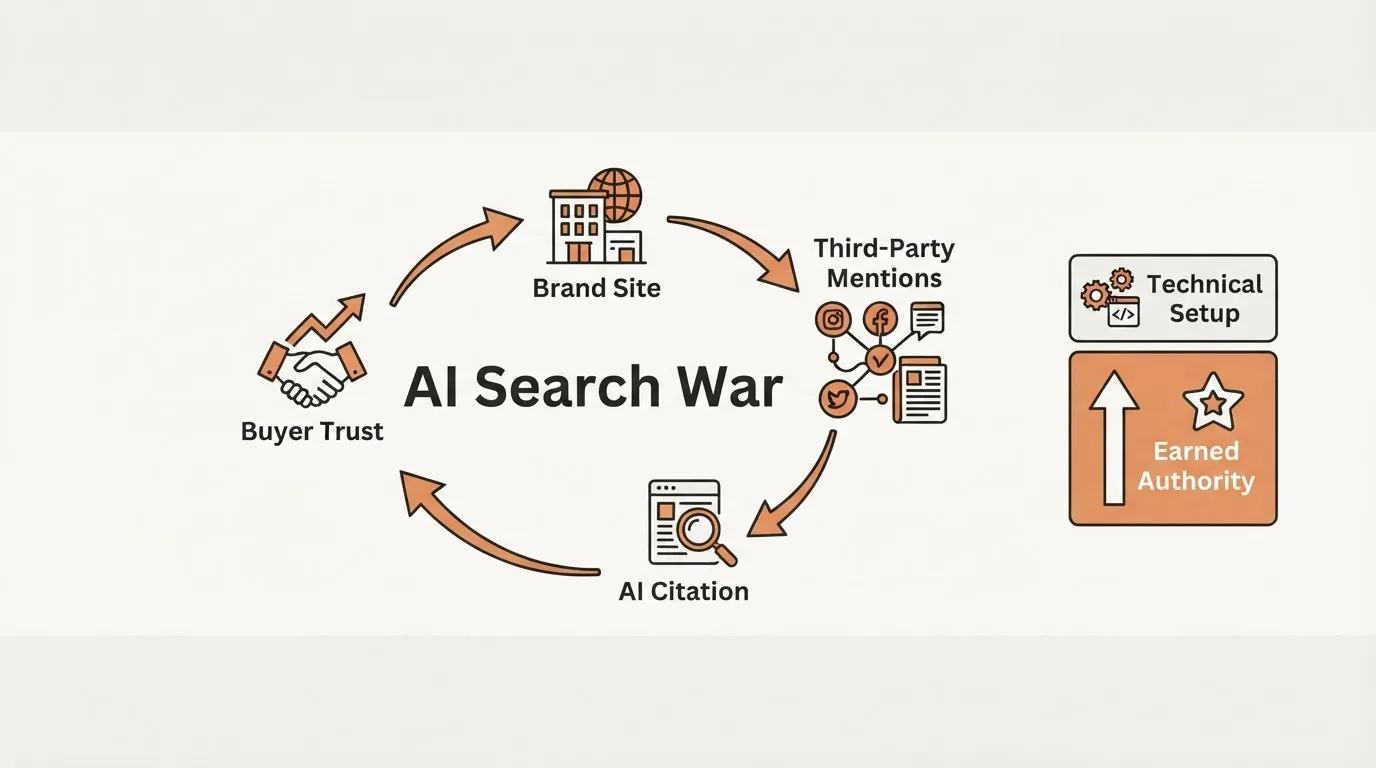
The pattern is clear: clean structure and clear entity signals open the door, but earned authority from trusted third-party mentions is what gets a brand quoted.
Technical setup opens the door; authority walks you through it.
Once you see that, the tactical question changes from “How do I optimize my page harder?” to “How do I make my knowledge easier to parse and my brand easier to verify?”
Structuring Content for AI Discovery
 That shift starts on your own site, even if your own site is not the whole game.
Good Generative Engine Optimization means making content easy to parse, easy to verify, and easy to quote.
Start with the answer near the top.
Do not bury the definition, claim, or recommendation beneath a long brand intro.
Then make the page machine-readable.
- Use clear headings that mirror real buyer questions
- Keep sections short so answers are easy to extract
- Add comparison tables when buyers evaluate options
- Repeat your entity description in consistent language
- Support claims with named proof like reviews, sources, and case data
For content teams under pressure, speed is no longer the blocker alone.
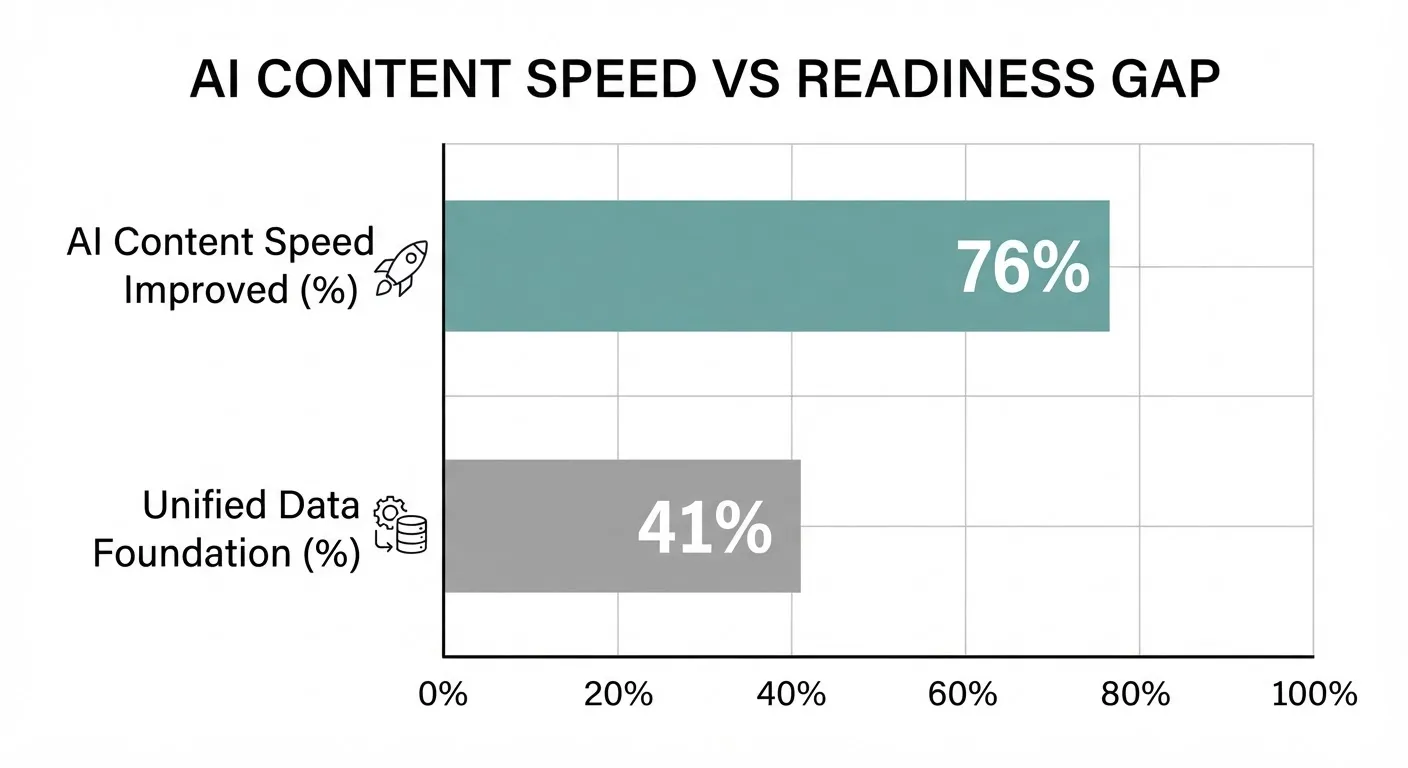
According to Adobe’s 2026 AI and Digital Trends Report, more than three-quarters of organizations (76%) reported moderate-to-significant improvements in content ideation and production speed from generative AI.
But infrastructure still breaks execution.
Adobe’s 2026 B2B Journey Orchestration report says about 41% of B2B organizations (41%) have a unified customer data foundation that can support AI at scale.
So yes, publish answer-first content.
But remember the bigger point: structure makes you legible, while authority makes you quotable.
And that raises the harder problem most teams try to skip.
Building Your Authority Footprint
 The harder problem is building proof beyond your own pages, because most teams still want a one-week GEO hack.
AI chat rarely rewards that.
It rewards the brand that keeps showing up in places the model already treats as credible.
That means your AI search strategy should follow your category’s citation habits, not generic advice.
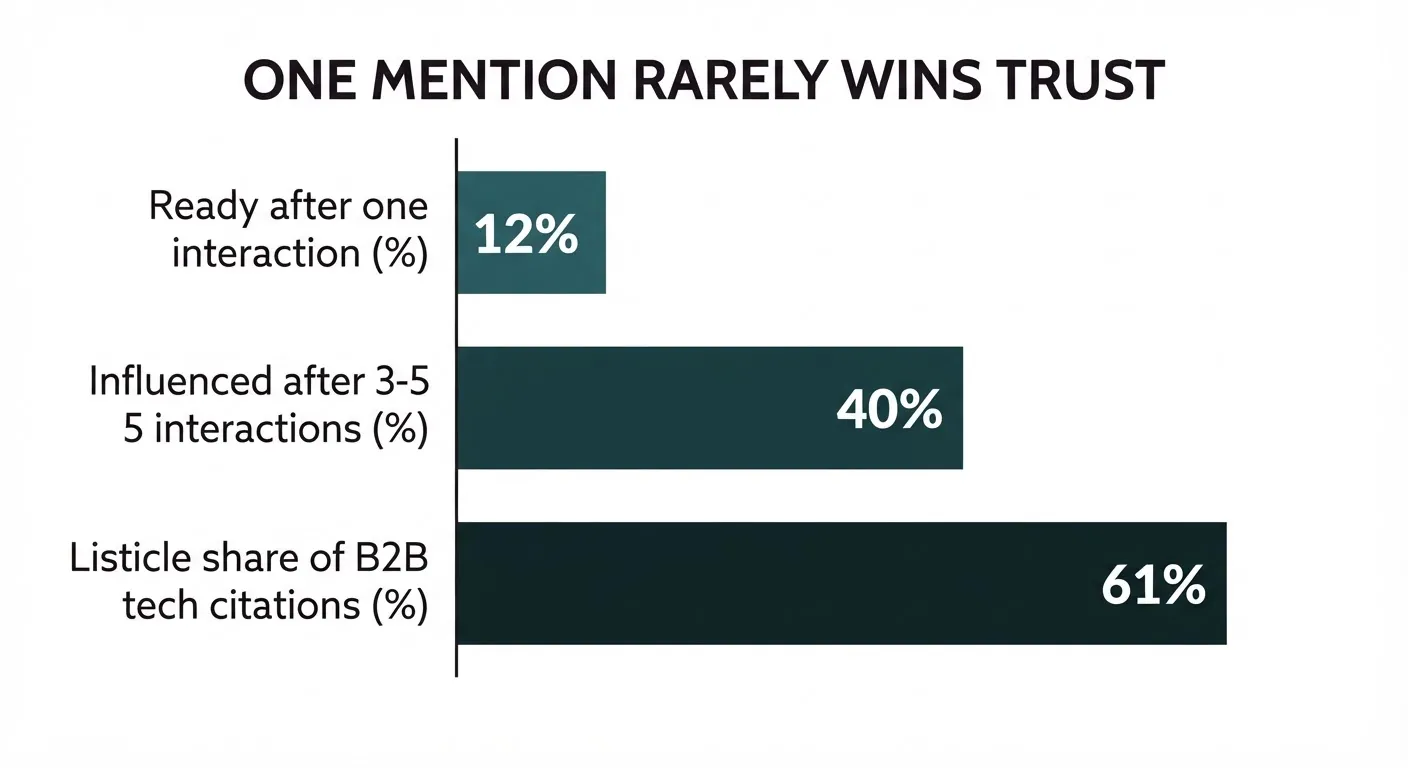
Research from DeltaV Digital’s AI citation study tracked 21,075 AI responses and 25,337 citations and found that in B2B technology services, listicles captured about 61% of citations (61%).
That one stat says a lot.
Different markets have different citation fingerprints.
- Software brands may need G2, TrustRadius, and comparison pages
- Service brands may need editorial listicles and expert explainers
- Thought leaders may need podcasts, quotes, and industry mentions
- All brands need repetition across formats, not one isolated hit
And buyers still need multiple touches before they move.
Adobe’s 2026 consumer report says only about 12% of customers (12%) feel ready to purchase after one personalized interaction, while about 40% are influenced after three to five interactions.
That is why one launch post will not carry you.
The streak is the strategy.
Once you accept that authority is a cross-web pattern, measurement also has to change.
Measuring Generative Engine Optimization Success Without Rankings
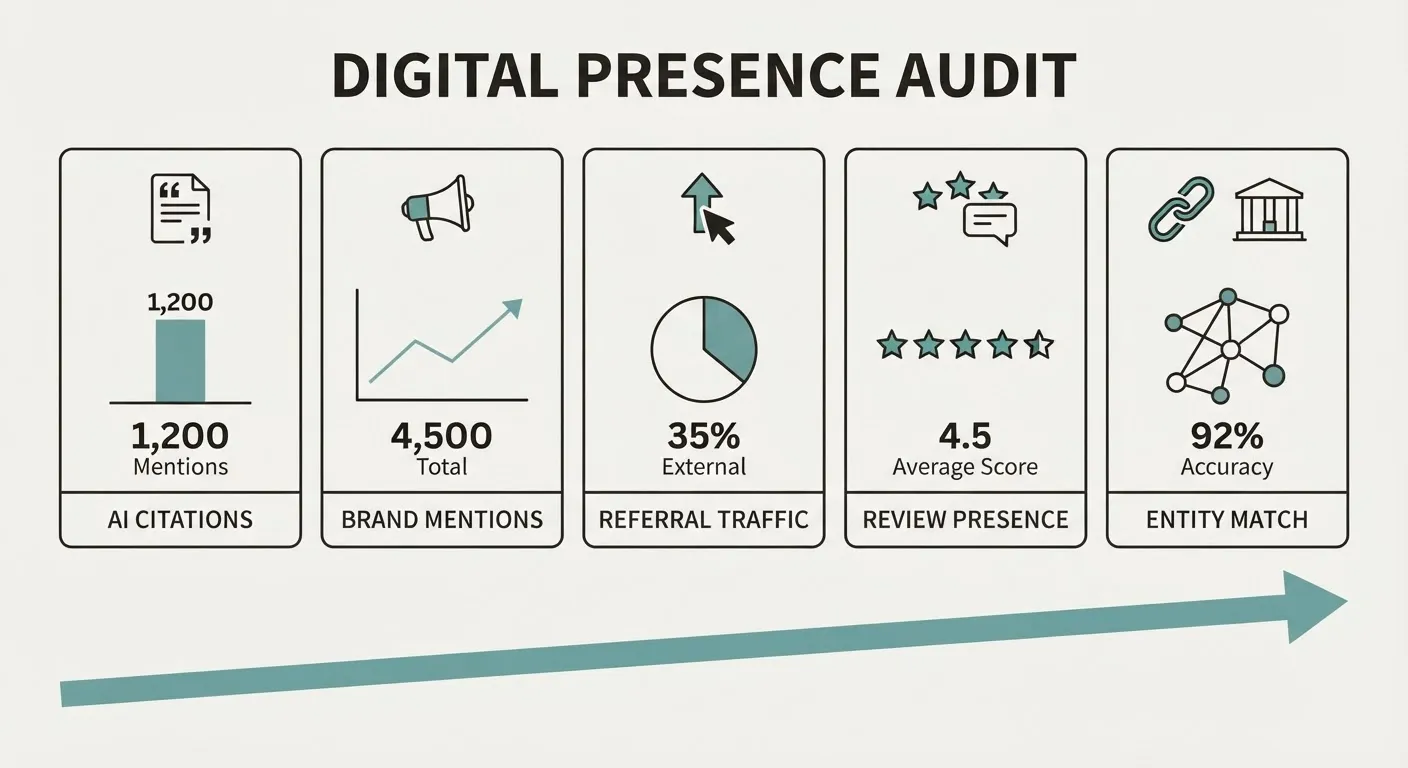 If you only track rankings, you will miss the channels where AI search changes buyer behavior first.
Generative Engine Optimization success shows up earlier in mentions, citations, assisted visits, and branded demand.
Start by watching where your brand appears inside AI answers.
Then expand outward to the sources those answers tend to quote.
- Track AI mentions for brand, product, and category terms
- Monitor review visibility on sites buyers already trust
- Check referral traffic from AI tools and comparison pages
- Audit entity consistency across bios, profiles, and descriptions
- Compare share of citations against direct competitors
This is a different scoreboard.
A page can rank lower in classic search and still influence more buying if AI tools keep citing it or citing sources that mention it.
That is why entity consistency should become a KPI, not a cleanup task.
If your product is described three different ways across the web, you force the model to guess.
If it is described one clear way everywhere, you make citation easier.
And that points to the larger strategic finish line.
What Wins the AI Search War
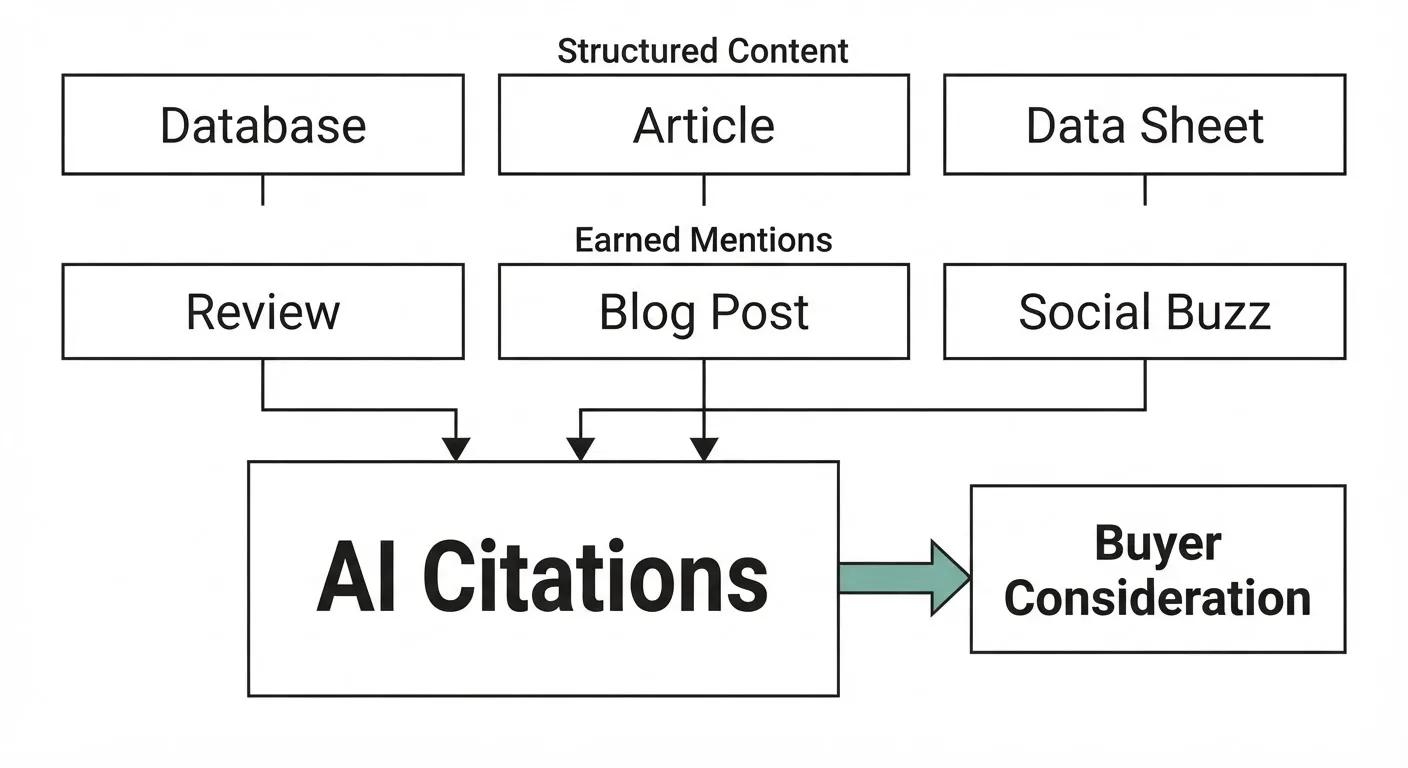 What wins is not a clever prompt trick or a fresh layer of keyword tuning.
What wins is becoming the source AI systems feel safe citing.
That means combining two layers that work together.
The first layer is clarity.
Define your brand, category, audience, and claims in clear, repeated language.
The second layer is proof.
Earn mentions where your buyers already look and where models already pull evidence.
- Start with clarity about what you are and who you help
- Publish answer-first pages that are easy to quote
- Earn external proof from trusted third-party sources
- Match citation patterns in your specific market
- Stay consistent over time because the streak is the strategy
If you are wondering how AI search impacts SEO rankings, here is the plain answer: it does not replace SEO entirely, but it reduces the value of rankings as the only visibility metric because buyers may get the answer before clicking.
And if you are wondering how to get cited by ChatGPT or Claude, the plain answer is this: create clear, extractable content and build enough third-party validation that the model sees your brand as a recognized authority.
That brings us back to the practical questions most teams ask before they act.
Common Questions
What is GEO?
Generative Engine Optimization (GEO) is the practice of optimizing digital content to improve its visibility and ranking within the responses generated by AI-powered search engines and answer engines. It focuses on aligning content structure, factual accuracy, and topical authority to ensure that large language models prioritize specific information when synthesizing answers for users.
In practice, it means making your brand easier for AI tools to find, understand, and cite.
How does AI search impact SEO rankings?
AI search changes what visibility looks like because users can get synthesized answers without clicking through ranked results. Classic rankings still matter, but they no longer tell the whole story when AI tools summarize sources and shape consideration before a visit happens.
How to get cited by ChatGPT and Claude?
Publish answer-first content, keep your brand description consistent, and earn mentions on trusted third-party sites. Models are more likely to cite brands they can clearly recognize and externally verify.
Why does AI cite my competitors and not me?
Usually because they have more visible proof across the web, not just better website copy. If reviewers, publishers, and category pages mention them more often, the model has more confidence citing them.
Is GEO the same as AEO?
Not exactly. AEO focuses on producing direct answers, while GEO is broader and includes answer structure, authority signals, citations, and entity recognition across the web.
Conclusion
Key takeaways:
- Structure helps discovery, but authority drives citation
- AI search rewards recognition across the web more than isolated page optimization
- Consistent third-party proof compounds over time
- Audit your footprint now before rivals become the default citation
Go back to the opening moment: your page is polished, your SEO basics are solid, and the chatbot still names someone else first.
That is not random.
It is usually a trust signal problem.
The real lesson of Generative Engine Optimization is that visibility in AI search comes from two layers working together. Your content must be clear, answer-first, and machine-readable. But the bigger lever is earned authority: trusted mentions, reviews, comparisons, and editorial references that tell the model your brand is known beyond its own website.
For Scout7 readers, especially builders with no time to spare, this matters because you do not need more busywork. You need the right loop. Tighten your entity language, publish pages that answer questions fast, and build an authority plan that keeps showing up where your category gets cited.
That is how you create organic marketing on loop.
Start this week with a simple audit: ask ChatGPT and Claude your core category questions, note who gets cited, map the third-party sources behind those answers, and update your publishing plan around those gaps. One week matters, up close. But the streak is the strategy, and that is what will decide who gets quoted next.
Frequently asked questions
Why do AI search tools cite competitors before my site?
Usually because those competitors have more visible third-party validation across the web. If reviews, editorial listicles, comparison pages, and industry mentions reference them more often, the model has more external proof to rely on.
Does Generative Engine Optimization replace traditional SEO?
No. The article makes the case that SEO still matters, but rankings are no longer the only visibility metric because AI tools may answer before a click happens. Generative Engine Optimization adds structure, entity clarity, and off-site authority to that older playbook.
What should I fix first for better AI citations?
Start by making your content answer-first and easy to parse, with clear headings, short sections, and named proof. Then strengthen off-site authority by earning mentions in the third-party sources your category already trusts.
How do I measure whether GEO is working?
Do not rely on rankings alone. Track AI mentions, cited sources, referral traffic from AI tools and comparison pages, review-site visibility, and whether your brand is described consistently across the web.
References
- Generative Engine Optimization: How to Dominate AI Search
- Adobe’s 2026 AI and Digital Trends Report: Key AI & CX Insights
- 2026 AI and Digital Trends in B2B Journey Orchestration
- Adobe 2026 AI and Digital Trends: Customer Behaviors and AI
- The Answer Economy: How AI Search is Rewiring B2B Software Buying
- TrustRadius 2026 B2B Buying Disconnect Report Reveals AI Has Changed How Buyers Research, But Not What They Trust
- B2B Buyers Make Zero-Click Buying Number One
- AI search citations study: what 25,000+ citations reveal