
market_pov
Why Ranking #1 No Longer Wins in AI Overviews SEO
August 27, 2026 · 9 min read · Scout7
AI Overviews cut top-result clicks and reward citation, not just rank. Learn what makes content citation-worthy in AI search.
Introduction
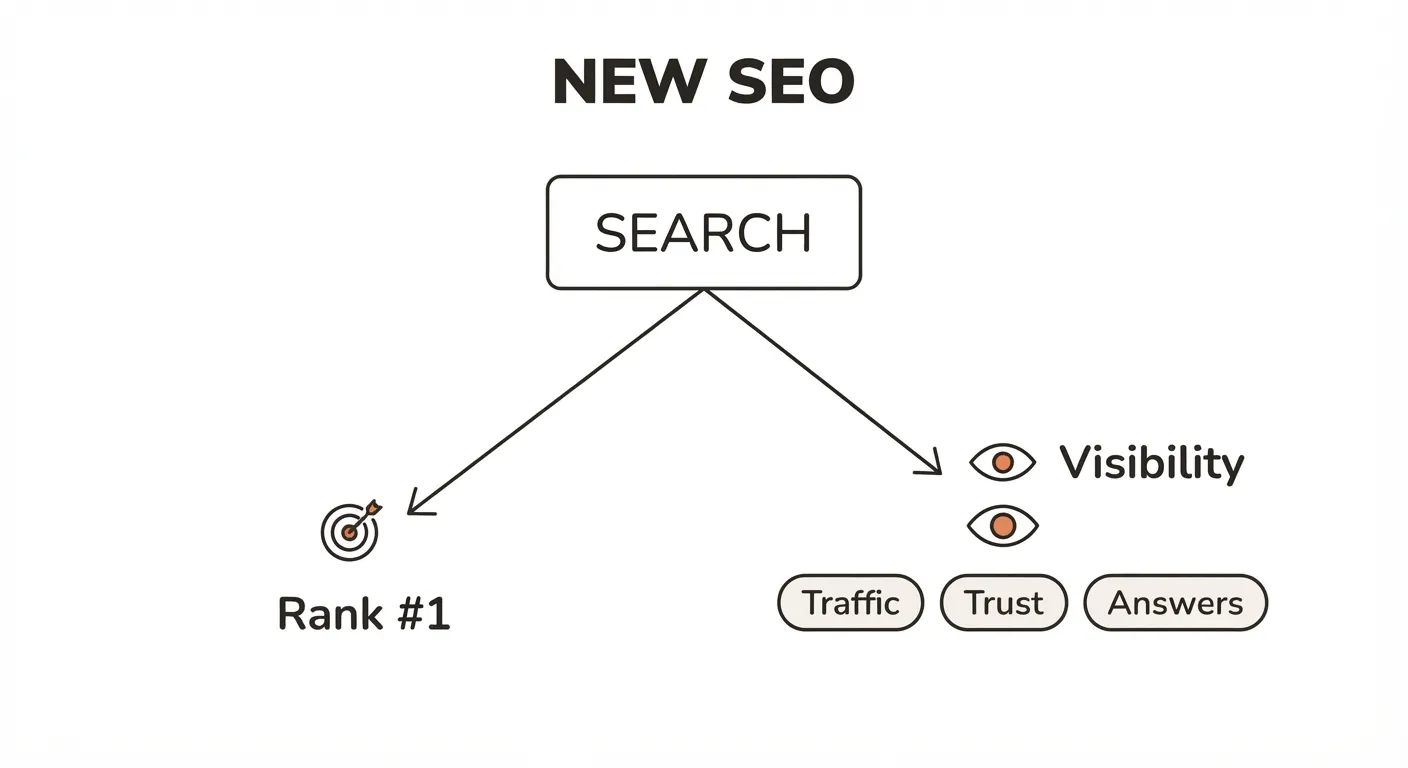
AI Overviews SEO now works on two tracks: ranking and citation. You still want strong SEO, but the brands winning visibility are the ones AI systems trust enough to quote, because the answer often appears before the click.
Key takeaways:
- Ranking and visibility split when AI Overviews appear
- Citation beats position alone in many answer-first searches
- Commercial queries are shifting into AI Overview territory fast
- Trust, structure, and specificity make content more citation-worthy
For years, search felt simple. Hit position one, protect your click share, and let the traffic roll in.
That mental model is now outdated, and not in a subtle way. Search is moving from link selection to answer synthesis, which means your page can rank well and still lose attention if the machine cites someone else in the answer.
When Ranking #1 Stopped Being Enough
And that shift is not theoretical anymore. The clean old promise of SEO — rank first, win the click — broke the moment AI answers started sitting above the blue links.
According to Ahrefs, the top-ranking page’s average clickthrough rate is 58% lower when an AI Overview appears. That finding came from a February 2026 analysis of 300,000 keywords, comparing queries with and without AI Overviews.
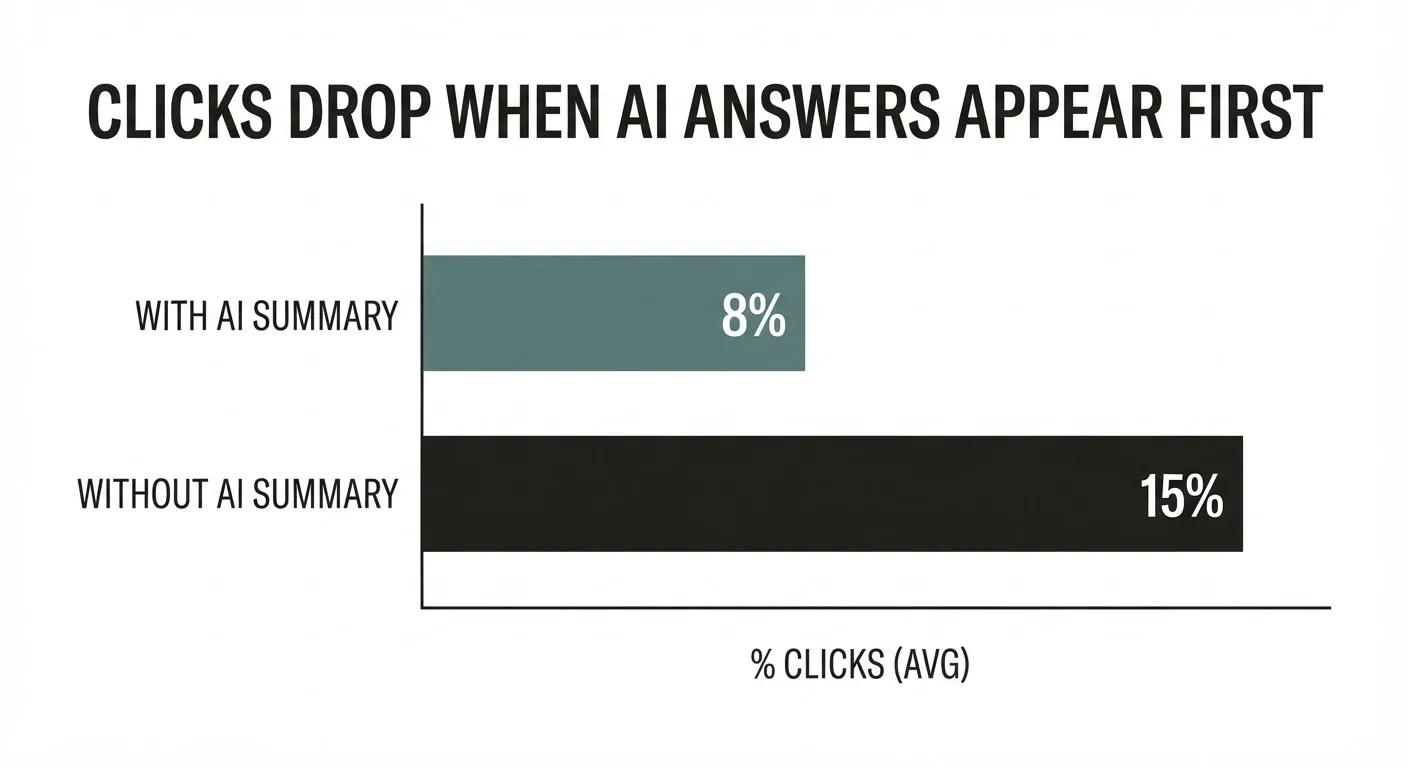
The behavior data tells the same story. Pew Research Center analyzed 68,879 unique Google searches and found users clicked a traditional search result just 8% of the time when an AI summary appeared, versus 15% when it did not.
That is the real break. People do not start with the links anymore; they start with the synthesized answer.
The takeaway is blunt: the old “rank #1 and you win” rule is over, while SEO still matters as support.
So the next question is not whether AI Overviews matter. It is where they matter most.
Why Commercial Intent Is the New Battlefield
And that is where this gets more expensive. AI Overviews are no longer just an informational-search quirk living at the top of harmless how-to queries.
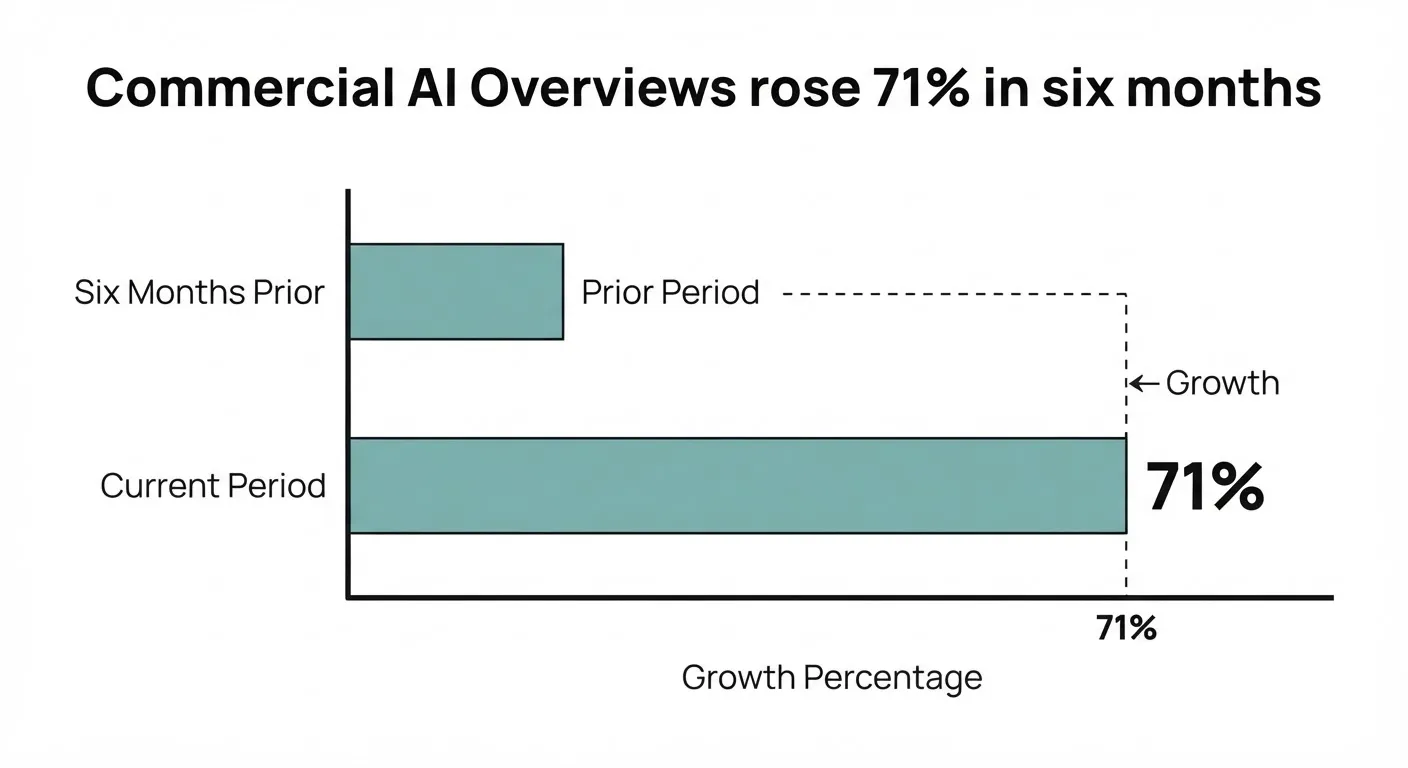
Research from Semrush found the share of commercial-intent SERPs with an AI Overview grew 71% in six months, based on more than 600,000 U.S. desktop keywords across 10 industries. In practice, AI answer boxes are moving closer to the searches that shape real buying decisions.
That changes the stakes for B2B marketing teams. These are the teams responsible for creating demand, supporting sales, and moving buyers from research to revenue, and they now have to think beyond rank reports.
If citation visibility is growing inside commercial queries, then AI search citation is not a side project. It is part of pipeline protection.
Which leads to the deeper question: what actually makes one source get cited over another?
The Anatomy of a Cited Source
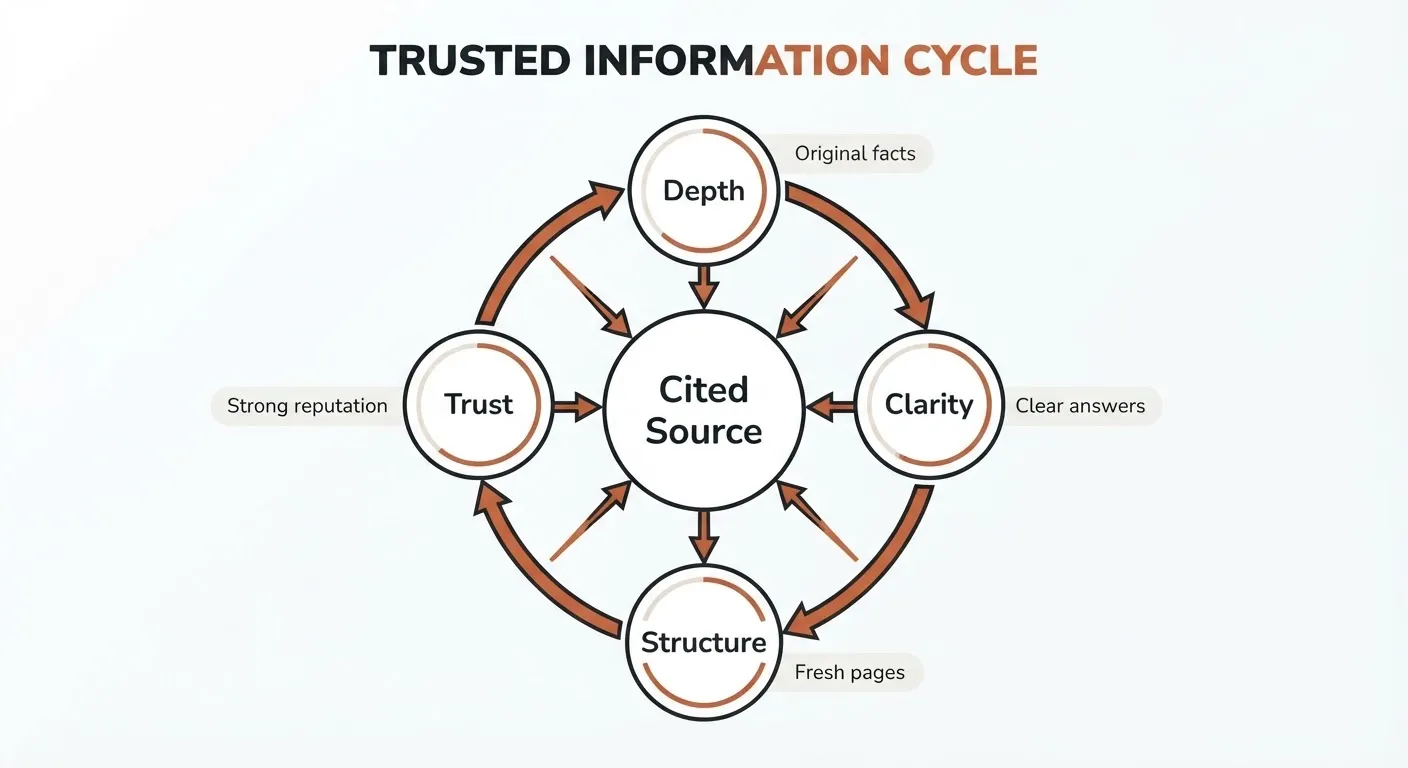
And here is the part many teams still miss. AI Overviews citations do not go to content just because it exists, or because it matches a keyword, or because it stuffed in every old SEO trick.
Research from Seer Interactive found pages with heavy FAQ and HowTo schema underperformed by roughly 10x for the first AI Overview citation slot. That matters because it shows a split: traditional ranking signals and AI citation outcomes are no longer the same thing.
Here is what citation-worthy content usually looks like:
- Specific answers that resolve the query fast
- Original evidence such as examples, comparisons, or firsthand observations
- Fresh information that feels maintained, not abandoned
- Clear headings and structure that machines can parse easily
- Trust signals that support E-E-A-T
E-E-A-T stands for experience, expertise, authoritativeness, and trust. In this context, it matters because AI systems appear more likely to cite sources that look reliable, current, and grounded in real knowledge.
Structured data still matters, but mostly as support. It helps search systems understand page elements, yet schema alone will not rescue thin content.
That trust layer is not optional. Forrester reported that nearly 1 in 5 buyers (19%) using generative AI applications feel less confident in purchasing decisions because of inaccurate or unreliable AI information.
If AI cites sources it trusts, thin content is not just weak SEO. It is a trust liability.
So if old SEO habits do not carry the whole load, what does a practical citation-first system look like?
How to Build an AI Overviews SEO Citation-First Organic Loop
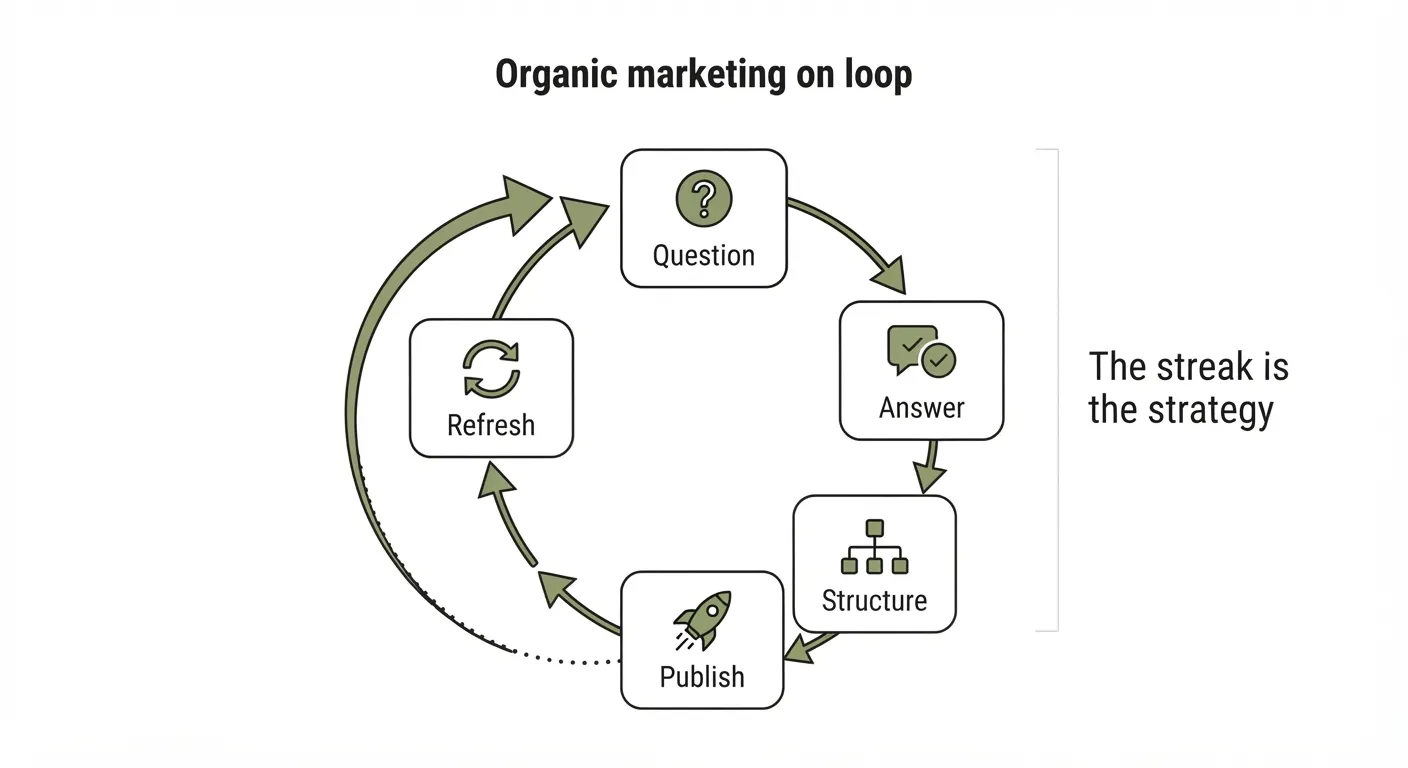
The answer is not to abandon SEO. It is to treat SEO as the floor and build a publishing system designed to be quoted.
That is where content automation matters. Content automation is the use of systems and AI tools to generate, schedule, update, and distribute content consistently, and it matters here because citation is rarely won by one lucky post. It is won by a steady body of useful answers.
HubSpot found that 80% of marketers use AI for content creation and 75% use it for media production. AI is now part of normal content operations, not an experiment.
But scale without readiness breaks fast. Adobe found only 41% of nearly 800 B2B organizations say they have a unified customer data foundation that can support AI at scale.
For Scout7, that is the practical lens: a week of organic marketing on loop. Designed for builders with no time to spare, the goal is not endless content. It is one useful answer after another, published consistently, updated often, and easy for both humans and machines to trust.
A citation-first loop looks like this:
- Start with high-intent questions your buyers already ask
- Answer directly first before adding context or narrative
- Use structured data carefully to clarify, not decorate
- Apply LLM source optimization by making facts, headings, and summaries easy to extract
- Refresh winning pages so the source stays current
- Build content authority by covering a topic deeply over time
LLM source optimization means shaping content so large language models can identify, extract, and cite the best parts of it. Content authority means your site earns repeated trust on a topic because it keeps publishing strong, connected answers.
And yes, Ahrefs still reminds us why this matters: when AI Overviews appear, the top result loses about 58% of expected CTR. Ranking still helps discovery. It just no longer guarantees you are the answer.
That usually leads teams to the same practical questions.
Common Questions
Does ranking #1 guarantee an AI citation?
No. Ranking helps AI systems find your content, but AI Overviews can still cite another source if it looks clearer, more trustworthy, or more directly useful.
That is the new split. SEO supports discoverability, while AI search citation depends more on answer quality, structure, and trust.
Why isn't my site showing up in AI answers?
Usually because the page is too thin, too vague, too old, or too hard to parse. If the answer is buried, generic, or unsupported, AI systems have little reason to cite it.
Pages also miss out when they lack content authority on the broader topic. One isolated article rarely beats a site with a stronger cluster of useful, maintained content.
What makes content citation-worthy?
Content becomes citation-worthy when it answers the question clearly, includes specific facts or original perspective, and feels trustworthy on contact. Strong headings, fresh updates, and visible expertise all help.
This is also where E-E-A-T matters most. If your page demonstrates real experience, expertise, authoritativeness, and trust, it is more likely to be treated as a source instead of just another page.
How many sources does an AI Overview cite?
It varies by query, so there is no fixed number to optimize around. The practical goal is simpler: become one of the sources the system trusts enough to include.
That brings us back to the real win condition.
The New Win Condition
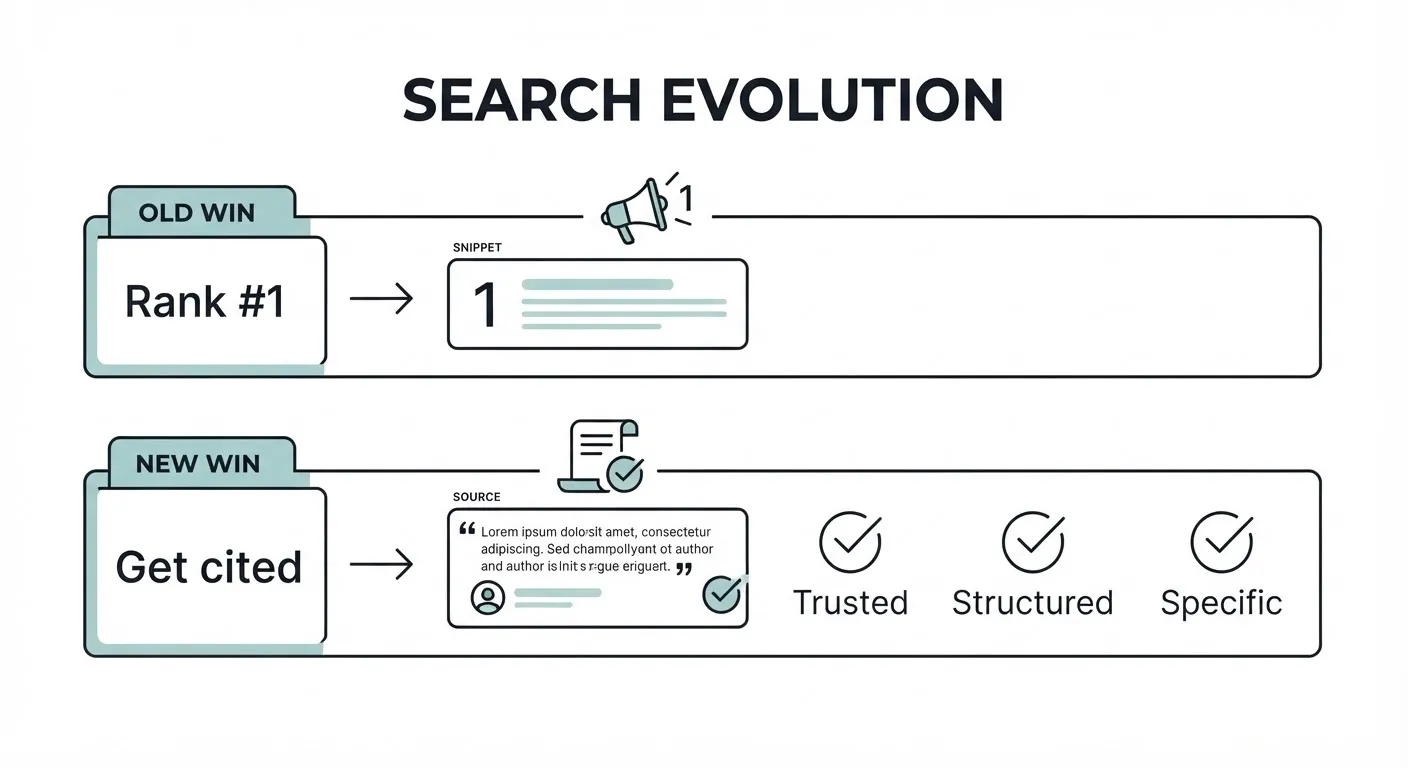
The old image was simple: your page sits in the top spot, the click follows, and the game is won. AI Overviews SEO changed that image.
Key takeaways:
- Ranking still matters but now acts as support, not the finish line
- AI Overviews citations reward trust structure, and answer quality
- Commercial search is shifting fast so citation affects revenue, not just awareness
- The streak is the strategy for builders who need authority to compound
The clearer strategy now is to keep doing SEO, but stop treating rank as the only outcome. Build pages that deserve AI citation: direct answers, current facts, visible expertise, clean structure, and enough topical depth to build trust over time.
That is also why AI Overviews should change your publishing rhythm. If you are a builder with no time to spare, think one week, up close. Publish one strong answer this week, another next week, and keep the loop running until authority compounds.
For Scout7, that is the practical play: organic marketing on loop, built for consistency instead of one-off bursts. If you want to win in AI search now, do not just ask how to rank. Ask whether your content is the source a machine would trust enough to quote.
Frequently asked questions
Does ranking #1 still matter in AI search?
Yes, but it is no longer the finish line. The article shows that ranking still helps discovery, while citation now plays a bigger role in whether your brand gets seen inside AI Overviews.
Why do AI Overviews reduce clicks to top-ranking pages?
Because users often see a synthesized answer before they choose a link. The article cites Ahrefs and Pew Research showing that when AI Overviews or AI summaries appear, users click traditional results less often.
What makes a page more likely to be cited in AI Overviews?
Pages are more citation-worthy when they answer clearly, include specific facts or original evidence, stay fresh, and are easy to parse. Trust signals and visible expertise also matter because AI systems appear to favor reliable, current sources.
Should teams focus on schema or content quality first?
Content quality comes first. The article explains that structured data helps as support, but schema alone will not rescue thin content or make a page citation-worthy.
References
- Ahrefs, "Update: AI Overviews Reduce Clicks by 58%" — https://ahrefs.com/blog/ai-overviews-reduce-clicks-update/
- Semrush, "AI Overviews are expanding across commercial intent search [Study]" — https://www.semrush.com/blog/ai-overviews-commercial-search-study/
- Pew Research Center, "Google users are less likely to click on links when an AI summary appears in the results" — https://www.pewresearch.org/short-reads/2025/07/22/google-users-are-less-likely-to-click-on-links-when-an-ai-summary-appears-in-the-results/
- Seer Interactive, "What It Takes To Rank In Google's AI Overviews in 2026 Isn't What You Think" — https://www.seerinteractive.com/insights/what-it-takes-to-rank-in-googles-ai-overviews-in-2026-is-not-what-you-think
- Forrester, "Forrester’s 2026 B2B Marketing, Sales, And Product Predictions: B2B Companies Will Lose More Than $10 Billion Because Of Ungoverned Use Of Generative AI" — https://investor.forrester.com/news-releases/news-release-details/forresters-2026-b2b-marketing-sales-and-product-predictions-b2b
- Adobe, "2026 AI and Digital Trends in B2B Journey Orchestration" — https://business.adobe.com/resources/reports/b2b-marketing-digital-trends.html
- HubSpot, "2026 State of Marketing Report" — https://www.hubspot.com/state-of-marketing