
market_pov
Why SEO Isn’t Dying: AI Search Optimization in 3
August 27, 2026 · 9 min read · Scout7
SEO still matters, but AI search changed the job. Learn the difference between SEO, AEO and GEO — and how to optimize for AI overviews.
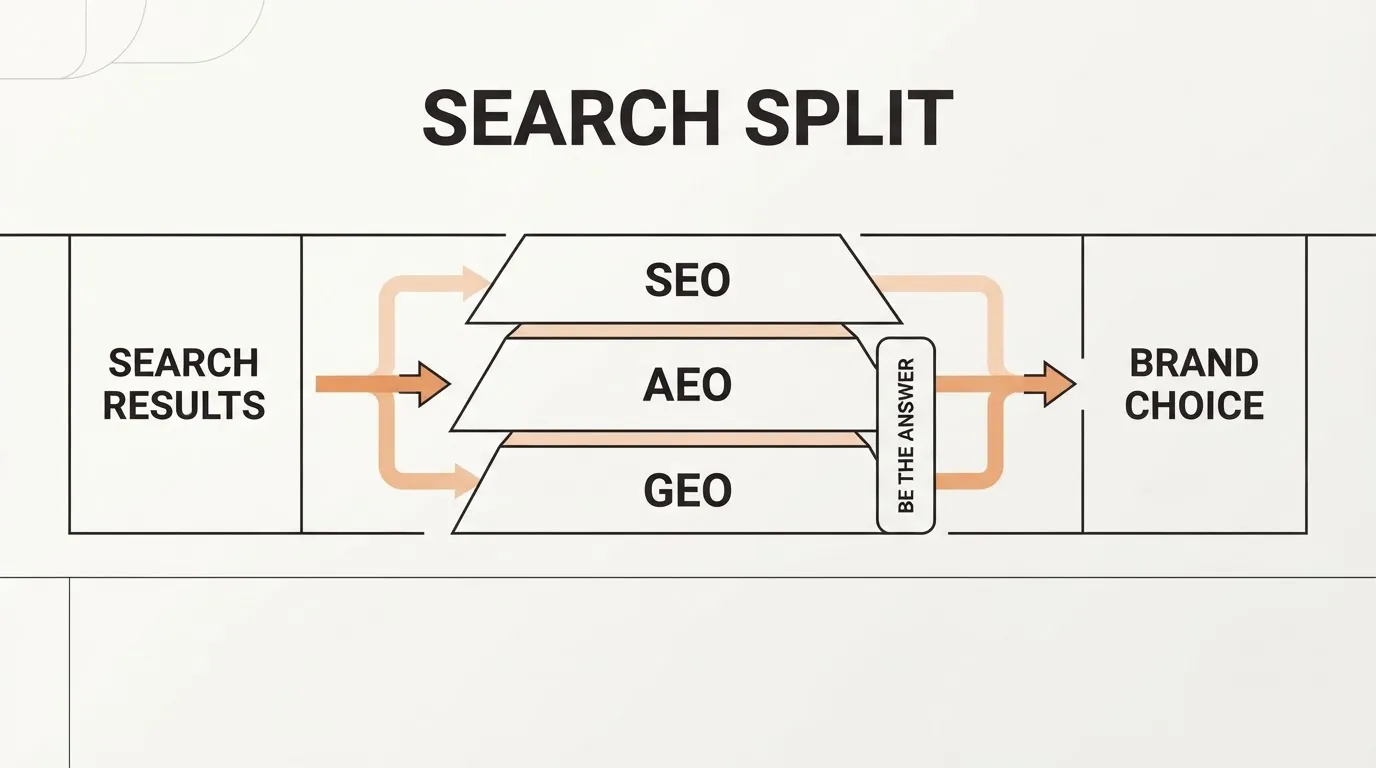
SEO still matters, but AI search changed the job. Here’s the clearest map for AI search optimization: SEO helps you rank, AEO helps you answer, and GEO helps you get cited in AI overviews and generative summaries.
AI search optimization now means building content that can rank in classic search, resolve direct questions in answer engines, and appear inside generated summaries before a buyer ever clicks. SEO is not dying. It is splitting into layers.
Key takeaways:
- SEO still matters as the base layer for discoverability
- AEO wins direct answers in AI overviews and answer engines
- GEO earns citations in generative summaries and comparisons
- The real risk is invisibility when AI names competitors first
The Front Door to the Internet Just Moved
Picture a buyer asking an AI, “What’s the best bug tracking tool for a small product team?” and hearing three brand names before your site ever gets a chance. That is the shift.
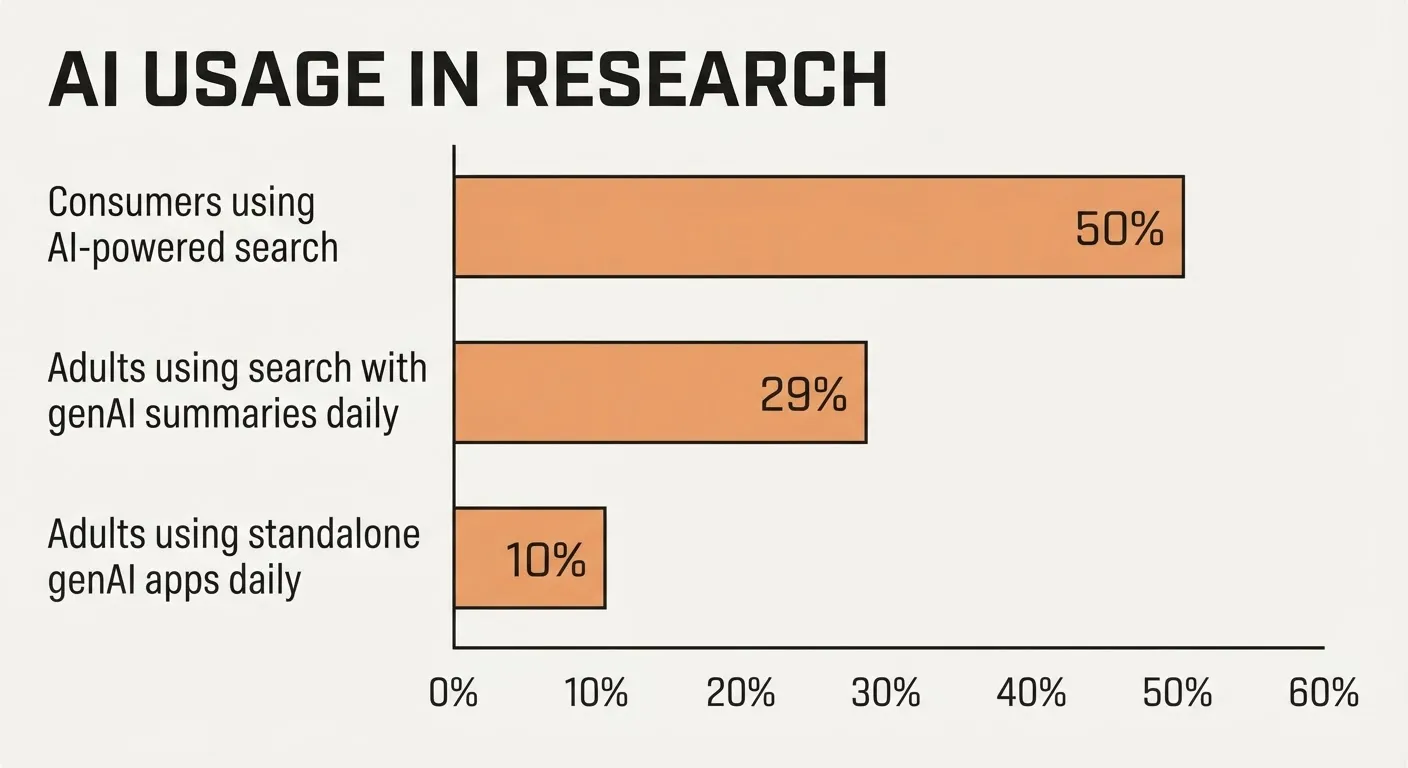
According to McKinsey, half of consumers (50%) already use AI-powered search, and Deloitte predicts nearly 3 in 10 adults (29%) in developed markets will use search with generative summaries daily in 2026, versus 1 in 10 (10%) using standalone genAI apps.
That matters because discovery no longer runs straight from query to website.
- AI summaries now sit in the middle of the research journey
- The first battle happens earlier than the click
- Lower traffic is only part of the risk
- Missing from the answer is the bigger loss
Scout7’s point of view for this series is simple: the click still matters, but the first job is becoming part of the answer. So the next question is what, exactly, you now need to optimize for.
AI Search Optimization: AEO and GEO Side by Side
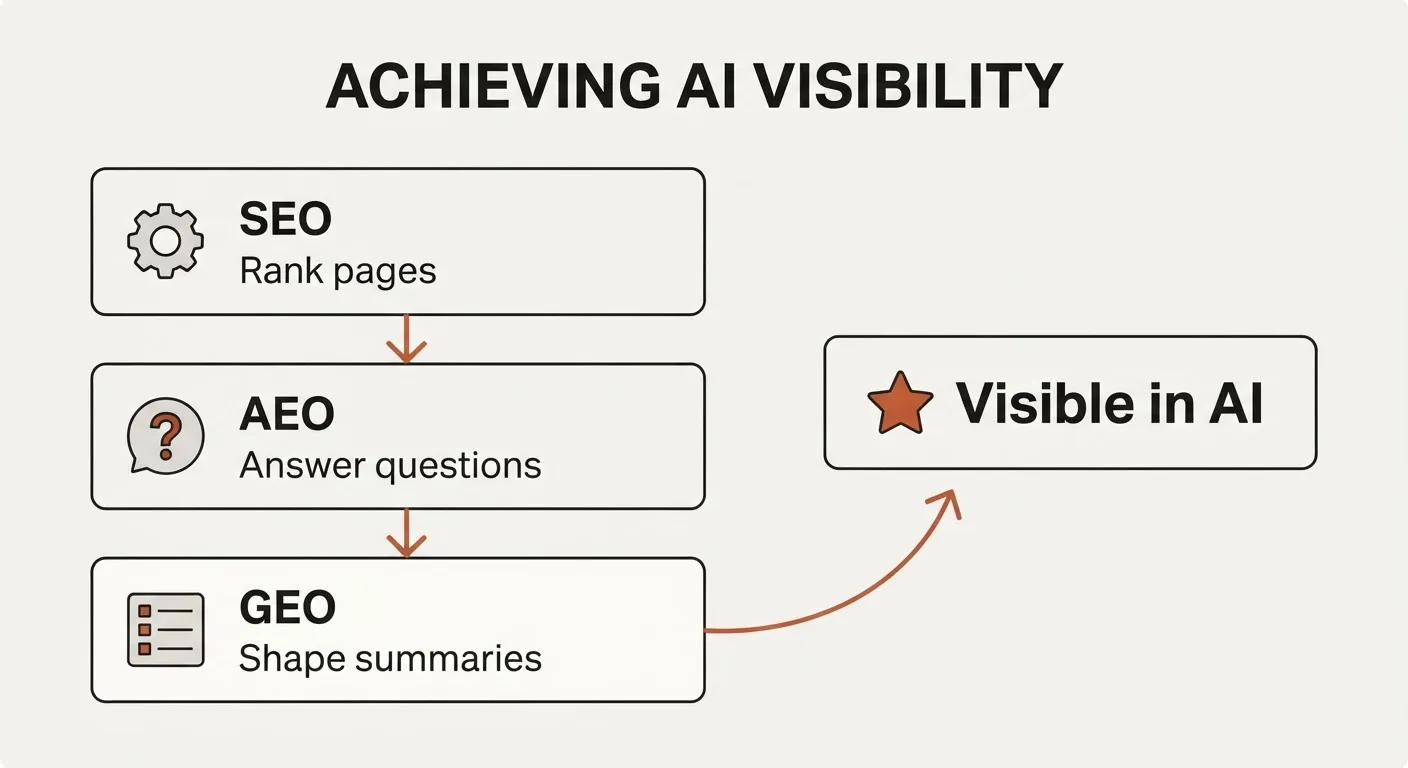
The cleanest way to think about this stack is: SEO helps people find your page, AEO helps answer engines quote your answer, and GEO helps generative systems use your brand in fuller responses.
According to Gartner, about half of consumers (51%) said GenAI changed their research habits, and among that group more than two-thirds (71%) changed how they phrase queries toward specific, conversational questions. That is why answer engine optimization matters.
- SEO targets searches like “best bug tracking tool”
- AEO targets questions like “What is the best bug tracking tool for small teams?”
- GEO helps your brand appear in generated comparisons and summaries
- Featured snippet thinking still helps because concise answers remain extractable
- Search engine visibility now includes blue links, answer boxes, and AI summaries
Generative Engine Optimization (GEO) is the practice of optimizing digital content to improve its visibility and ranking within the responses generated by AI-powered search engines and answer engines. It focuses on aligning content structure, factual accuracy, and topical authority to ensure that large language models prioritize specific information when synthesizing answers for users.
And that stack changes how you build pages.
Winning the AI-Native Decision Journey
If buyers now search in full sentences, your content needs to meet them in answer form before it asks for a click.
That is the practical shift behind answer engine optimization and generative engine optimization. The hard part is not learning new jargon. It is seeing that the real risk is hearing a competitor’s name in the answer before your brand gets a visit.
According to Gartner, nearly one-third of consumers (31%) say AI summaries make them spend more time searching, while only about one in six (16%) say they spend less. Search journeys are getting longer, not simpler.
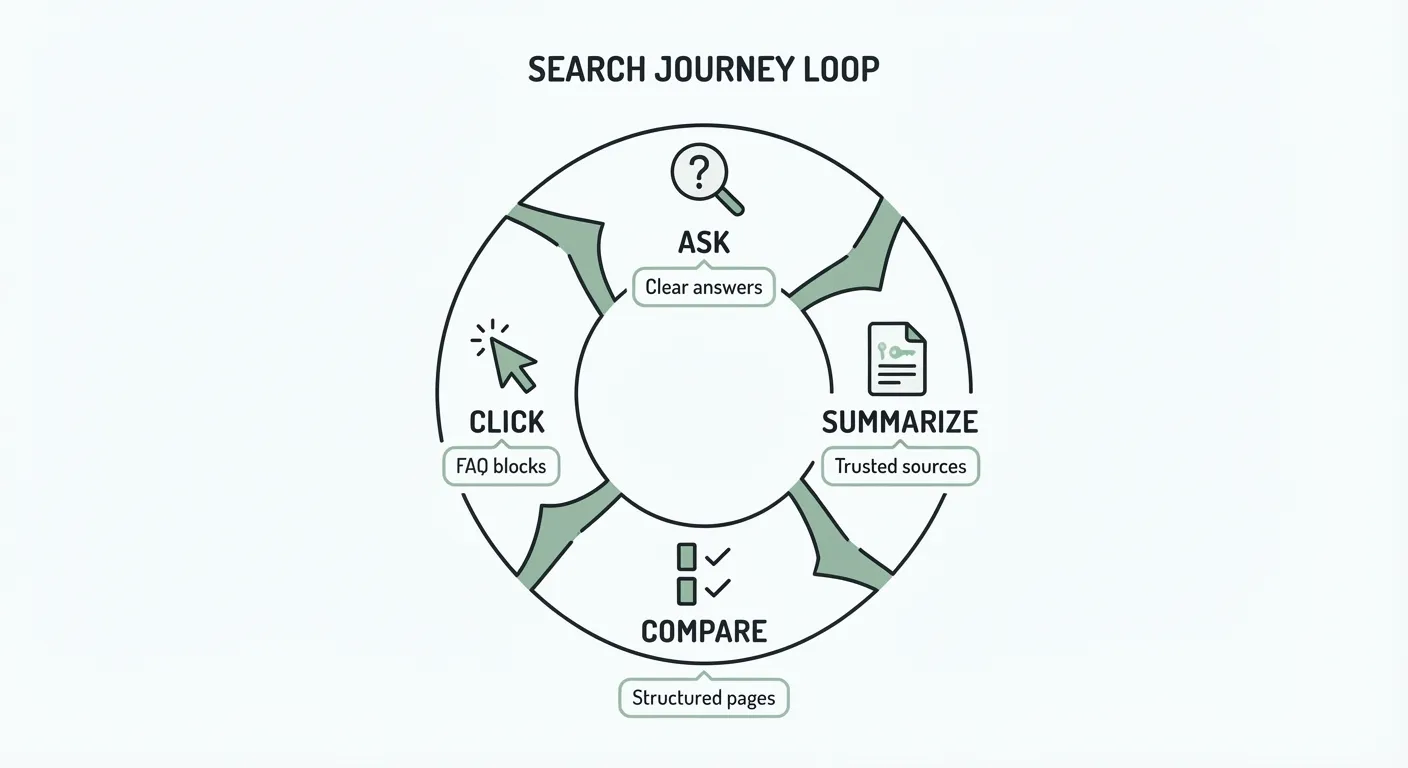
- Write question-first pages around real buyer prompts
- Use short answer blocks directly under key headings
- Add definitions early so AI systems can extract language fast
- Show trust clearly with citations, examples, and clear authorship
- Use structure like FAQs, comparison tables, and clean headings
According to Forrester, nearly 1 in 5 buyers (19%) feel less confident using generative AI in purchase decisions because the information may be unreliable. Trust is not decoration here. It is part of optimization.
The Cost of Inaction
If your strategy stops at rankings, you are exposed right where AI compresses research and comparison.
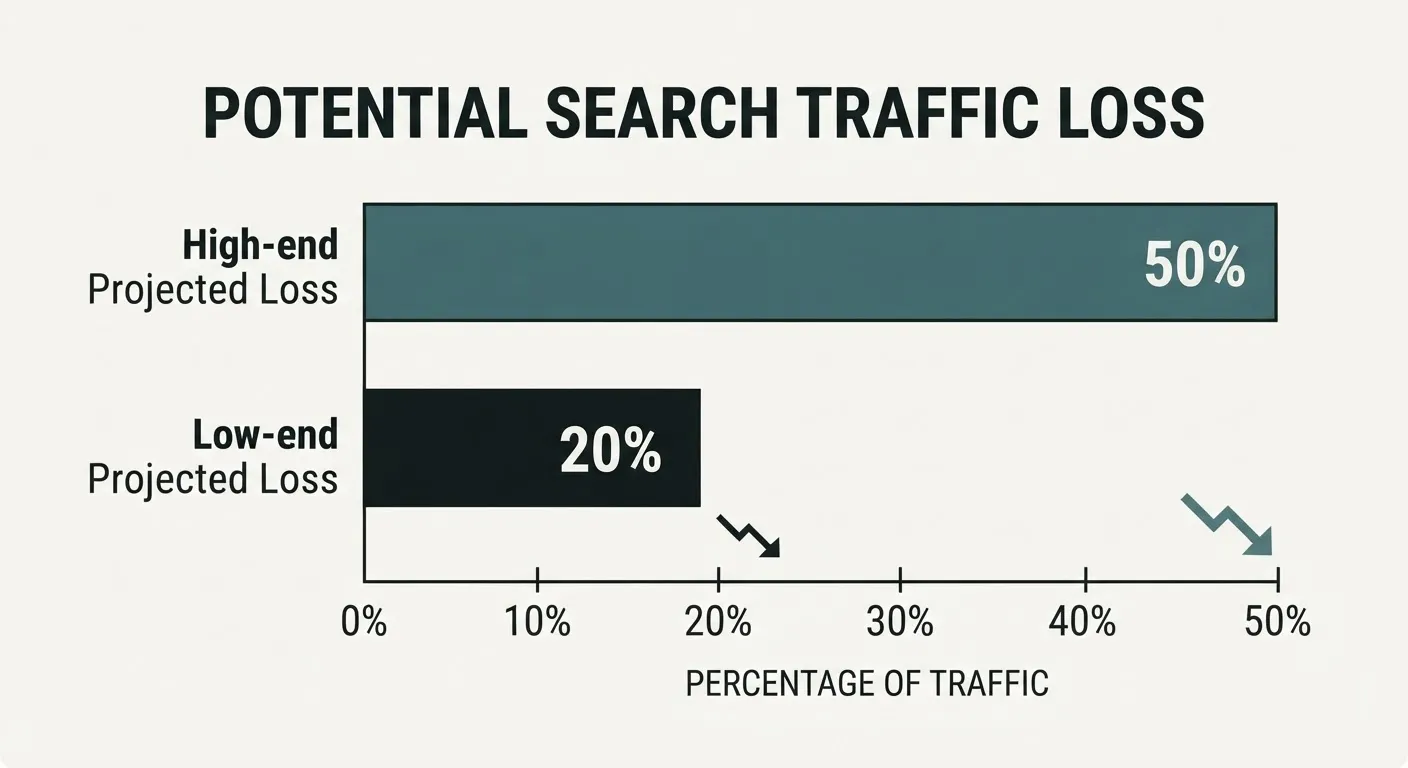
According to McKinsey, brands that are unprepared for AI search could lose between one-fifth and half of traditional search traffic (20% to 50%) as AI answers absorb research before the click.
That sounds like a traffic story, but it is really a decision-story.
- AI can answer mid-funnel questions without sending a visit
- Comparison moments may happen on-platform inside an overview
- Your competitor can win mindshare first if AI cites them, not you
- The absence that matters most is absence from the recommendation set
So yes, legacy SEO still matters.
But the higher-stakes battle now happens earlier, when an AI decides which brands to name before the visit ever happens. That is why the next question is bigger than traffic volume alone.
Why This Shift Is Bigger Than Traffic
Fewer visits do not always mean less value. In AI discovery, the smaller stream may be the stronger one.
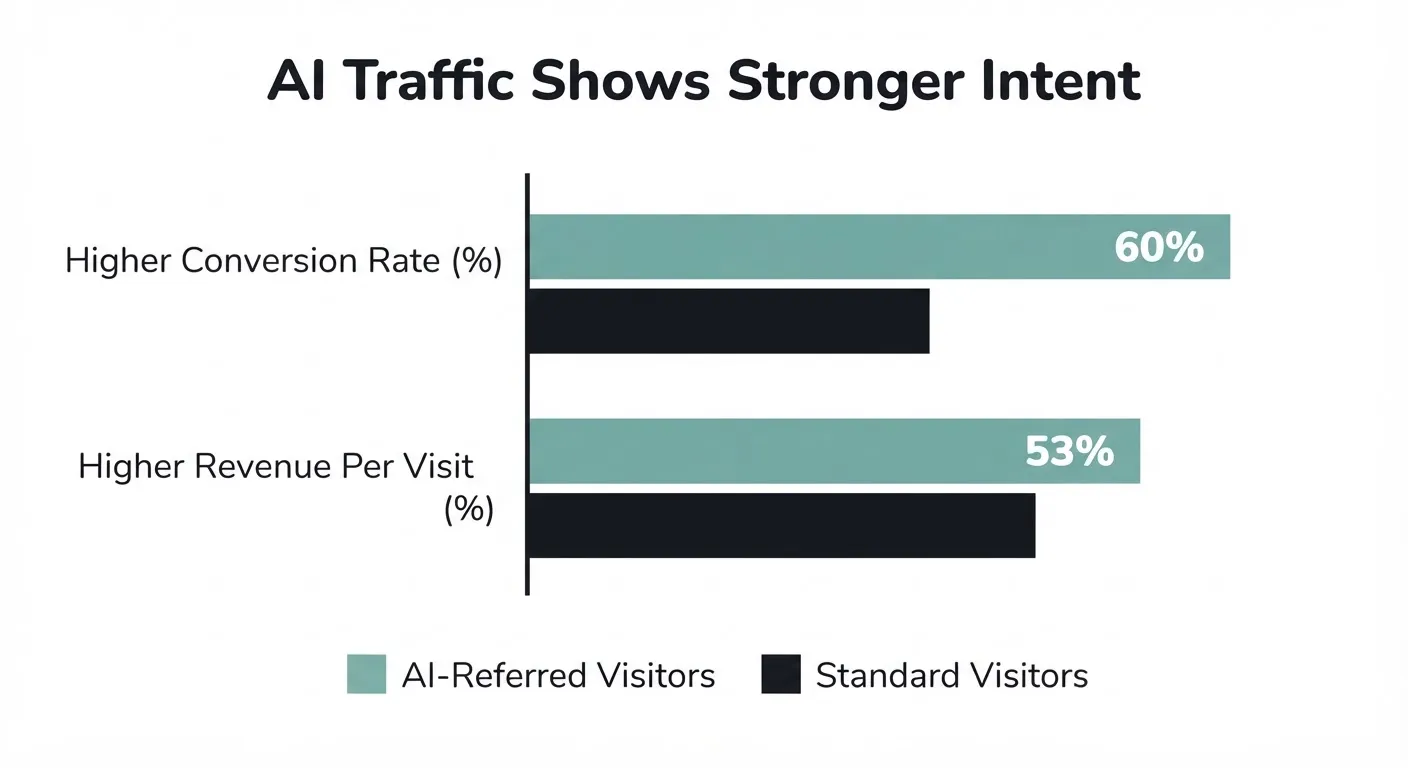
According to Adobe’s AI Traffic Trends Report, AI-referred retail visitors converted at a rate 60% higher than non-AI traffic in July 2026, based on analysis of more than 1 trillion visits to U.S. retail sites. The same Adobe report found AI-referred shoppers generated 53% more revenue per visit.
That makes generative engine optimization practical, not theoretical.
- AI discovery can send fewer visits but higher-intent ones
- Revenue per visit may rise even if sessions fall
- Answer visibility becomes a revenue issue
- Being cited in summaries can outperform weaker click-driven traffic
If SEO was once mostly about volume, GEO forces a better question: are you visible in the moments that create demand?
The Market Is Already Rebuilding Around It
This shift is not waiting for consensus. The operating model is already changing.
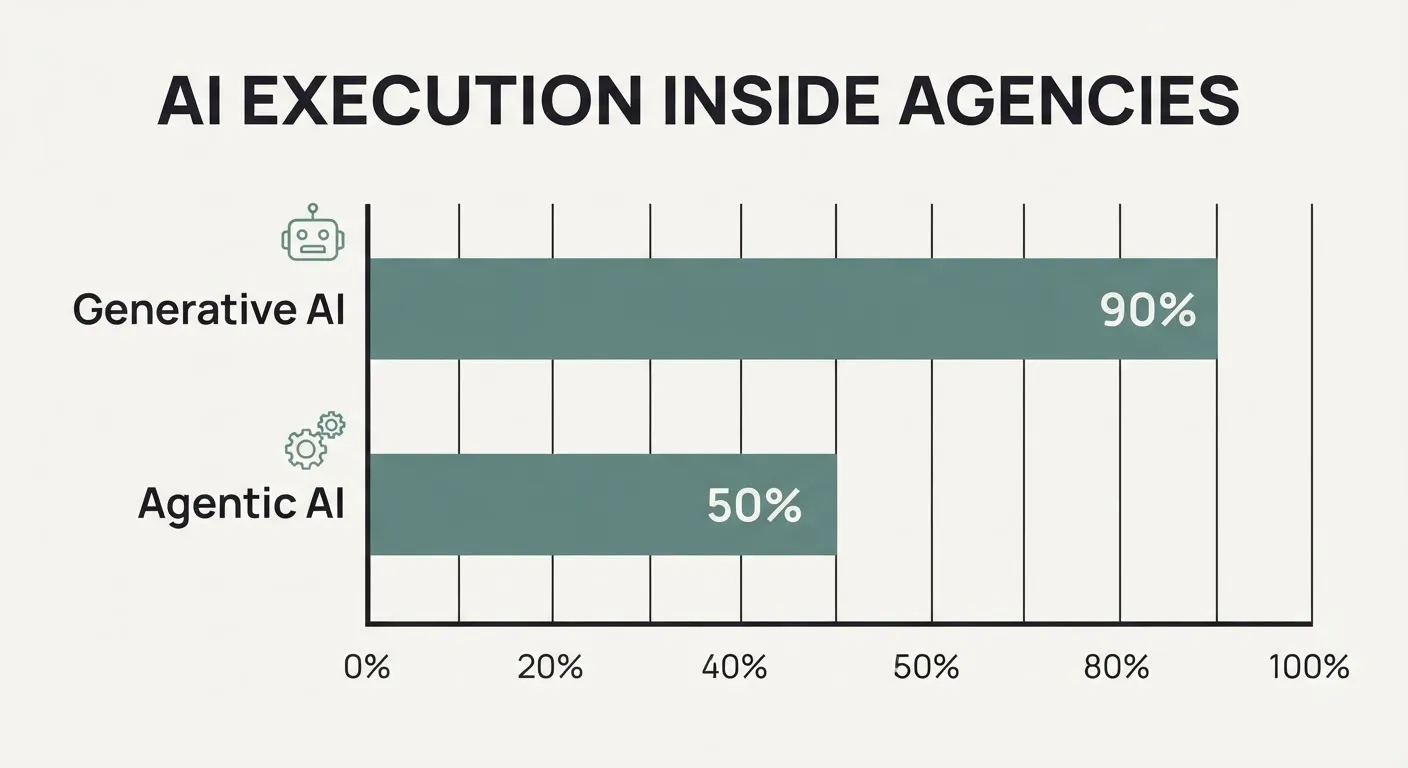
According to Forrester and the 4As, 9 in 10 U.S. marketing agencies (90%) already use generative AI, and half (50%) use agentic AI for marketing execution. SEO strategy is one of the cited use cases.
That is where content automation enters the picture.
- Content automation means using AI to draft, structure, refresh, and distribute content faster
- Agentic workflows can now support SEO execution at scale
- Teams are rebuilding around AI-assisted search already
- Early movers will shape new visibility habits before everyone else catches up
This is exactly why Scout7 frames the problem as organic marketing on loop.
For teams using tools like Claude, ChatGPT, and an llm workflow through an mcp connector, the goal is not to flood the web with content. It is to publish pages that can rank, answer, and be cited repeatedly.
Common Questions
What is Generative Engine Optimization?
Generative Engine Optimization is optimizing content so AI-powered search engines and answer engines can understand, trust, cite, and summarize it in their responses. In practice, GEO helps your brand appear inside AI overviews, generated comparisons, and recommendation-style answers.
How do I optimize for AI search overviews?
Optimize for AI search overviews by writing clear question-first pages, placing direct answers near the top, using strong headings, adding credible citations, and covering one intent per page. Clean structure, trustworthy sourcing, and repeated topic authority make your content easier for AI systems to extract and cite.
What is the difference between SEO, AEO and GEO?
SEO helps pages rank in traditional search results. AEO helps answer engines pull direct responses from your content, while GEO helps generative systems cite and summarize your brand across broader, synthesized outputs.
Do I still need SEO in 2026?
Yes. SEO remains the base layer because your website is still the source material that AI systems read, verify, and cite when they generate answers.
Which one should I start with?
Start with SEO fundamentals and your highest-value buyer questions. Then rewrite those pages so they become AEO-friendly with direct answers and GEO-friendly with trustworthy structure and topical depth.
Does ranking #1 on Google still matter?
Yes, but it matters differently now. Ranking still helps, yet being included in the answer can matter just as much as winning the click itself.
What This Means for Builders
The opening image was simple: a buyer asks AI for the best option, and your competitor gets named before your site appears. That is the real market shift.
Key takeaways:
- SEO is the base for crawlable, trustworthy source material
- AEO wins question-shaped prompts with direct, extractable answers
- GEO earns citations in AI summaries, comparisons, and recommendations
- The biggest loss is not traffic alone but brand absence at decision time
For builders with no time to spare, the move is practical.
One week, up close, audit your top five pages, rewrite key sections into direct answers, add FAQ blocks, and tighten headings so each page resolves one clear intent. Then keep going, because the streak is the strategy.
If you use Scout7’s organic marketing on loop model, this is the play: build content that can rank, answer, and be cited across the full journey. Start with the few questions buyers ask right before choosing a vendor, then turn those answers into repeatable assets across your site and channels.
The front door to the internet has moved, but it is still a door your brand can own. The teams that adapt now will not just protect search engine visibility. They will shape the answers buyers hear first.
Frequently asked questions
Is AI search optimization replacing SEO?
No. In this article, SEO remains the base layer for discoverability, while AEO helps you win direct answers and GEO helps you get cited in AI summaries. The point is not replacement, but a split in how visibility works.
Why does being cited in AI answers matter if traffic drops?
Because the bigger risk is invisibility during the decision process. The article argues that if AI names competitors before your site is visited, you can lose mindshare even before a click happens.
What should I update first on existing pages?
Start with your highest-value pages and rewrite key sections into direct answers. Then add clear headings, definitions early on, and trust signals like citations, examples, and clear authorship.
Does AI traffic actually convert better?
Sometimes, yes. The article cites Adobe reporting that AI-referred retail visitors converted 60% higher and generated 53% more revenue per visit than non-AI traffic. That is why answer visibility can matter as much as raw session volume.
References
- McKinsey — New front door to the internet: Winning in the age of AI search
- Deloitte — Gen AI inside existing search engines overtakes standalone gen AI
- Gartner — Survey Finds Only One-Third of Consumers Say GenAI Rivals Search Engines; Marketers Must Optimize for Both AI-Driven and Traditional Search
- Forrester — Nine In 10 US Marketing Agencies Use AI To Cut Costs At The Expense Of Creativity
- Forrester — 2026 B2B Marketing, Sales, And Product Predictions
- Adobe — AI Traffic Trends Report, August 2026