
blog
Why Virality Fails B2B SaaS Organic Growth
August 27, 2026 · 7 min read · Scout7
Most B2B SaaS content stalls because teams chase spikes instead of systems. Learn how to build an organic marketing loop that compounds weekly.
Read time: 5 min read
Introduction
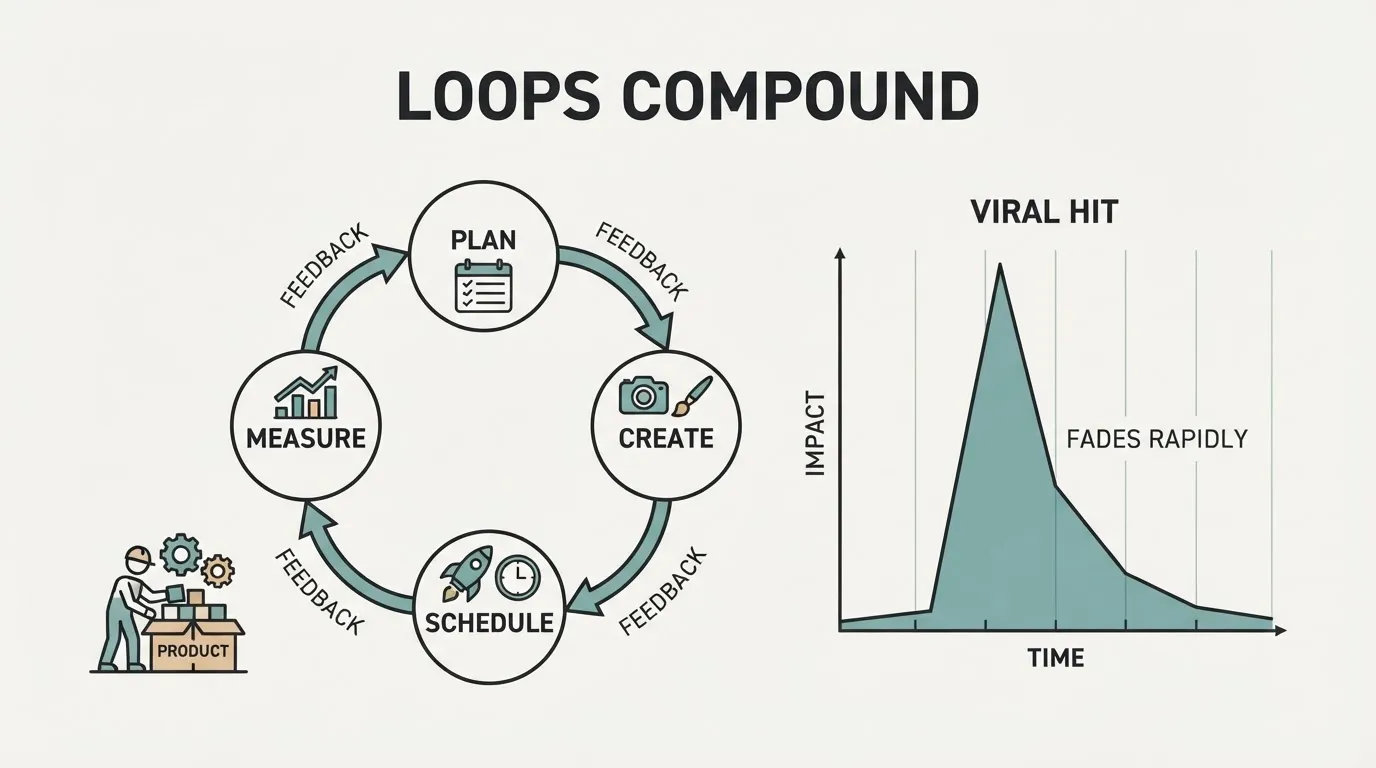
B2B SaaS organic growth usually stalls for one reason: teams optimize for occasional attention instead of a repeatable system. The fix is not a better viral idea. It is an Organic Growth Loop: plan, create, schedule, measure, and feed the result into next week.
A viral post can feel like momentum on Monday and look irrelevant by Friday. That gap matters because the real constraint is not creativity. It is workflow design.
Key takeaways:
- Virality spikes attention but rarely compounds demand
- Weekly loops beat campaigns because they reuse data each cycle
- Generic AI output fails without audience, brand, and scorecard inputs
- B2B SaaS organic growth improves when systems run without heroics
The Viral Fallacy Creates Growth Debt
 That workflow problem starts with a false signal: one post pops, the dashboard jumps, and the team mistakes noise for growth. Then the next week starts from zero again.
Most founder-led teams still run organic like a side quest:
- Hand-writing posts when time appears between product work
- Copy-pasting from ChatGPT with no channel logic or feedback loop
- Measuring spikes instead of repeatable lift across weeks
- Resetting every Monday because no system carries learning forward
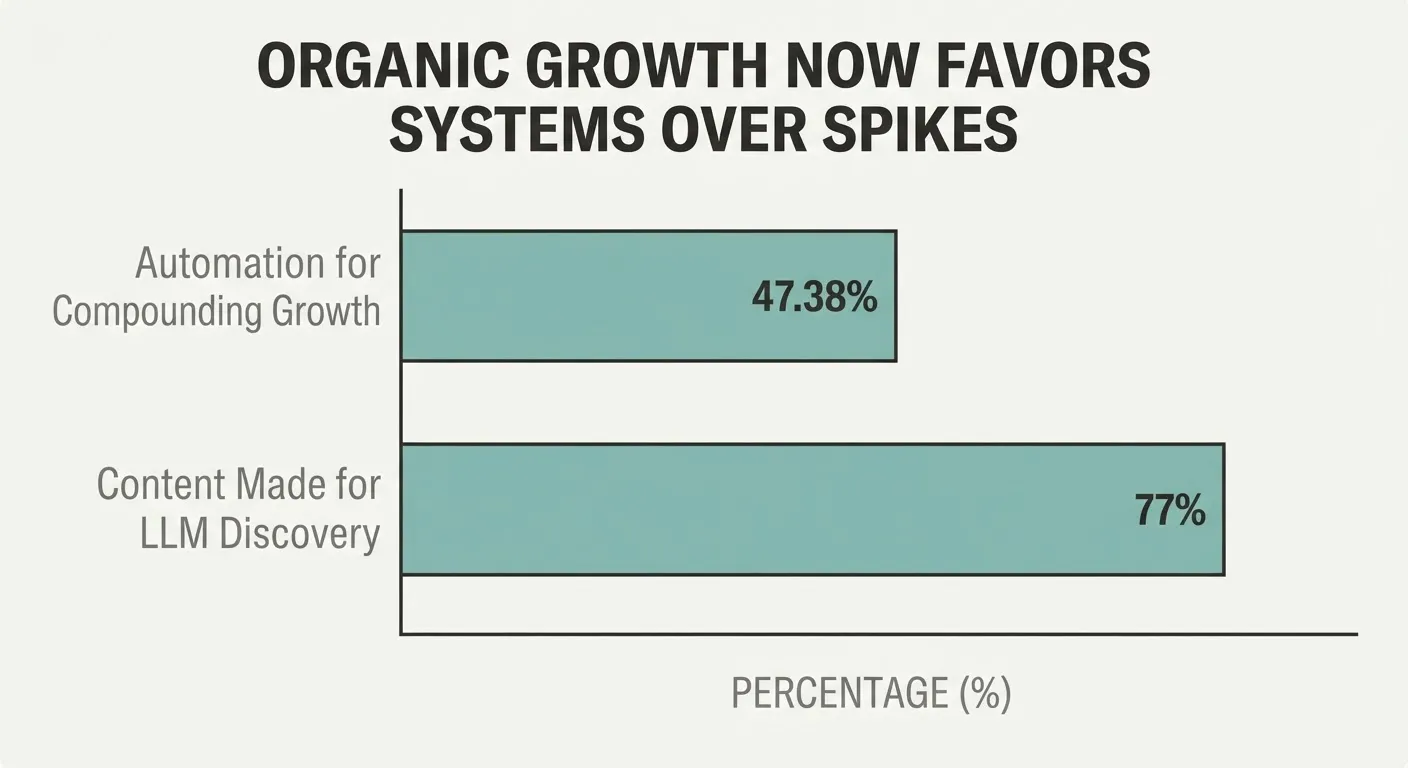
According to HubSpot’s 2026 State of Marketing, nearly half of marketers (47.38%) cite leveraging automation as a top trend. That matters because compounding comes from repeatable operations, not campaign bursts.
Research from Clutch x Conductor’s 2026 State of AI Content Report adds another signal: more than 77% of content teams create for LLM discovery, not just social spikes. The market is moving toward discoverability loops, and the next question is what that loop actually looks like.
From Campaign Bursts to a Weekly B2B SaaS Organic Growth Loop
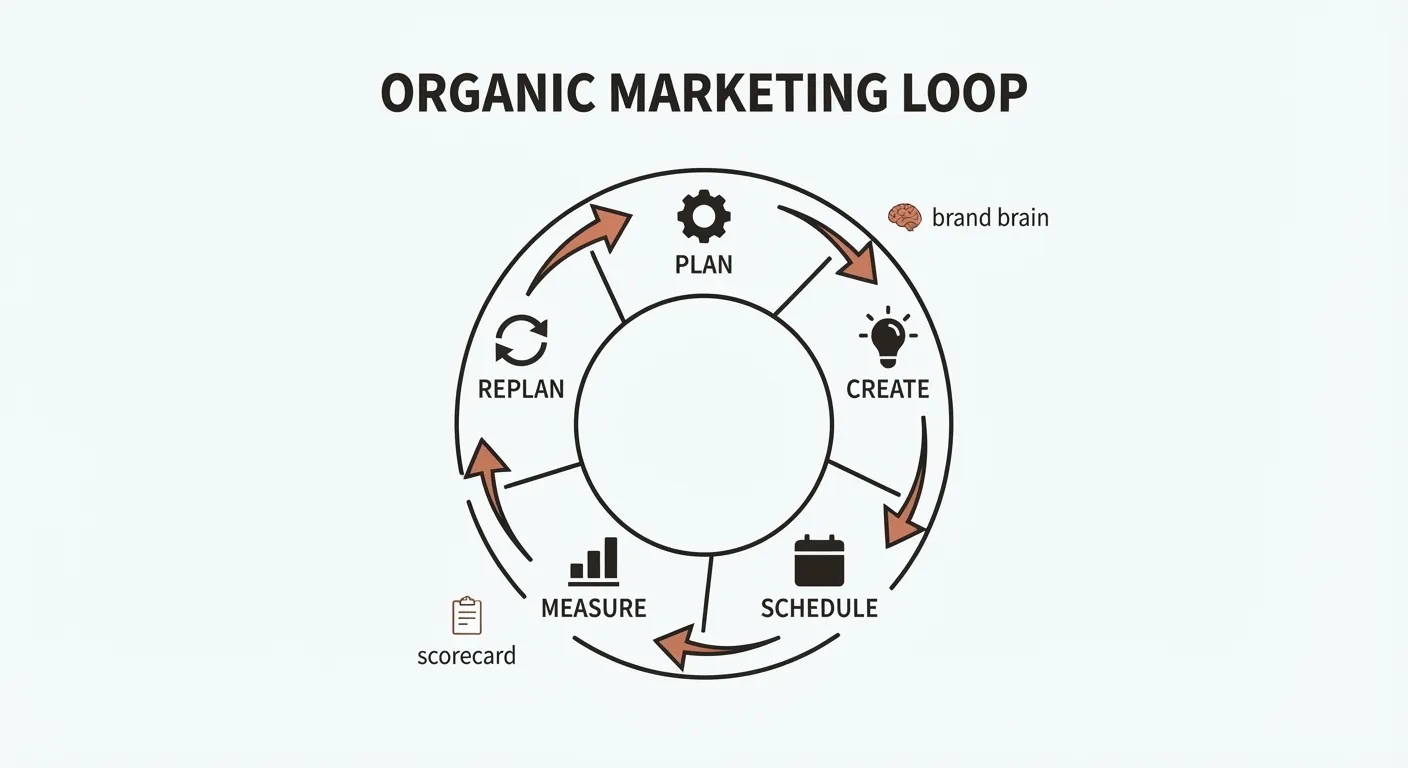 That answer is not “use more AI.” The answer is to run one closed weekly system and inspect it like product infrastructure.
The weekly organic marketing loop is simple:
- Plan: pull themes from product, ICP pain, search shifts, and last week’s scorecard
- Create: turn one core idea into channel-specific assets with your brand brain
- Schedule: distribute across blog, social, carousels, and video on a fixed cadence
- Measure: review reach, saves, clicks, replies, assisted visits, and topic performance
- Replan: feed winners, misses, and audience signals into next week’s brief
Based on what we saw when founder-technical teams stayed trapped in generic, copy-paste habits, the bottleneck was never content volume. It was connecting the steps into one loop that could run every week.
That matches the research. In HubSpot’s 2026 State of Marketing, nearly half of marketers (48.57%) said AI-personalized content is a top trend, and about two in five (40.60%) said updating SEO for search changes matters most. In the separate HubSpot State of Marketing Report, 80% use AI for content creation and 75% for media production.
Output is easy now. The hard part is building a loop that learns.
A brand brain and scorecard make that learning visible. Without them, AI only makes generic content faster, which is why most teams still underperform.
Why 84% of Competitors Are Still Losing
 And that underperformance is more common than most founders think. The market is crowded with activity, but not with disciplined systems.
The gap is not tool access. The gap is operational maturity:
- Most teams use AI like a word processor instead of a workflow layer
- One generic asset gets published everywhere with minimal adaptation
- Audience segmentation stays shallow even when intent differs by channel
- Measurement stops at top-line engagement instead of informing next week’s plan
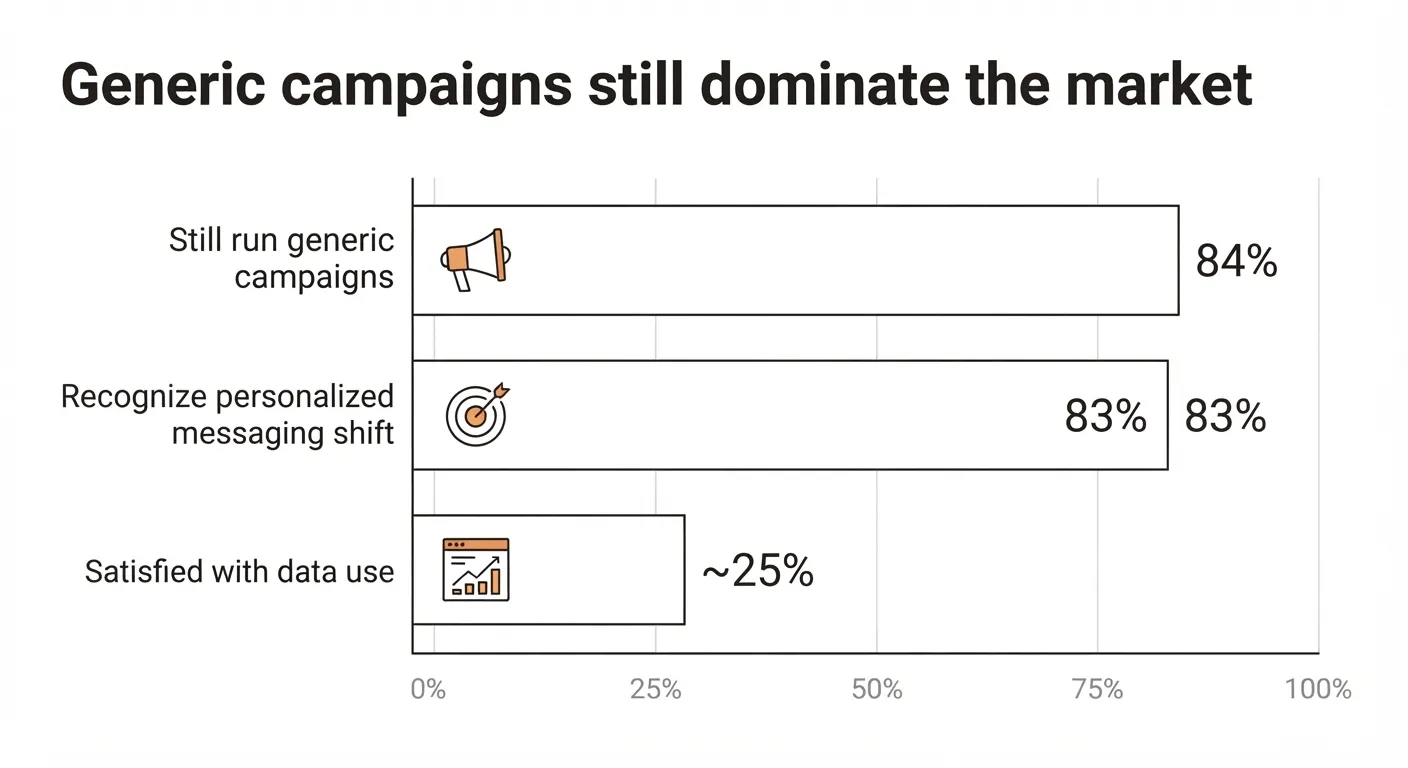
According to Salesforce’s State of Marketing 2026 coverage, most marketers still run generic campaigns (84%). That is an enormous opening for teams that publish audience-specific assets on a fixed weekly loop.
The deeper problem shows up in Salesforce’s State of Marketing Report: although 83% recognized the shift to personalized two-way messaging, only one in four were satisfied with how they use data to power it. That weakness lives in the measure-and-feed-back step, which leads directly to how to fix the workflow.
Build the Engine, Then Run Your Loop
 So the move is not to ask AI for “a post.” The move is to redesign the operating model so the loop can run with low friction every week.
A workable founder setup looks like this:
- Connect your agent to your site, positioning, and existing content
- Define your brand brain with ICP, product claims, voice, and proof boundaries
- Set a weekly cadence for blog, social posts, carousels, and video clips
- Review one scorecard every week and decide what to repeat or cut
- Protect governance so outputs stay on-message and measurable
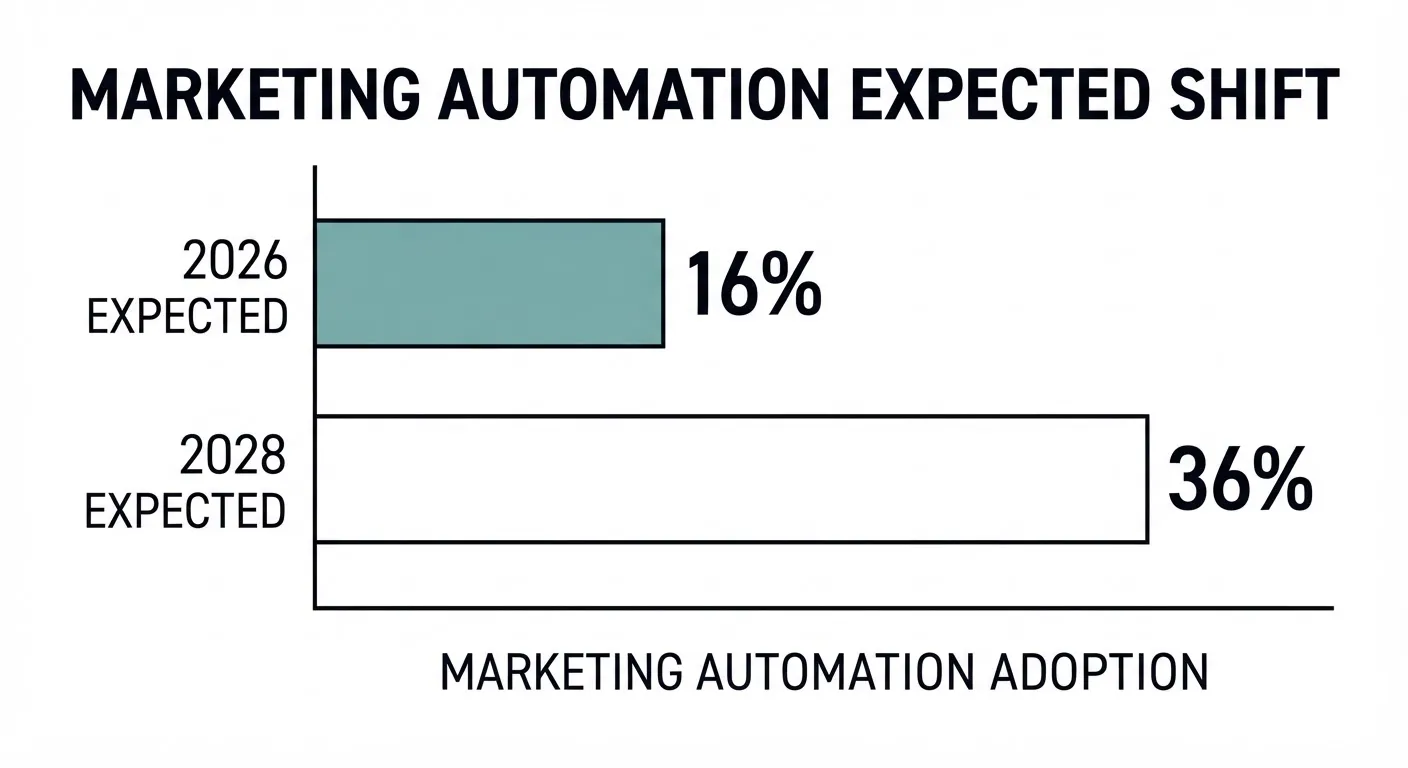
The trend line supports this shift. In Gartner’s May 2026 survey, expected AI-driven marketing automation rises from 16% in 2026 to 36% by 2028. And Deloitte’s 2026 enterprise AI analysis, based on nearly 3,700 professionals, argues deployment is not the hard part anymore; redesigning work, governance, and ROI measurement is.
That is exactly why occasional viral hits do not compound. A loop does.
Your Next Move: Stop Publishing, Start Looping
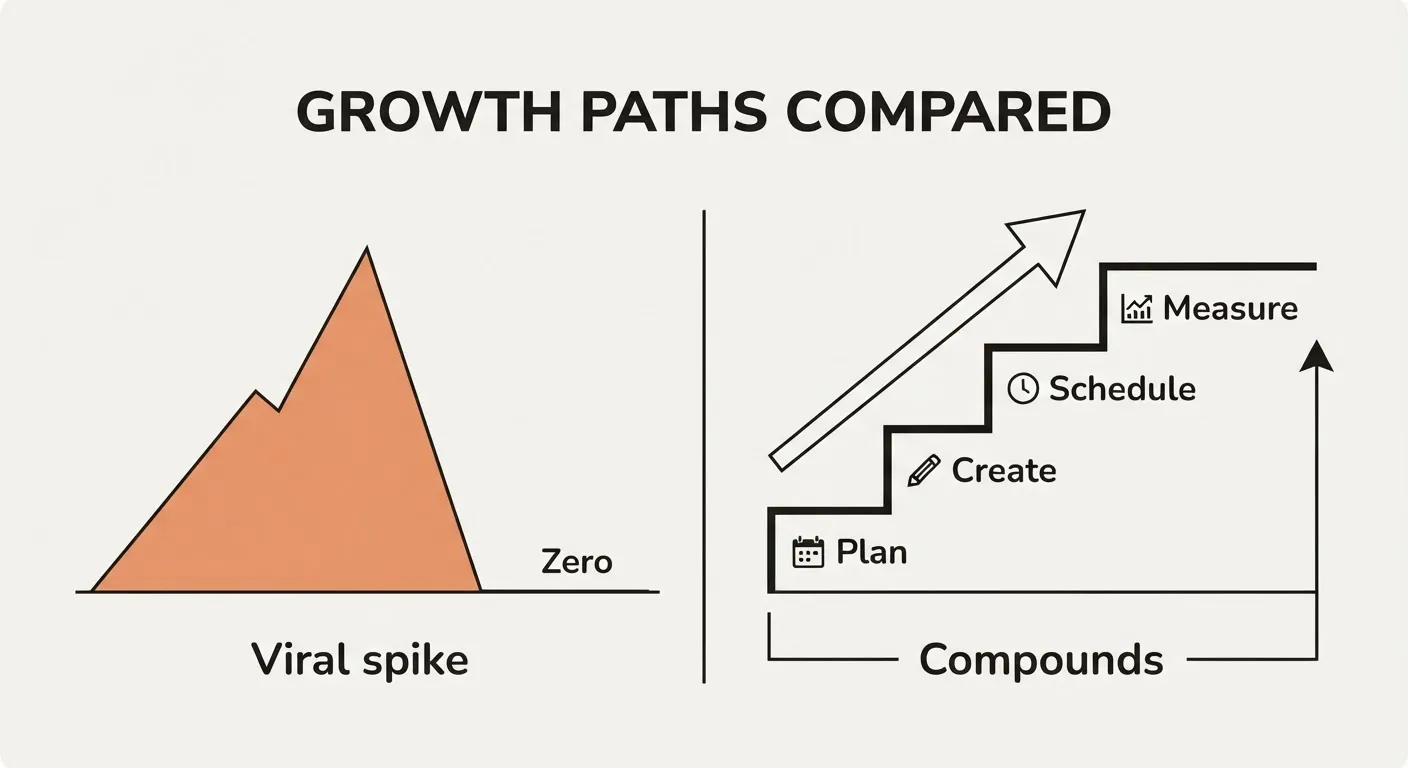 The opening image still holds: a post spikes, the graph jumps, then everything goes quiet. That is not failure of ideas. It is failure of system design.
Key takeaways:
- B2B SaaS organic growth compounds through weekly loops, not breakthrough moments
- An Organic Growth Loop works when planning and measurement stay connected
- Most competitors remain generic, which makes disciplined execution easier to outrun
- Automation matters most when it removes weekly rebuilds, not when it drafts faster
If your content is not growing, the direct answer is simple: your workflow probably resets too often, publishes too generically, and learns too slowly. If you want to build a sustainable organic growth loop, map the real sequence your team runs each week, then convert it into one closed system: plan, create, schedule, measure, replan.
For Scout7’s audience, that means something practical. Onboard. Connect. Ask. Run your organic growth loop from Claude Code, Codex or Cursor, then review the scorecard instead of rebuilding the process from scratch. A week of organic marketing on loop is not just a tagline. It is the operating model that makes compounding visible.
Your next move is to audit next week before it starts. List your planning inputs, your brand brain, your publishing cadence, and your scorecard fields. Then identify which steps an agent can own. The teams that win organic in B2B SaaS will not be the ones chasing virality. They will be the ones whose loop still runs next Tuesday.
Frequently asked questions
Why doesn’t virality compound for B2B SaaS?
A viral post can create a short spike in attention, but the article argues that most teams start from zero again the following week. Without a repeatable system that captures learning, virality creates noise, not compounding demand.
What is an organic growth loop in B2B SaaS?
The loop in this article is a weekly system: plan, create, schedule, measure, and replan. Its value comes from feeding performance data and audience signals back into next week’s brief instead of resetting every Monday.
Is AI the answer to B2B SaaS organic growth?
Not by itself. The article says output is easy now, but the real advantage comes from connecting AI to audience context, brand rules, and a scorecard so the workflow can learn each week.
What should a founder-led team measure each week?
This article recommends reviewing reach, saves, clicks, replies, assisted visits, and topic performance. The point is not just to report engagement, but to decide what to repeat, adapt, or cut in the next cycle.
References
- HubSpot Blog — 2026 state of marketing: Data from 1,500+ global marketers
- HubSpot — 2026 State of Marketing Report
- Salesforce News — 75% of Marketers Have Adopted AI, Yet Still Use It to Send Generic Campaigns
- Salesforce — State of Marketing Report: Tenth Edition
- Gartner — Marketing Leaders Expect AI Automation of Marketing Work to Double to 36% By 2028
- Deloitte — Enterprise AI trends 2026: AI transformation strategy opportunities and predictions
- Conductor Academy — Clutch x Conductor: The 2026 State of AI Content Report