
blog
Your AI Marketing Agent Should Execute, Not Just Draft
August 27, 2026 · 7 min read · Scout7
Learn the real difference between AI tools and AI agents, and how B2B founders can build an autonomous organic marketing loop.
Introduction
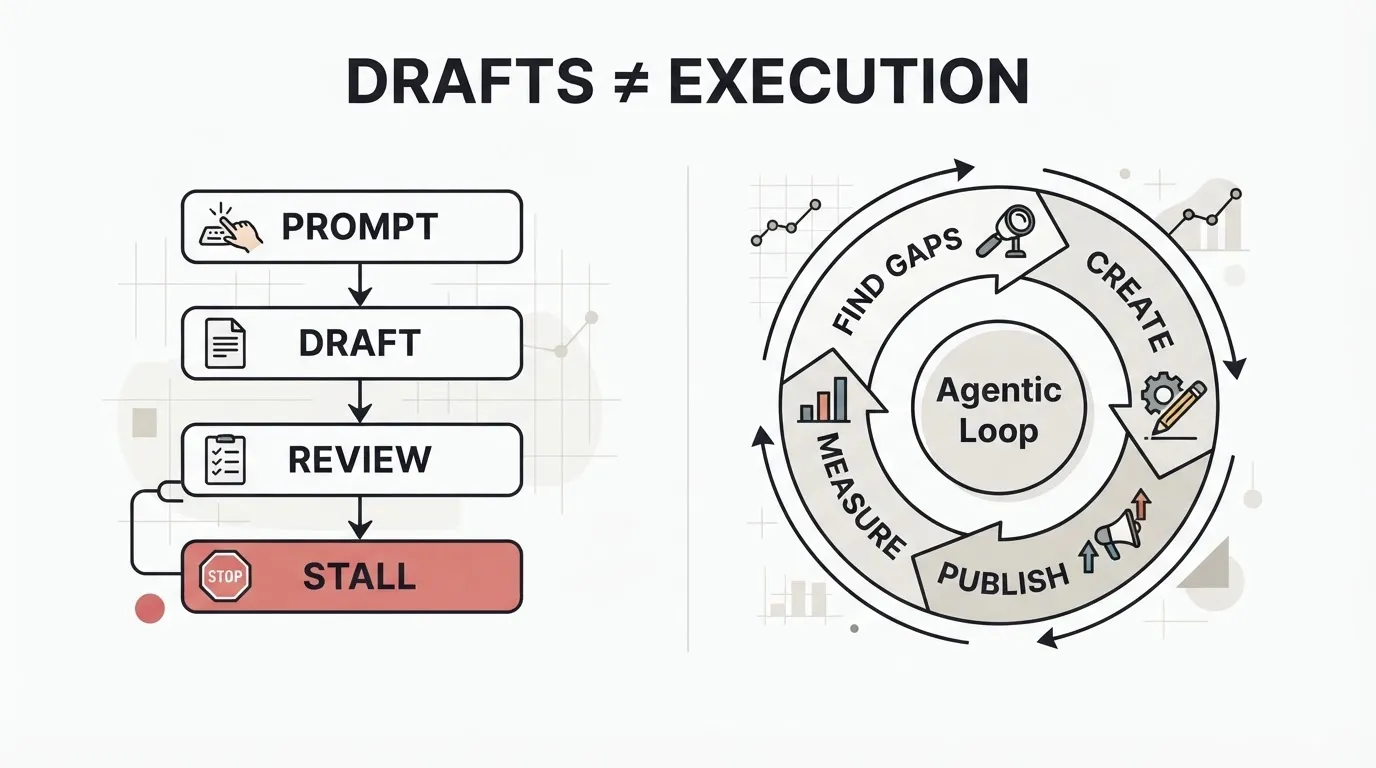
You ask an AI marketing agent for a post, get a solid draft in seconds, and still end the week moving copy between docs, calendars, and publishing tools. That is the core difference: drafting saves writing time, but agentic marketing closes the execution loop from plan to scorecard.
Key takeaways:
- AI tools output drafts; agents run workflows
- The missing mechanism is orchestration across the loop
- Unified brand context turns output into execution
- Founders should automate a weekly organic marketing loop
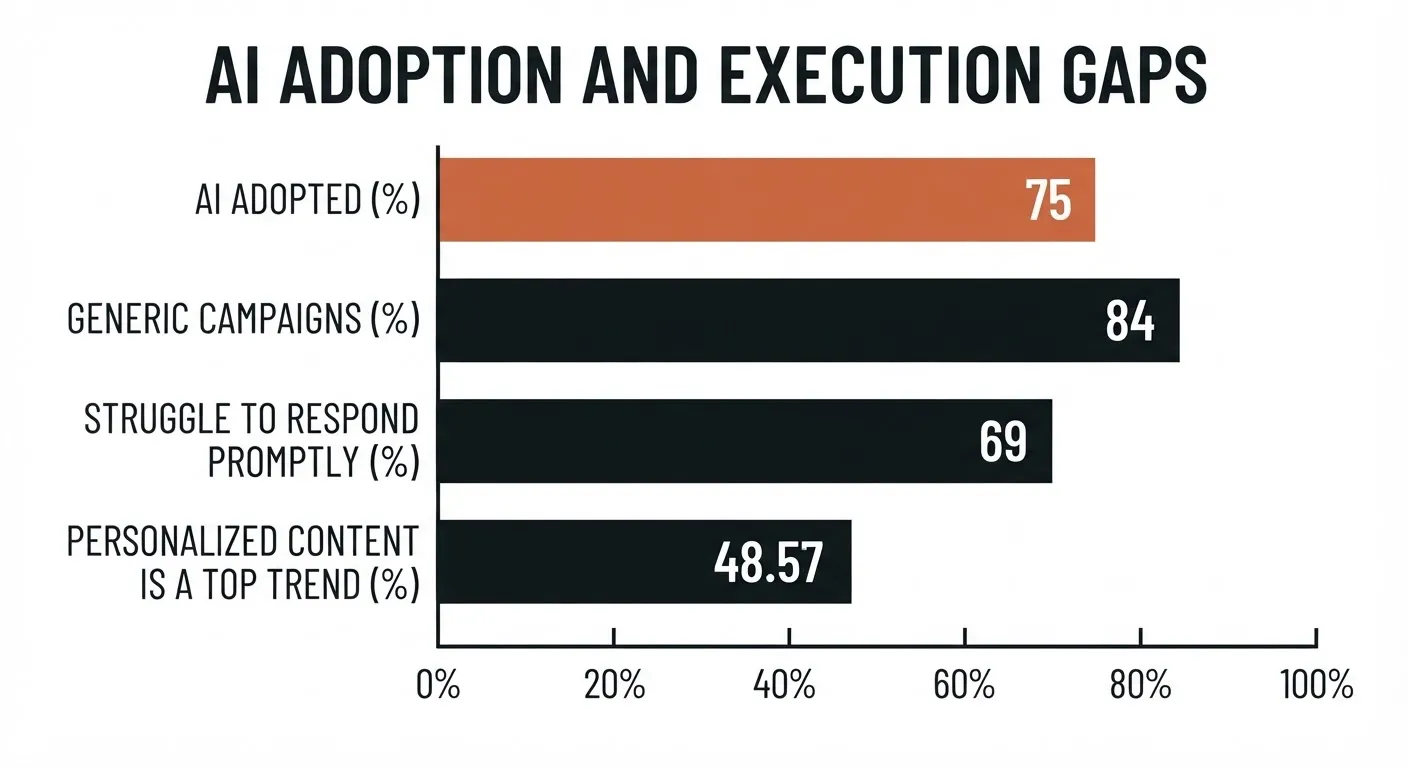
That gap is getting harder to ignore. According to HubSpot’s 2026 State of Marketing, nearly half of marketers (48.57%) say AI for personalized content is a top trend, but rising content demand does not solve what happens after the draft.
This matters because the market is moving from assistive AI toward execution. If you want “A week of organic marketing on loop,” you have to understand why prompting is not the same as running an organic marketing loop.
The Drafting Trap That Steals Founder Time
That post draft feels like progress, and then the real work starts. Someone still has to decide what to make next, format it for channels, publish it, and check whether it worked.
According to Salesforce’s 2026 State of Marketing, about three quarters of marketers (75%) have adopted AI, yet most still run generic campaigns.
- Most teams adopted AI help, not autonomous execution
- About 84% of marketers still run generic campaigns
- Roughly 69% struggle to respond promptly to customers
- Drafting saves minutes, then coordination consumes the gain
That is the trap. The tool did its part, but nothing connected the artifact to the next action.
If AI stops at draft output, founders stay in the operator seat.
The missing system is not another prompt library. It is the mechanism that carries work from idea to outcome, which is where the distinction between tools and agents becomes practical.
Tools Wait. An AI Marketing Agent Runs the Loop.
So what changes once you leave the drafting trap? The useful distinction is simple: a tool waits for instructions, while an AI marketing agent keeps moving toward a goal.
An AI tool is linear. An AI agent is stateful.
- Tool model: prompt in, draft out, human resumes coordination
- Agent model: goal in, research-decide-act loop continues
- Loop steps: plan, create, publish, measure, replan
- Useful unit: not one asset, but a weekly cycle
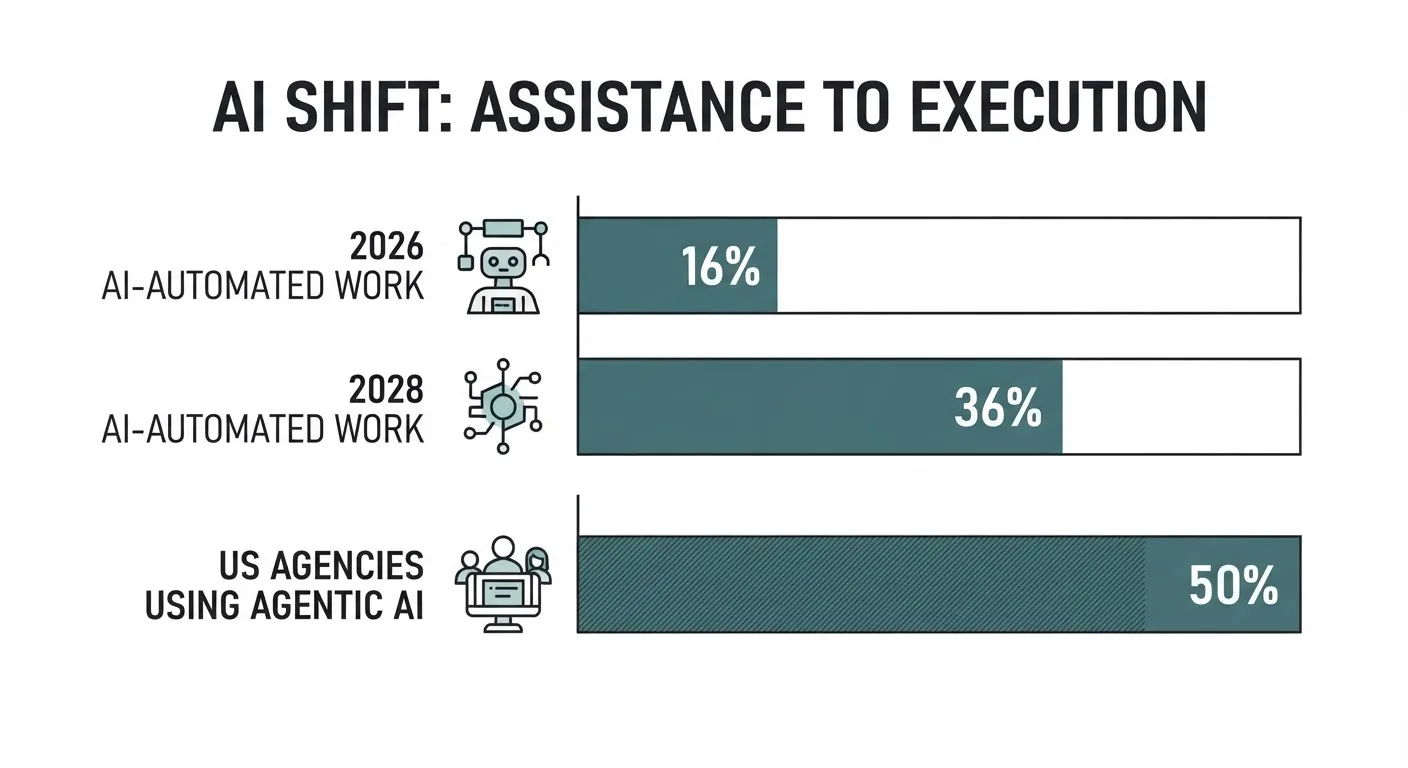
According to Gartner’s 2026 survey, marketing leaders expect AI-driven automation to rise from 16% of work in 2026 to 36% by 2028. That signal points past prompting and toward autonomous execution.
And this is already entering operations. Forrester’s 2026 report found nine in 10 US agencies use generative AI, while 50% use agentic AI for marketing execution.
The hard part, though, is not defining the loop. It is giving the agent enough connected context to run it.
Why Unified Data Makes Agents Work
That is where most systems break. An agent cannot run your autonomous marketing loop if it cannot see the brand as a connected system.
The brand brain needs more than prompt history. It needs a unified view of your website, content history, channel state, publishing surface, and performance signals.
- Website context tells the agent what the brand actually says
- Calendar context shows what is already planned or published
- Channel context prevents duplicate or mismatched execution
- Results context lets the agent choose what to do next
This is not theory. Based on what we saw when tools could draft but teams still failed at publish, measure, and replanning, the break point was always connection.
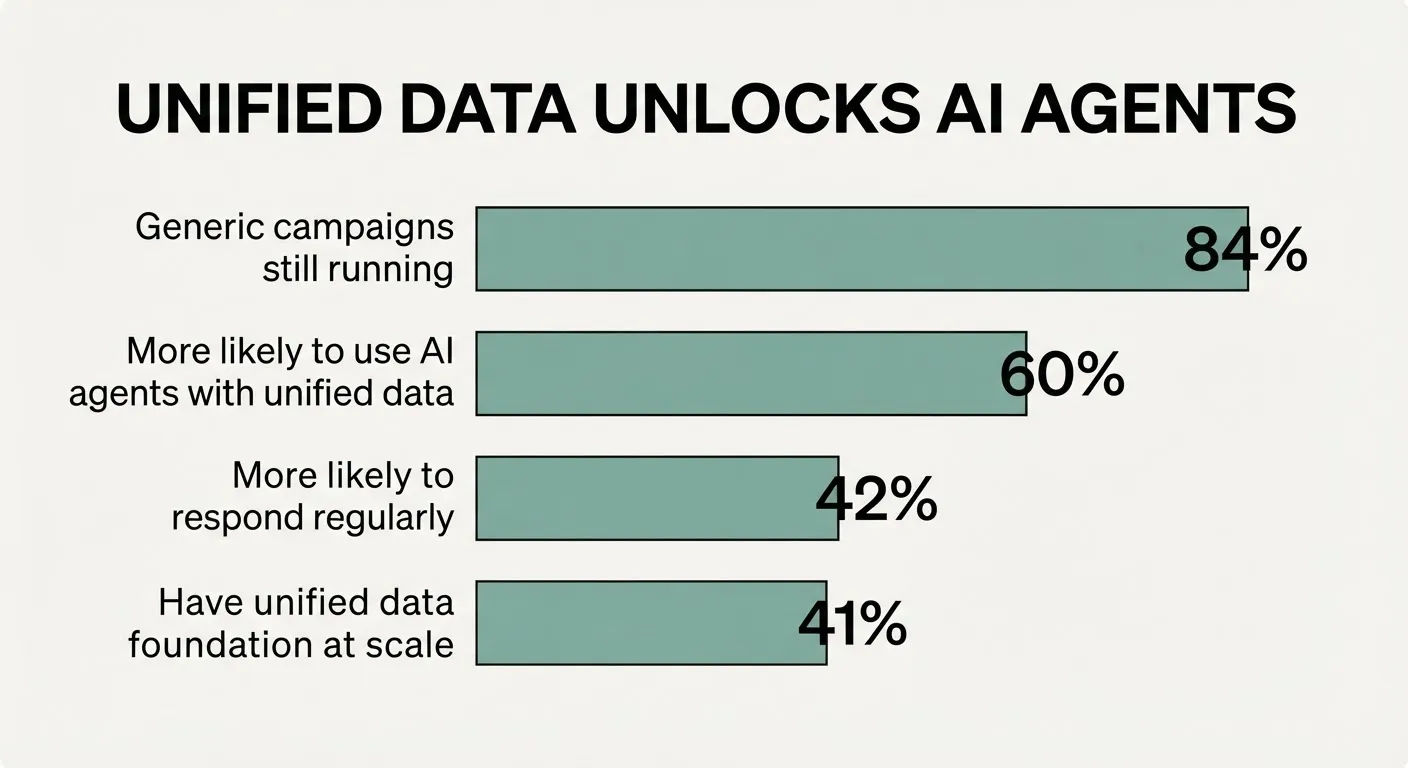
That pattern matches the data. According to Salesforce’s 2026 State of Marketing, teams satisfied with unified data were 60% more likely to use AI agents and 42% more likely to respond to customers regularly.
The readiness gap is just as clear in B2B. Adobe’s 2026 global survey found over half of B2B organizations expect agentic AI to coordinate journeys in real time, yet only about 41% say they have a unified customer data foundation for AI at scale.
Without that connection, even strong models produce generic work. With it, the agent can start acting like a real brand brain.
Build the Loop, Not Another Prompt Stack
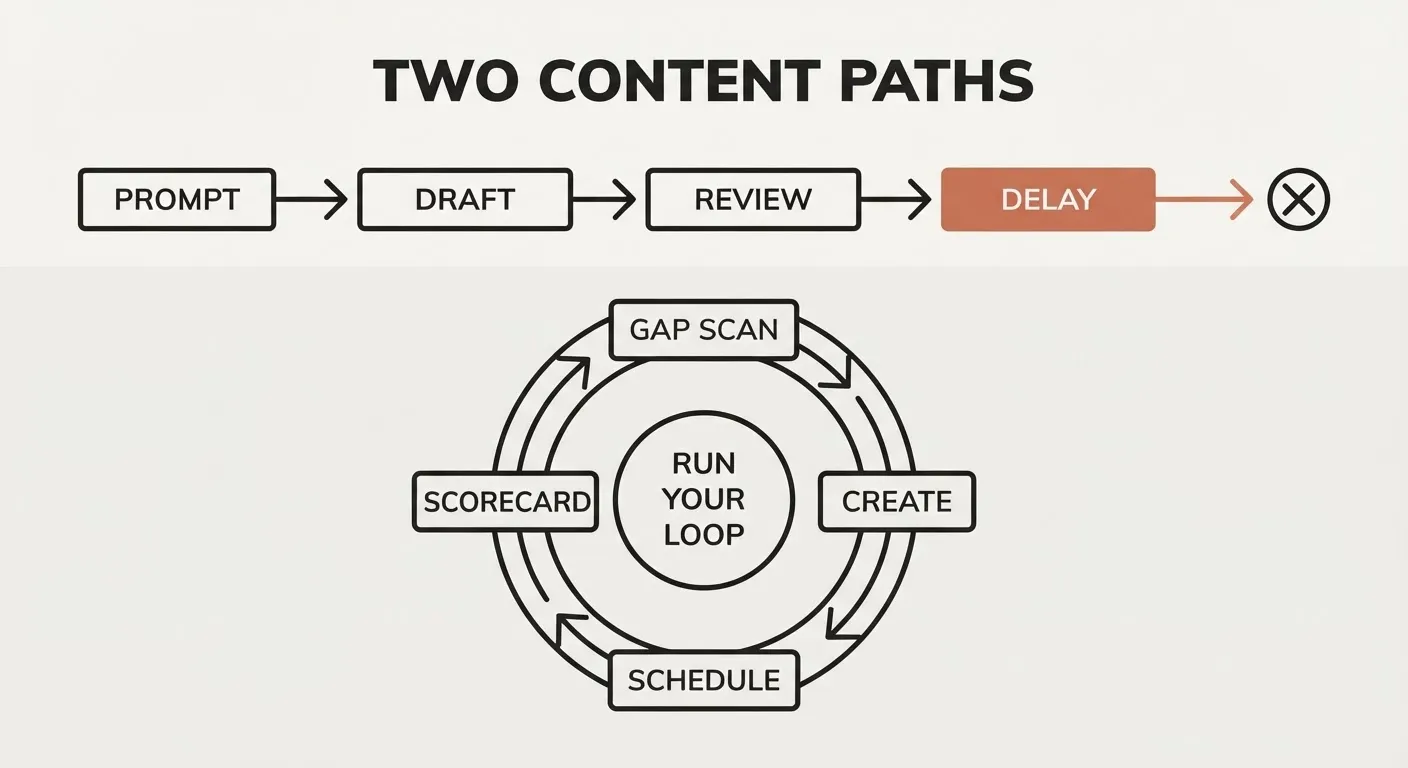
Once connection is in place, the next move is operational. B2B founders do not need more isolated prompts; they need a weekly organic marketing loop with named mechanisms at each step.
Here is the simplest version.
- Step 1: detect gaps from the site and existing content footprint
- Step 2: create assets using brand-aware context, not blank prompts
- Step 3: publish and schedule across channels automatically
- Step 4: score results against a repeatable weekly scorecard
- Step 5: replan next week from what actually performed
That sequence is the difference between “help me write this” and “run my loop.” It also answers a practical founder question: how can B2B founders automate their organic content? By connecting one system that can inspect the website, identify gaps, produce channel-ready assets, publish them, and feed results back into the next cycle.
Adobe’s 2026 B2B research underscores why this matters: ambition is high, but only 41% report the unified data foundation needed to support AI at scale. The blocker is not model quality alone. It is missing loop infrastructure.
The Shift Founders Need to Make
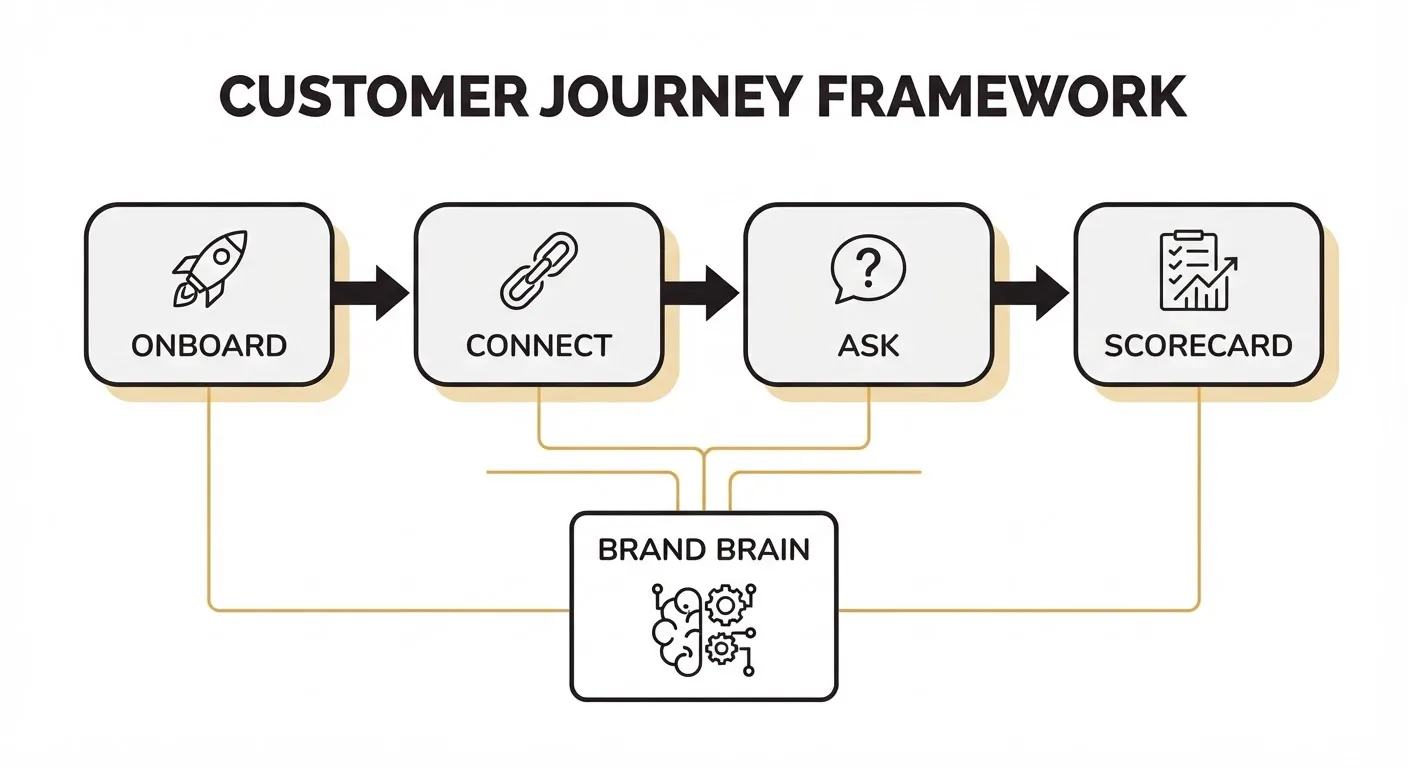
So the shift is not “use AI more.” It is judge AI by whether it closes the loop.
If you remember the opening scene, the problem was never the draft. The problem was that the founder became the routing layer between planning, publishing, and learning.
- Stop grading draft quality alone and grade loop completion
- Connect your agent to the site, calendar, channels, and results
- Start with one weekly loop simple enough to repeat
- Use a scorecard so the system can improve each cycle
That also gives a clean answer to another core question: what is the difference between an AI tool and an AI agent? A tool returns an artifact when prompted. An agent carries state across decisions and actions until the marketing goal is complete.
Key takeaways:
- Agentic marketing is execution, not better drafting
- Unified context is the mechanism that makes agents useful
- A weekly organic marketing loop beats one-off prompt sessions
For founder-led B2B teams, that means starting with connection first. Onboard the website, connect your agent, and let it work from a shared brand brain instead of isolated chat threads.
Scout7’s framing is the right one: “Onboard. Connect. Ask.” When the system can read the site, identify gaps, generate assets, schedule across channels, and return a scorecard, you finally have an autonomous marketing loop rather than a faster drafting workflow.
The next advantage will not come from squeezing slightly better copy out of a model. It will come from building a repeatable system that plans, acts, measures, and learns every week.
If you want to run your loop instead of coordinating it by hand, start small: connect one brand, one publishing surface, and one weekly scorecard. Then expand once the loop closes reliably. That is how founders move from prompt-based help to real agentic execution.
Frequently asked questions
What is the difference between an AI tool and an AI marketing agent?
An AI tool returns an artifact when prompted, like a draft or outline. An AI marketing agent carries state across decisions and actions, moving from planning to publishing to measurement until the marketing goal is complete.
Why doesn’t faster drafting solve the marketing problem?
Because the draft is only one step in the workflow. Founders still have to decide what to make next, format it for channels, publish it, and review performance unless the loop is connected end to end.
What does an autonomous organic marketing loop include?
The article defines the loop as plan, create, publish, measure, and replan. In practical terms, that means detecting gaps, creating assets with brand-aware context, publishing across channels, scoring results, and using those results to guide the next week.
Why does unified data matter for agentic marketing?
An agent needs connected context to act like a brand brain instead of a drafting tool. Website context, calendar context, channel state, and results data help it avoid generic output and choose the next useful action.
References
- Gartner Survey Reveals Marketing Leaders Expect AI Automation of Marketing Work to Double to 36 Percent by 2028
- Salesforce State of Marketing 2026
- 2026 AI and Digital Trends in B2B Journey Orchestration — Adobe
- HubSpot 2026 State of Marketing
- Forrester: Nine In 10 US Marketing Agencies Use AI To Cut Costs At The Expense Of Creativity